
The Room Isn't Empty. It Just Has Nothing to Gather Around.
You know the room. It has a table, enough chairs, and perhaps a plant doing its best in the corner. The furniture fits. The walkway works. Yet the whole arrangement looks as if everyone might pack up and leave after lunch. People call this an empty room, but the problem is often not a shortage of objects. It is a shortage of focus.
Adding another cabinet or three framed prints may fill square footage without making the room feel more settled. What the eye wants is a clear relationship: this is where the room gathers, this is the object that marks it, and everything around it can relax. A table pendant light can provide that missing center, especially when color and a strong horizontal line connect the ceiling to the furniture below.
First, Check Whether the Room Is Actually Empty
Stand in the doorway and count functions rather than objects. Is there somewhere to sit, eat, work, and move through the space? If the answer is yes, buying more furniture may simply make those functions harder. A room can be physically full and visually weak because no element leads.
Now take a photograph and turn it to grayscale. If the table, chairs, wall, and floor all merge into similar mid-tones, the scene may lack contrast. If every object is equally noticeable, it may lack hierarchy. These are different problems, but neither is solved automatically by filling the last bare wall. The useful question is not “What can I put there?” It is “Where should attention arrive first?”
The Table Is Already Asking to Be the Center
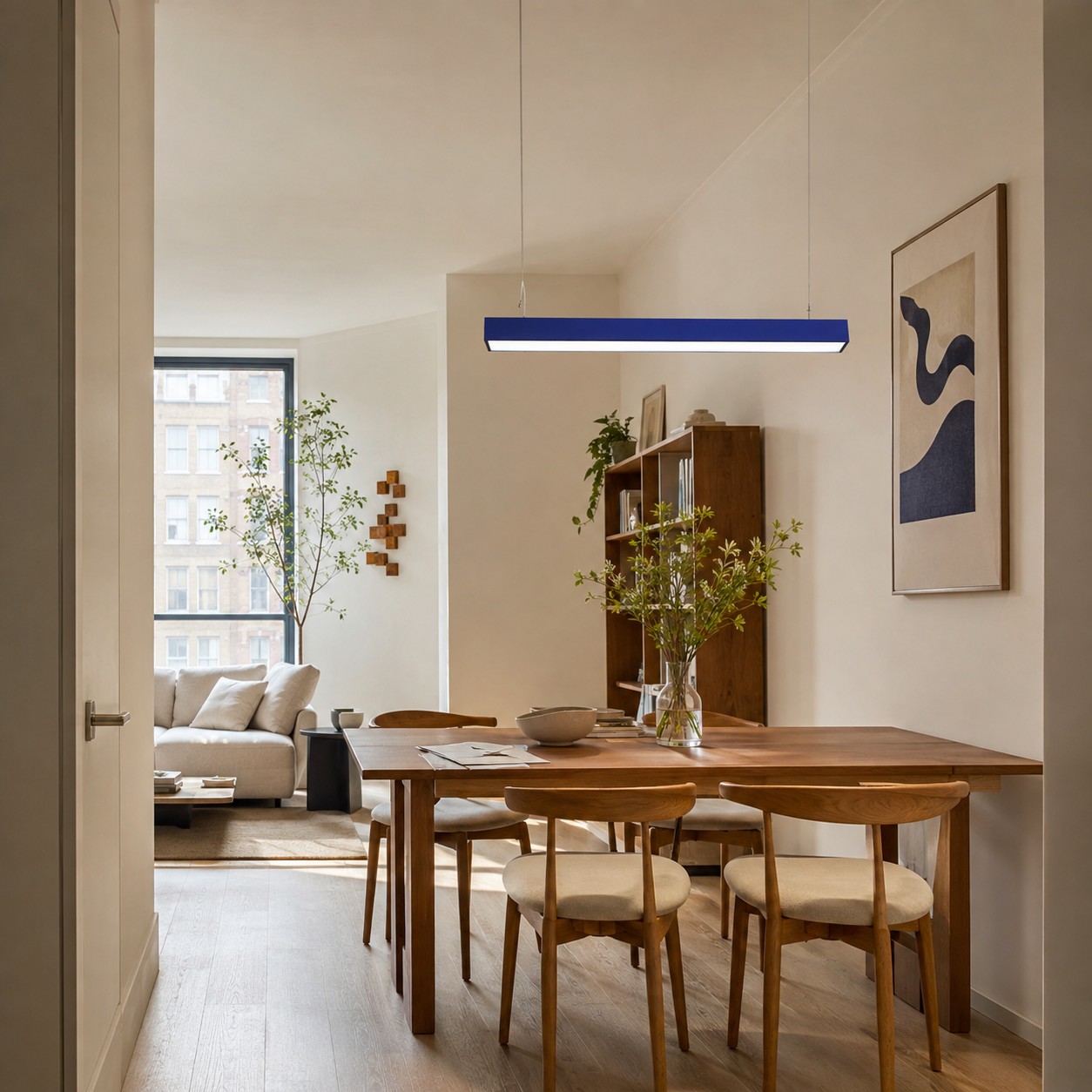
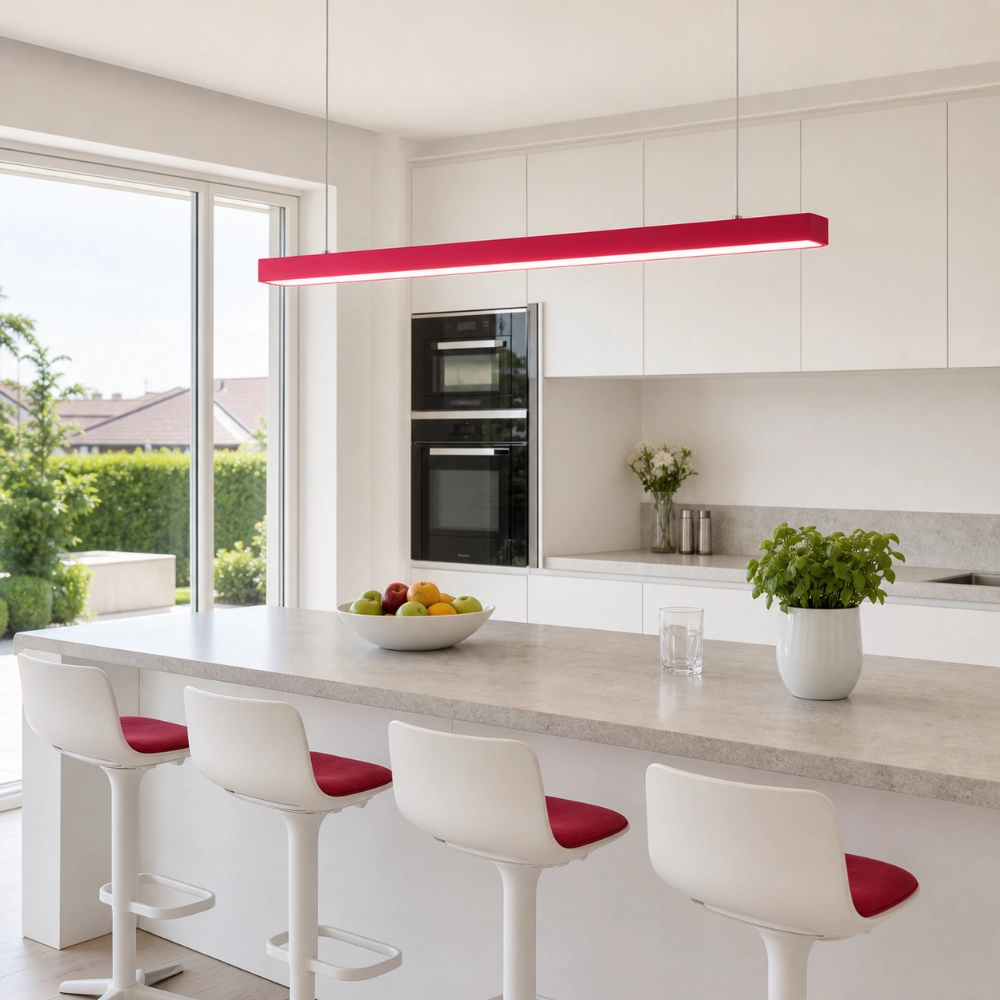
Dining tables and kitchen islands are natural gathering points. They hold breakfast, homework, unopened mail, late-night conversations, and the occasional ambitious puzzle that occupies the room for a week. A light above that activity does more than decorate the ceiling. It gives the furniture below a visible address.
Center the pendant on the occupied surface, not blindly on the room. In an open plan, the dining table may sit off the architectural midpoint because circulation needs space. That is fine. The light should clarify how the room is used. When the pendant, tabletop, and seating read as one group, the surrounding empty space begins to look intentional rather than unfinished.
A Horizontal Line Can Hold the Group Together
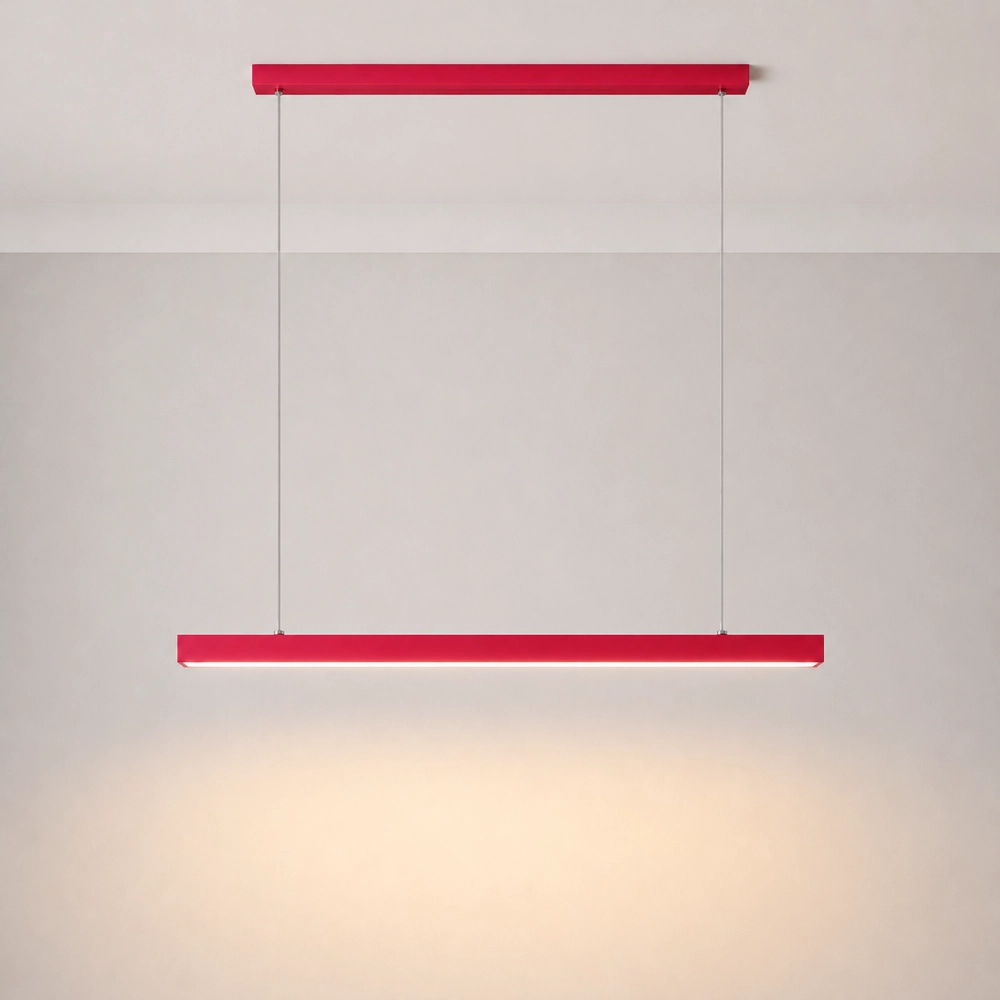
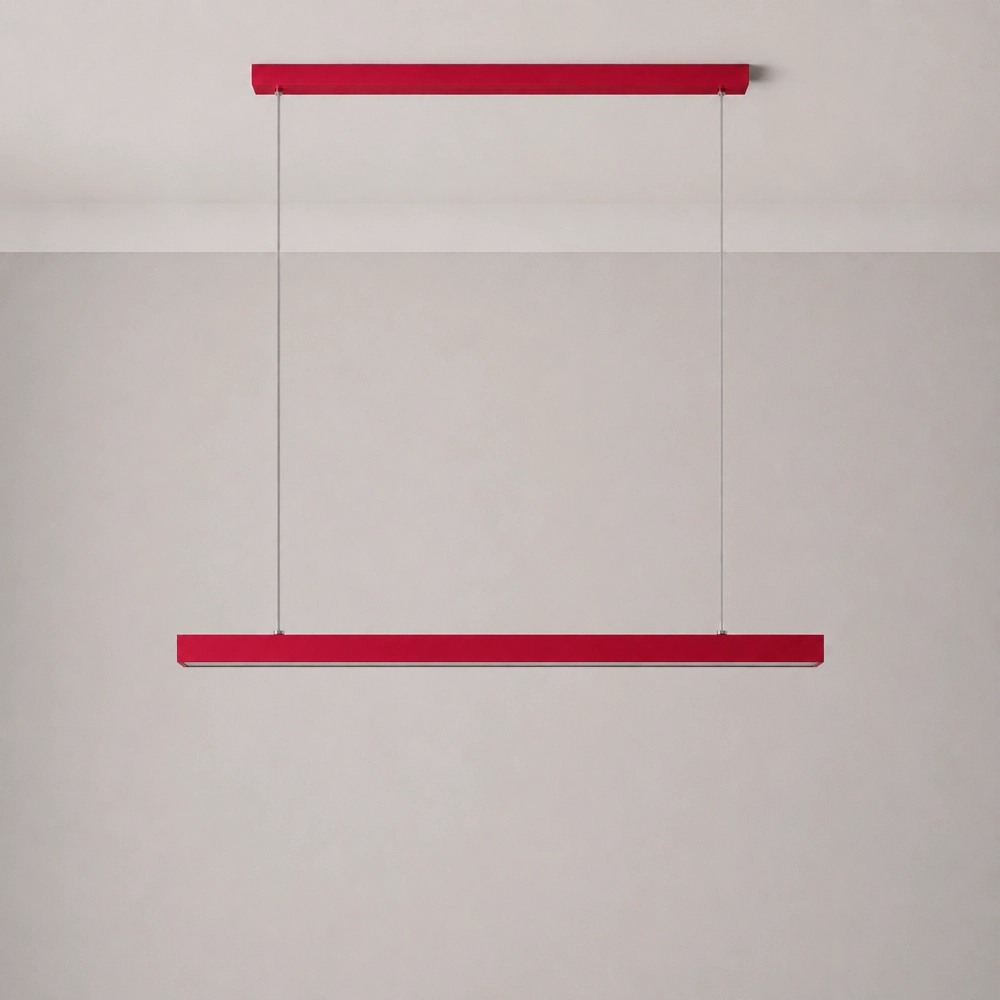
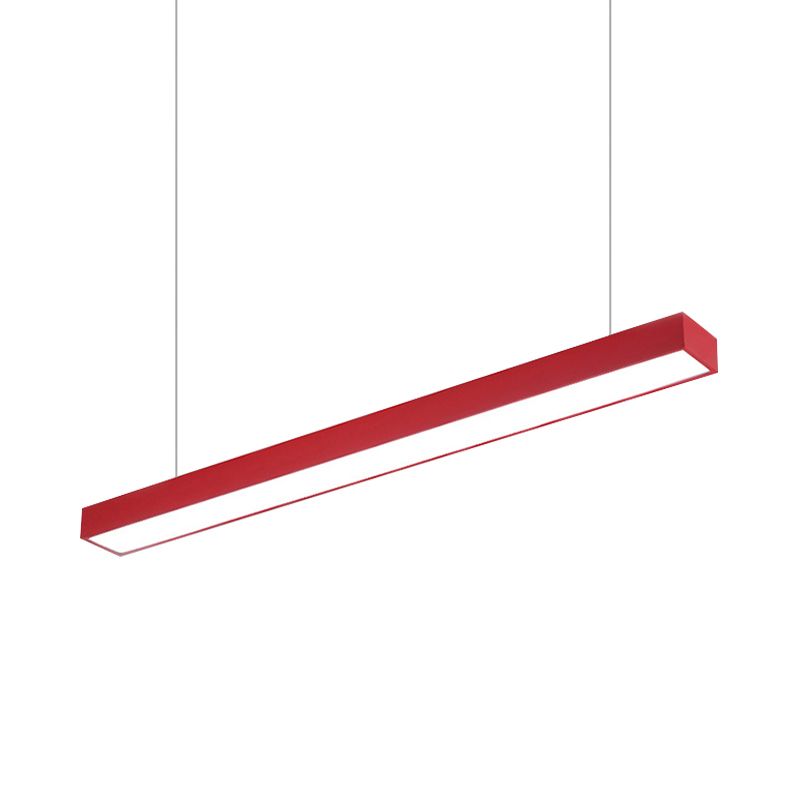
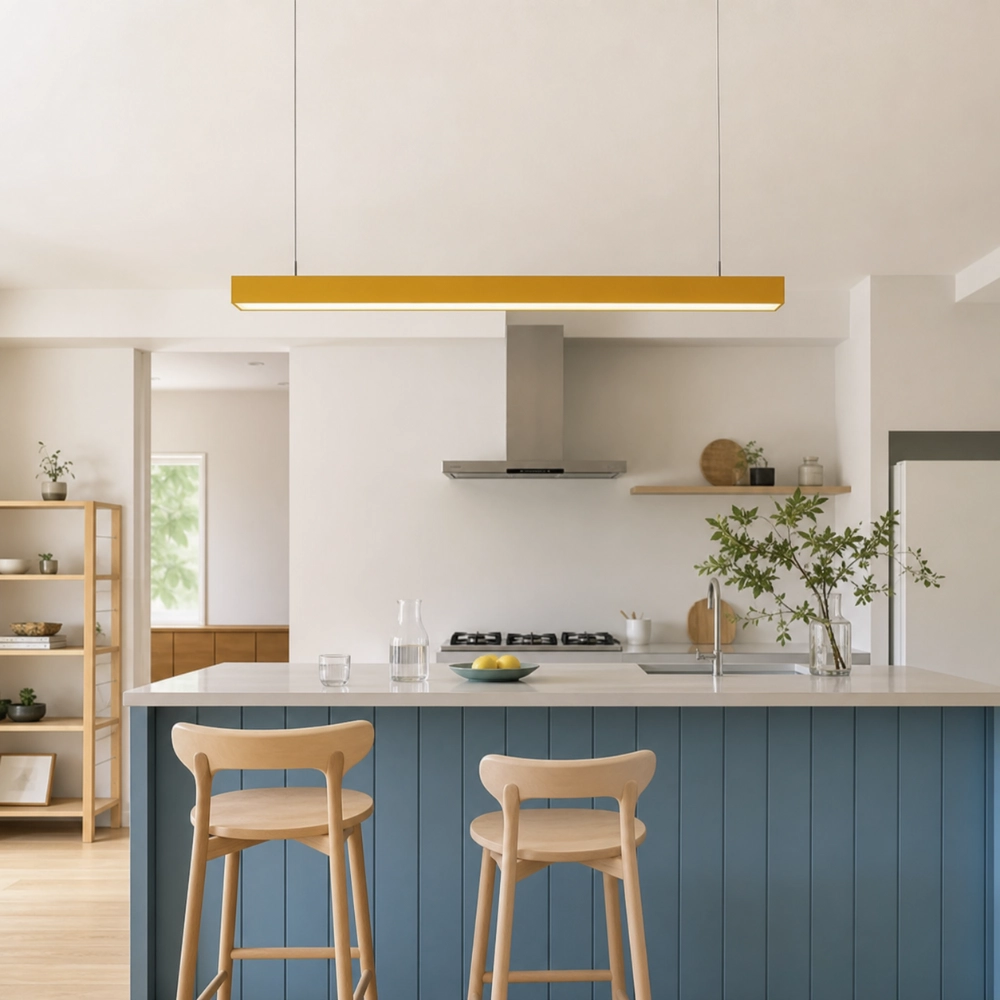
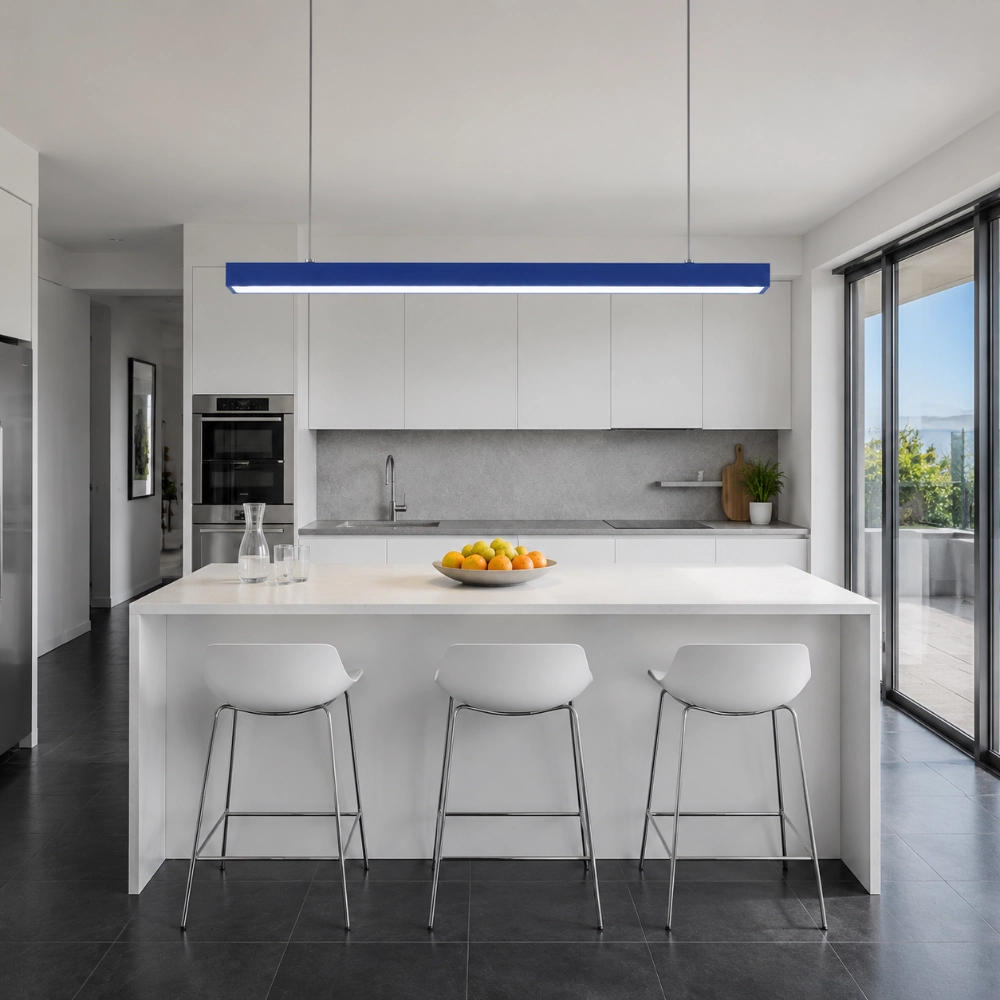
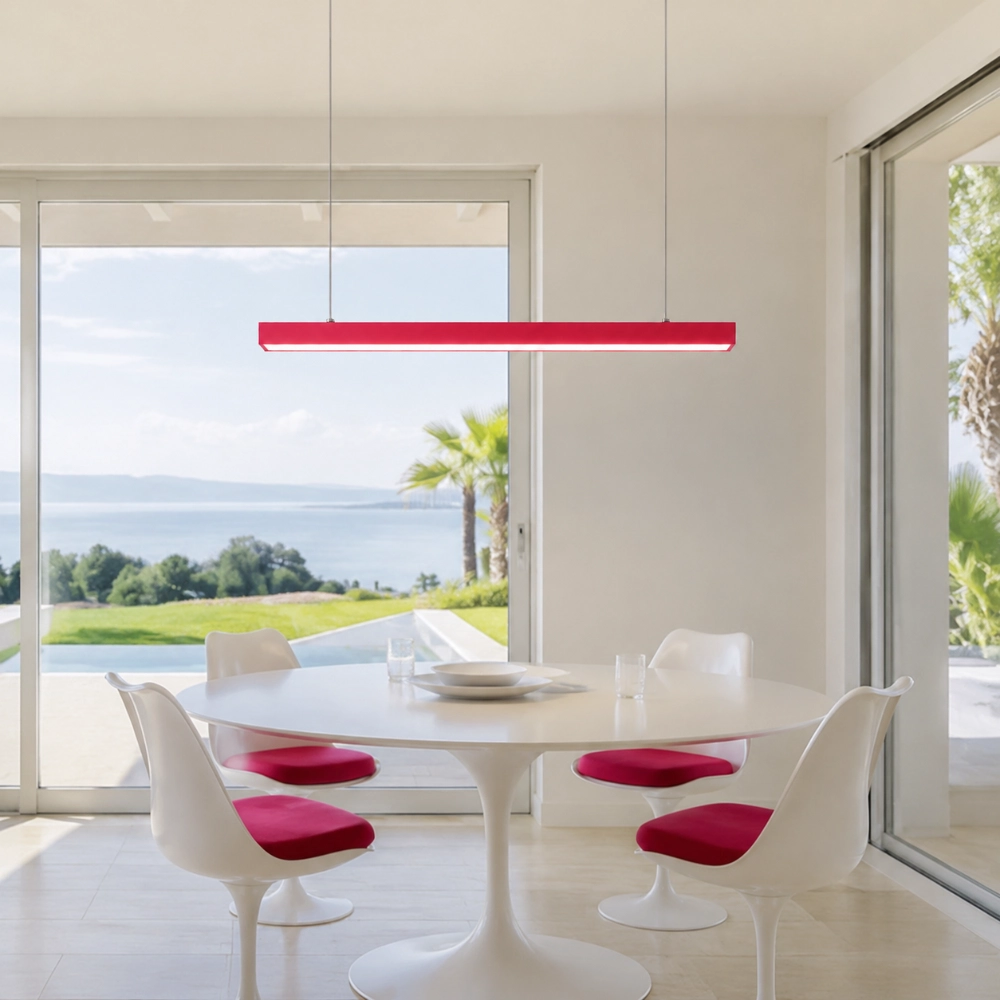
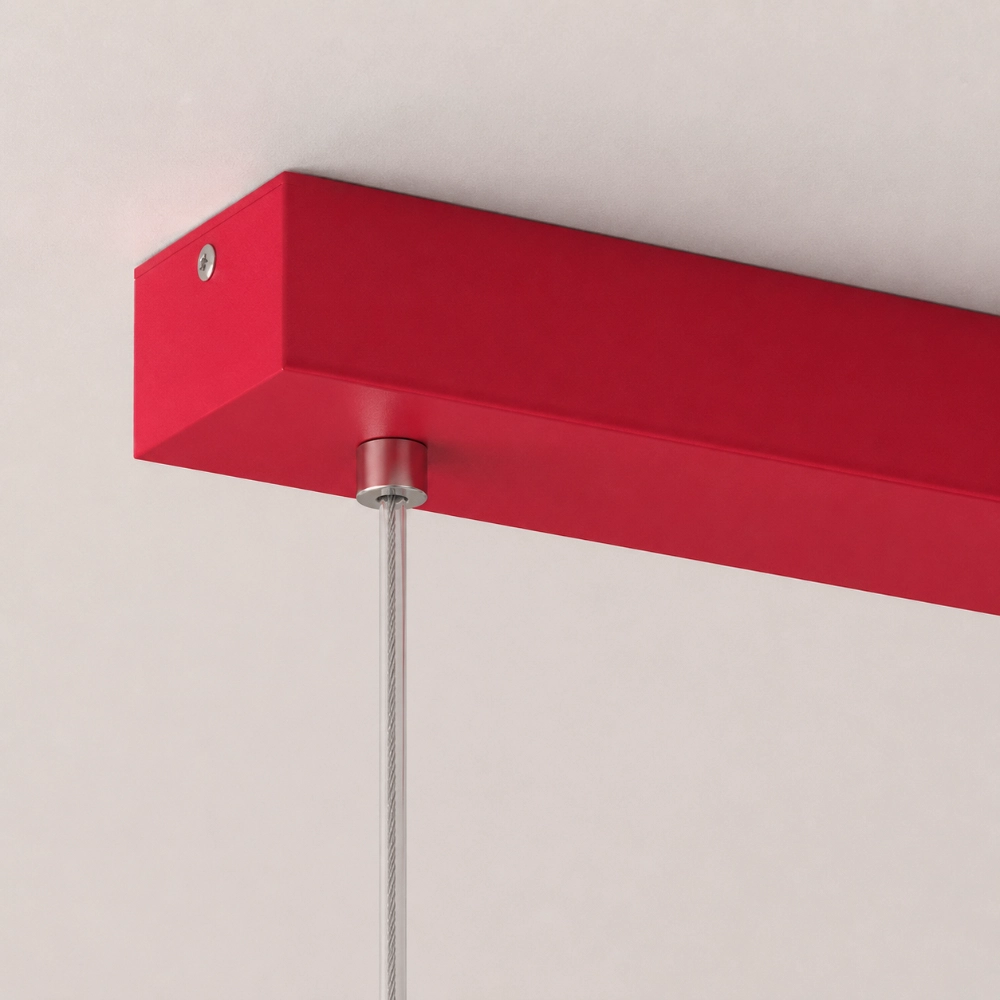
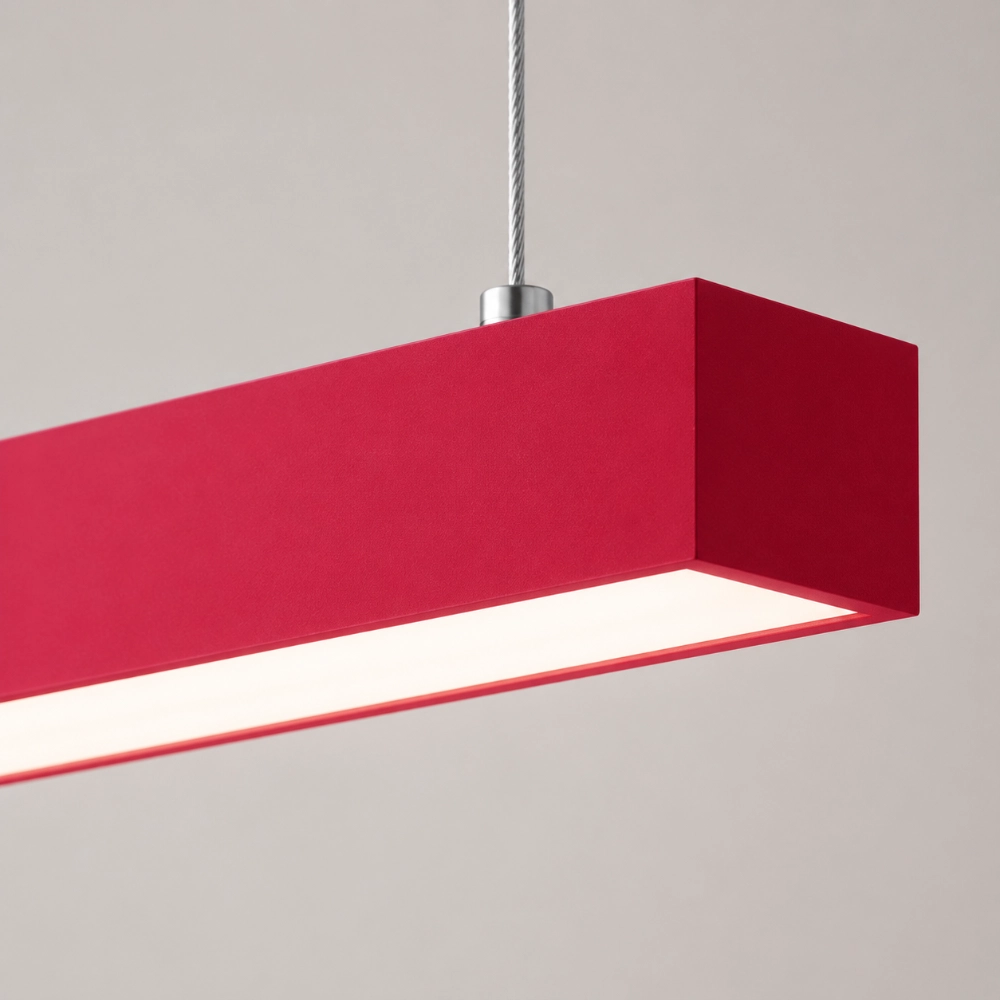
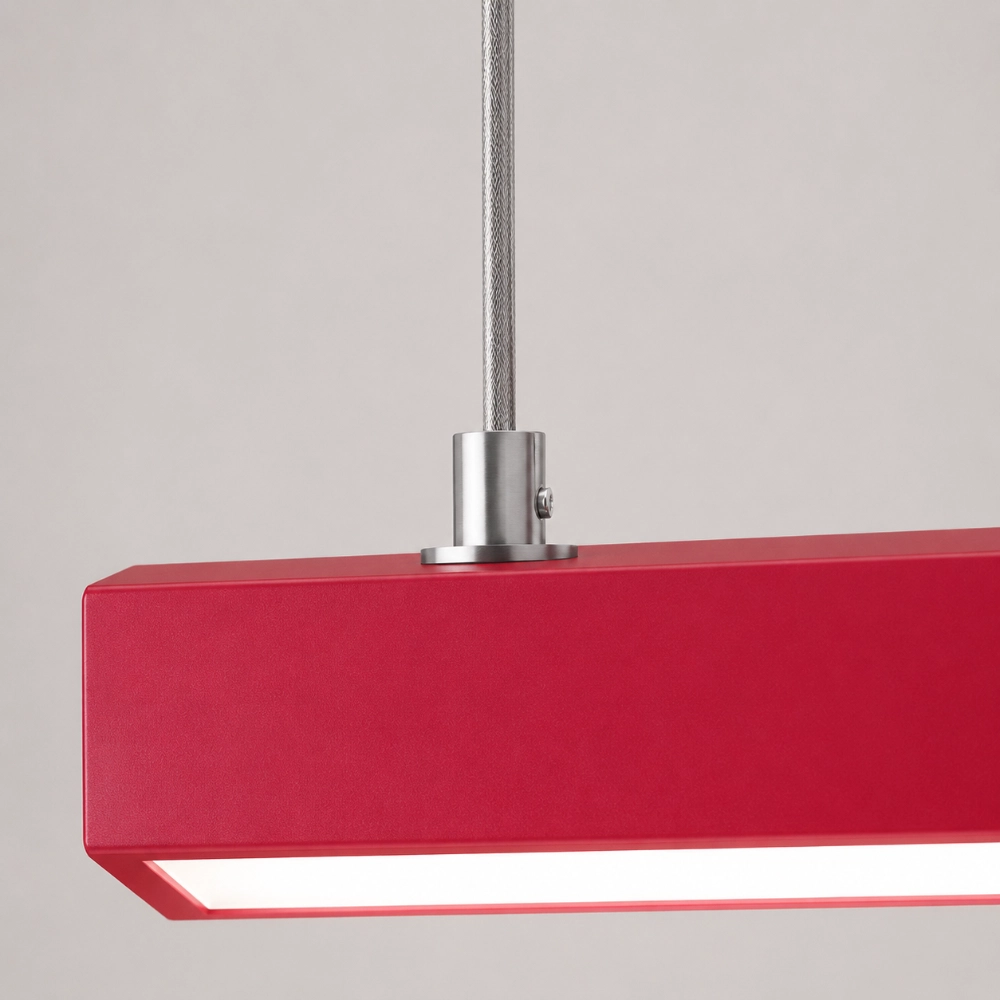
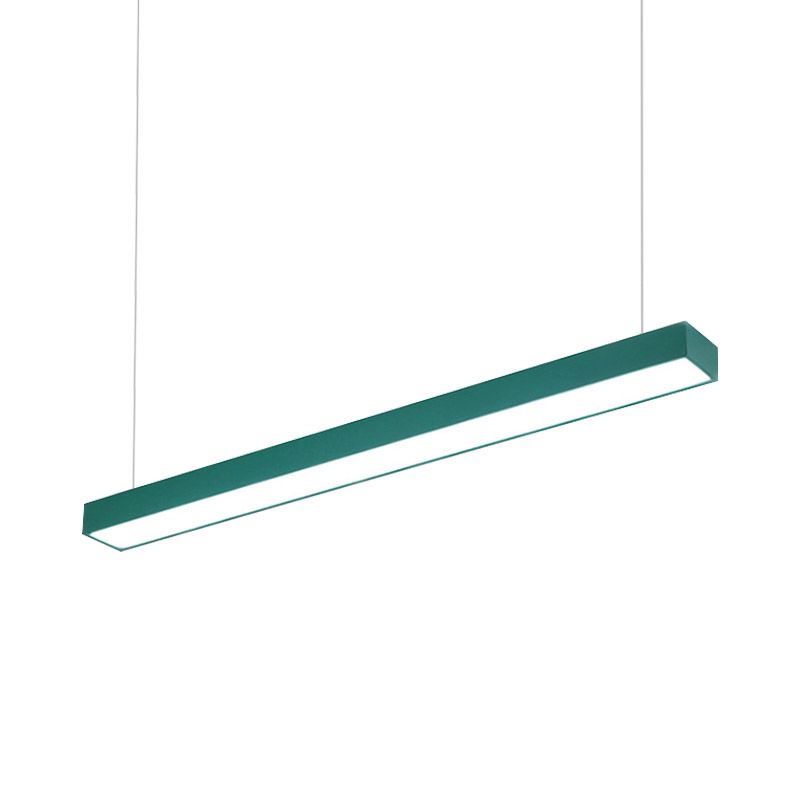
A long rectangular pendant is particularly effective over a long surface because the two shapes speak the same language. The Edge pendant uses one perfectly straight horizontal metal bar, a matching rectangular ceiling canopy, and two thin vertical suspension cables. That simple construction creates a visual bridge between ceiling and table without spreading decoration around the room.
The line must remain easy to read. Avoid crowding it with another pendant, a busy ceiling feature, and tall objects directly beneath it. Let one fixture lead. View the Edge rectangular pendant to assess whether its straight geometry suits the surface and sightlines in your room.
Use Color as a Destination, Not a Theme
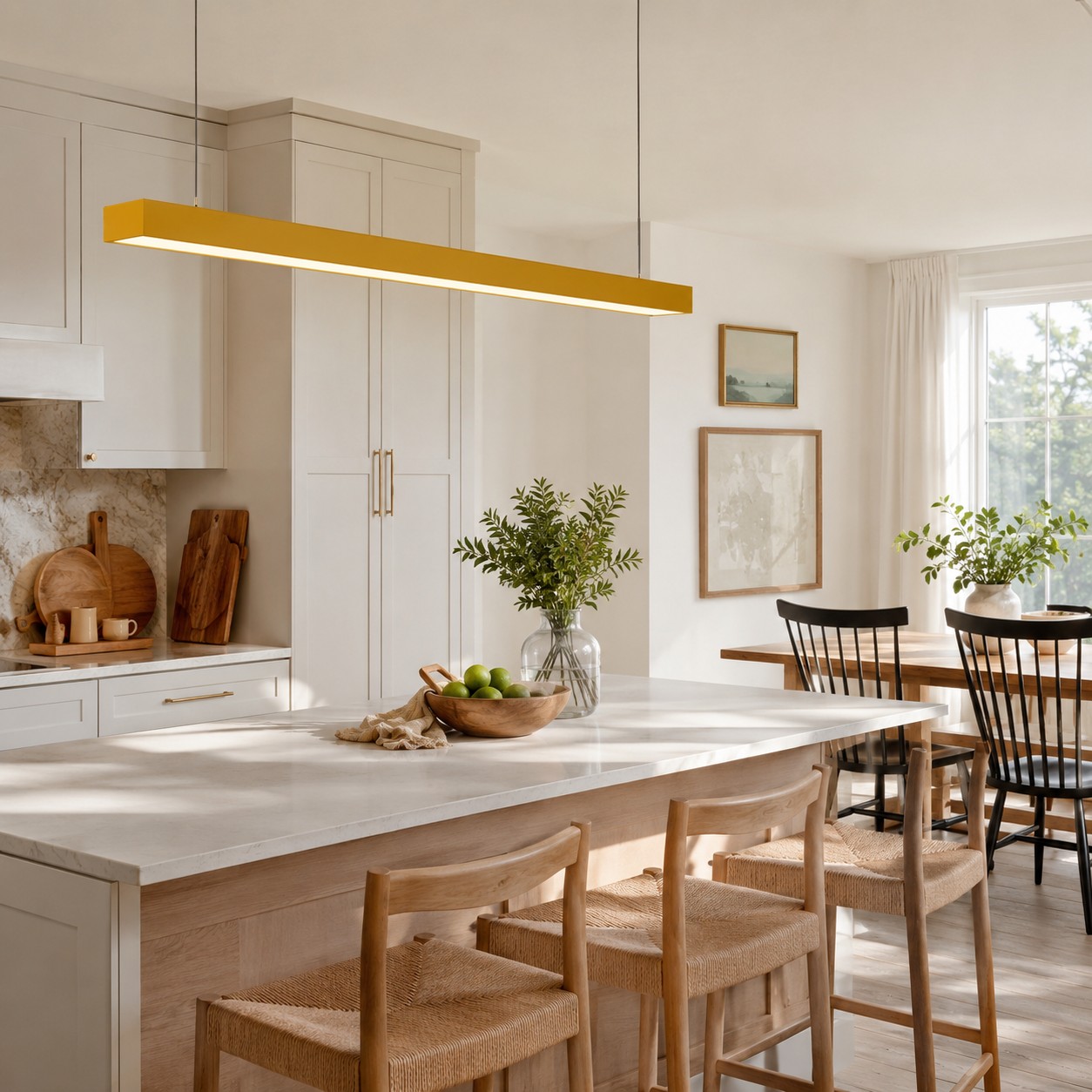
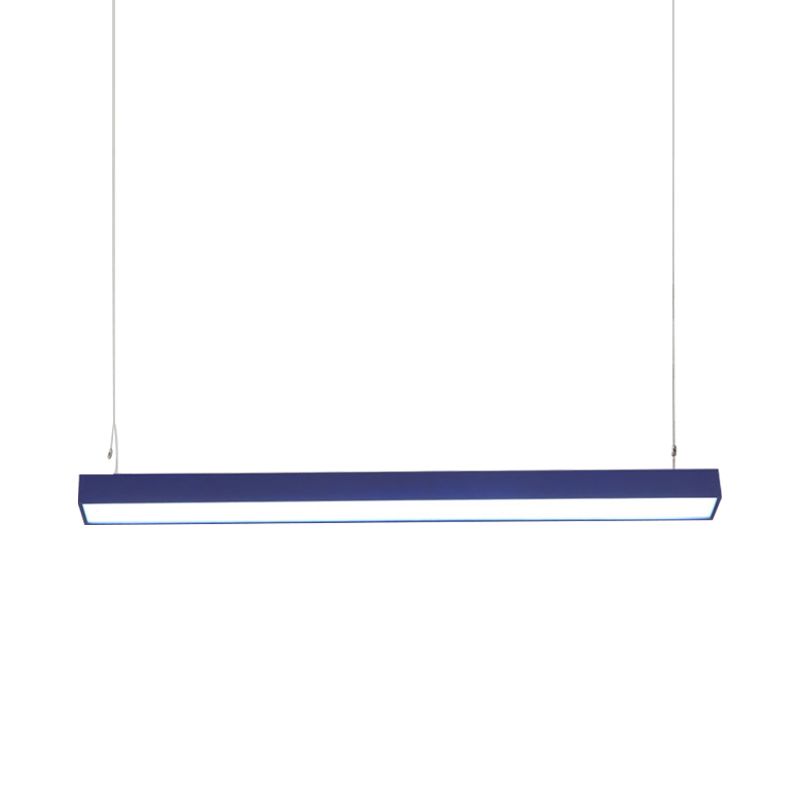
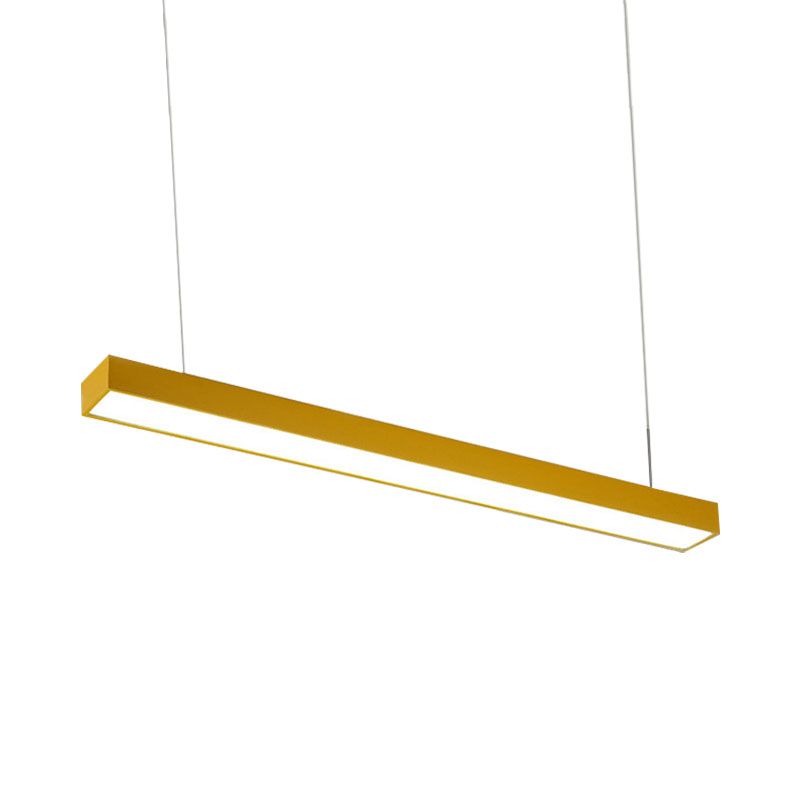
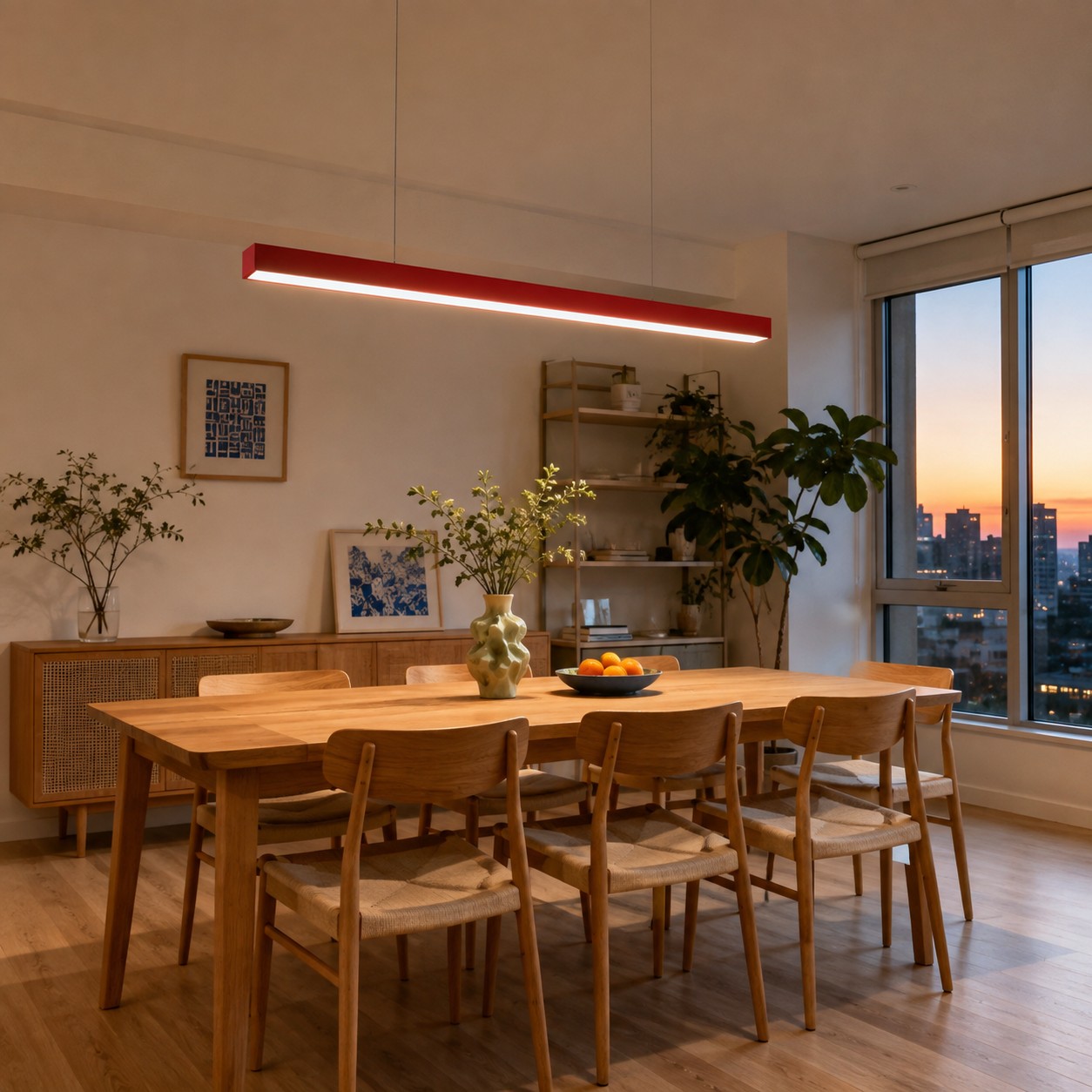
Color helps because the eye notices difference. It does not mean the room needs a matching collection. A red bar can warm up pale oak and cream walls. Blue can sharpen honey-colored timber. Green can bring energy to stone and brushed metal. Yellow can make a quiet breakfast corner feel awake before its occupants do.
Test the finish beside the room's fixed materials under daylight and evening light. Then give it one small companion below eye level: a book cover, a bowl, or a narrow textile stripe. The echo should feel discovered, not purchased as a set. If every accessory repeats the fixture color, the room stops looking collected and starts looking sponsored.
Measure the Relationship, Not Just the Fixture
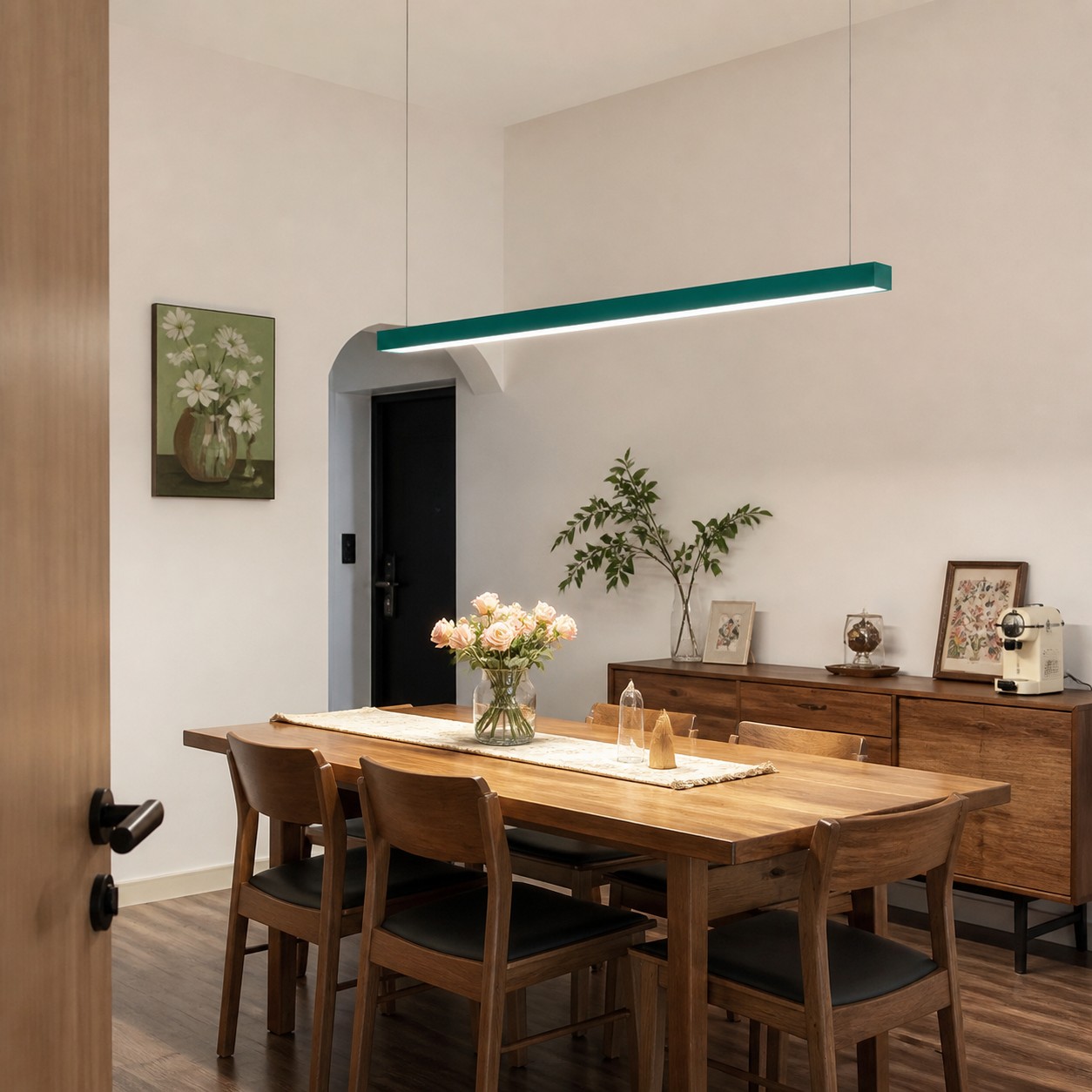
A pendant can be attractive and still look stranded if its length has no convincing relationship with the table. Make a full-size cardboard strip, mark the canopy, and hang two strings where the suspension cables would fall. View the mock-up from the doorway, the kitchen, and every seat. This catches awkward scale and blocked sightlines before they become expensive.
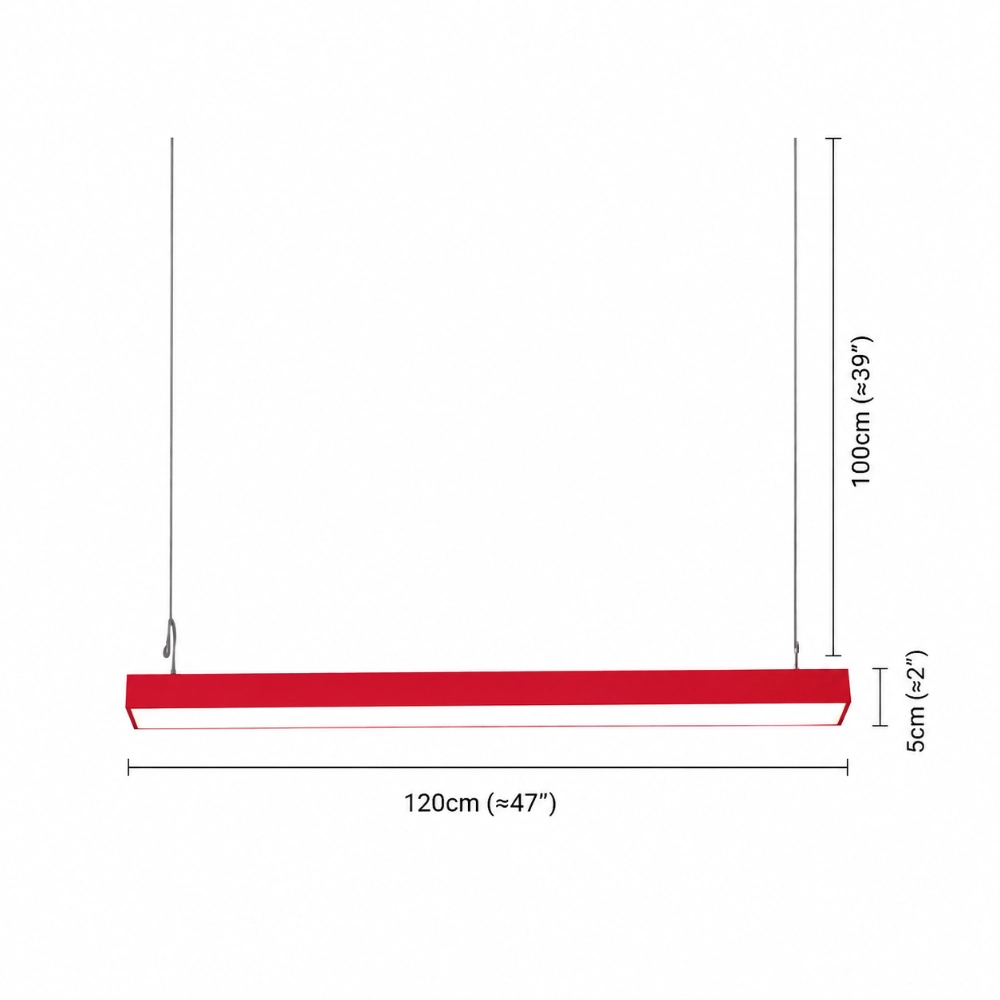
For a structured comparison across tables, islands, and desks, read Rectangular Pendant Size Guide for Dining Tables, Kitchen Islands, and Office Desks. Use it as a checking framework, not as a universal formula. The Edge listing describes a 120 cm by 5 cm body, but room width, furniture placement, ceiling conditions, and actual lighting requirements still need project-specific judgment.
Do Not Confuse a Focal Point With a Lighting Plan
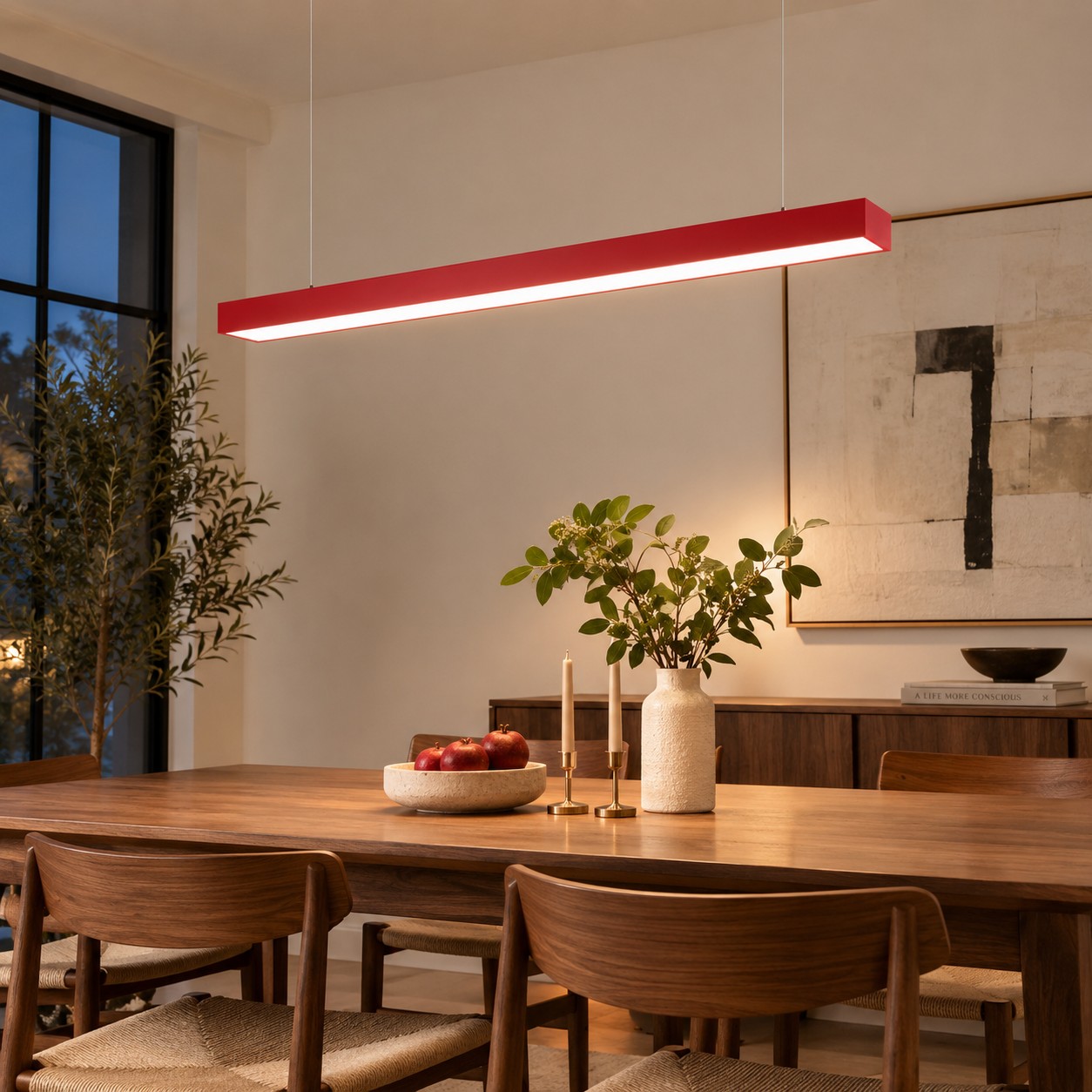
A visible pendant can organize a room, but visual focus and useful illumination are not the same job. The product listing identifies an integrated underside light source and several listed light-color options. It does not provide enough photometric information to guarantee even coverage across every table or adequate ambient light for an entire open room.
Keep circulation routes, work surfaces, and evening comfort in mind. Supporting light may still be required, ideally from sources that do not compete visually with the pendant. Think of the colored bar as the lead actor, not the entire cast. Review the current Edge specifications and ask about any performance detail your project depends on.
The Best Fix May Be Less Decor, Not More
Once the table has a clear center, edit the surrounding room. Remove one decorative object and see whether the composition improves. A confident pendant often makes a row of small pictures, a crowded centerpiece, or an apologetic corner shelf unnecessary. Negative space is what allows the focal point to work.
This restrained approach connects with Statement Lighting Without Maximalism: The New Quiet Drama. The useful drama comes from one strong decision surrounded by calm, not from filling every available surface. If a room finally makes sense after the pendant is mocked up, resist the urge to celebrate by buying six coordinating accessories.
Know When a Pendant Is Not the Answer
If the table is pushed into a circulation path, the chairs are badly scaled, or the room lacks basic ambient light, a colorful fixture will only make the underlying problem easier to notice. Low ceilings, complex beams, and an already dominant artwork may also leave too little visual space for another strong element.
Fix furniture placement and function first. Then decide whether the room still needs a focal point. Good design is not measured by how many ideas survive the process. Sometimes the most useful conclusion is that the ceiling should stay quiet.
Live With the Outline for One Evening
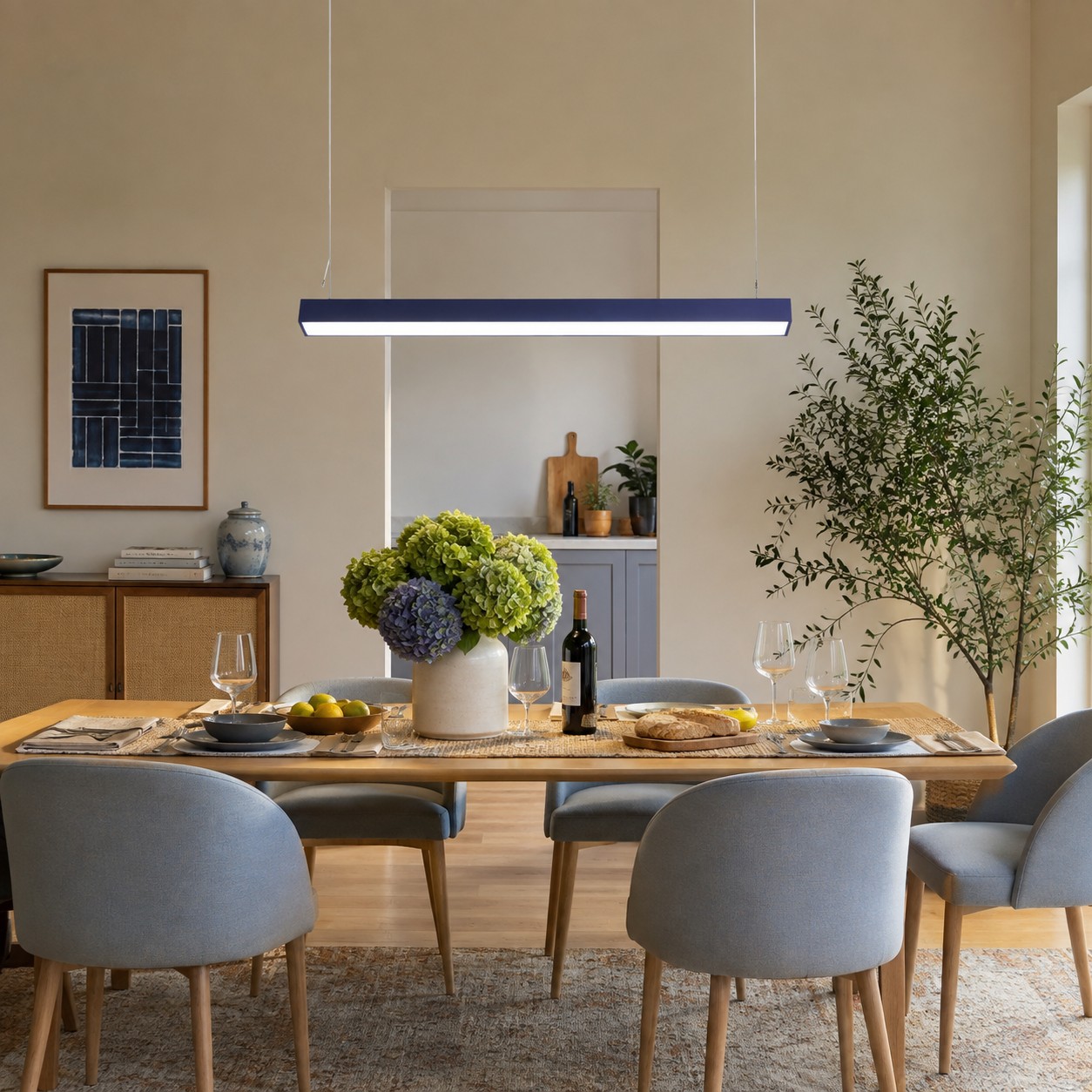
Leave the cardboard mock-up in place through dinner. Sit down, stand up, clear the table, and walk past it carrying something bulky. Check the line from seated eye level and from the room's main approach. Notice whether it gathers the furniture into one scene or simply adds another object overhead.
If the room feels calmer, not busier, the relationship is probably doing useful work. Confirm measurements and unanswered technical requirements before ordering, then compare the available Edge colors in the context of your real materials.
Can a table pendant make a small room feel crowded?
Yes, if the scale blocks sightlines or competes with too many other features. A full-size mock-up reveals this quickly.
Must the pendant match the table finish?
No. A controlled contrast often creates a clearer focal point than exact matching.
Should the light be centered on the room or table?
Usually on the occupied surface it serves, after checking views and ceiling constraints.
Will one pendant light the entire room?
Do not assume it will. Verify available performance information and plan supporting light where needed.