

Put Down the Calculator. First, Look at What the Light Has to Belong To.
Searching for the correct pendant light size usually produces a small avalanche of fractions. The fixture should be some percentage of the table, someone says. Another chart insists on a fixed distance from every edge. These shortcuts feel reassuring because they turn a room into arithmetic. Unfortunately, rooms have doors, chairs, sightlines, off-center furniture, and people who refuse to remain neatly inside a diagram.
A better starting point is relationship. The pendant has to belong to an occupied surface, make sense from the room's main approaches, leave useful space around itself, and avoid interfering with faces or movement. A number can help you describe that relationship after you see it. It cannot see the room for you.
Fixture Length Is Only One Number in the Room
Begin by measuring the table, island, or desk, but do not stop there. Mark the occupied area: where plates actually sit, where someone opens a laptop, where stools are used, and where a centerpiece tends to migrate during dinner. Then note the clear ceiling area above it. A pendant that looks balanced against the tabletop may still feel cramped beside a beam or lost beneath a wide open ceiling.
Also record the approach views. The long side seen from the kitchen may matter more than the short side visible from a hallway. A rectangular fixture is read as a line, and that line changes dramatically depending on whether you see it head-on or from the side.
Measure Four Relationships Before Choosing
First, compare the fixture with the occupied surface, not merely the furniture's outside dimensions. Second, check the room axis: does the line reinforce the way people move and look through the space? Third, test sightlines from seated and standing positions. Fourth, look at the negative space around the proposed bar and canopy.
These checks explain why identical tables can need different visual solutions. One may sit in a narrow dining room with a low ceiling; another may float inside a double-width open plan. The same pendant can feel composed in one and oddly timid in the other. Review the Edge rectangular pendant while comparing its actual listed dimensions with your complete room, not with a cropped product image.
Dining Tables: Size for the People, Not the Photograph
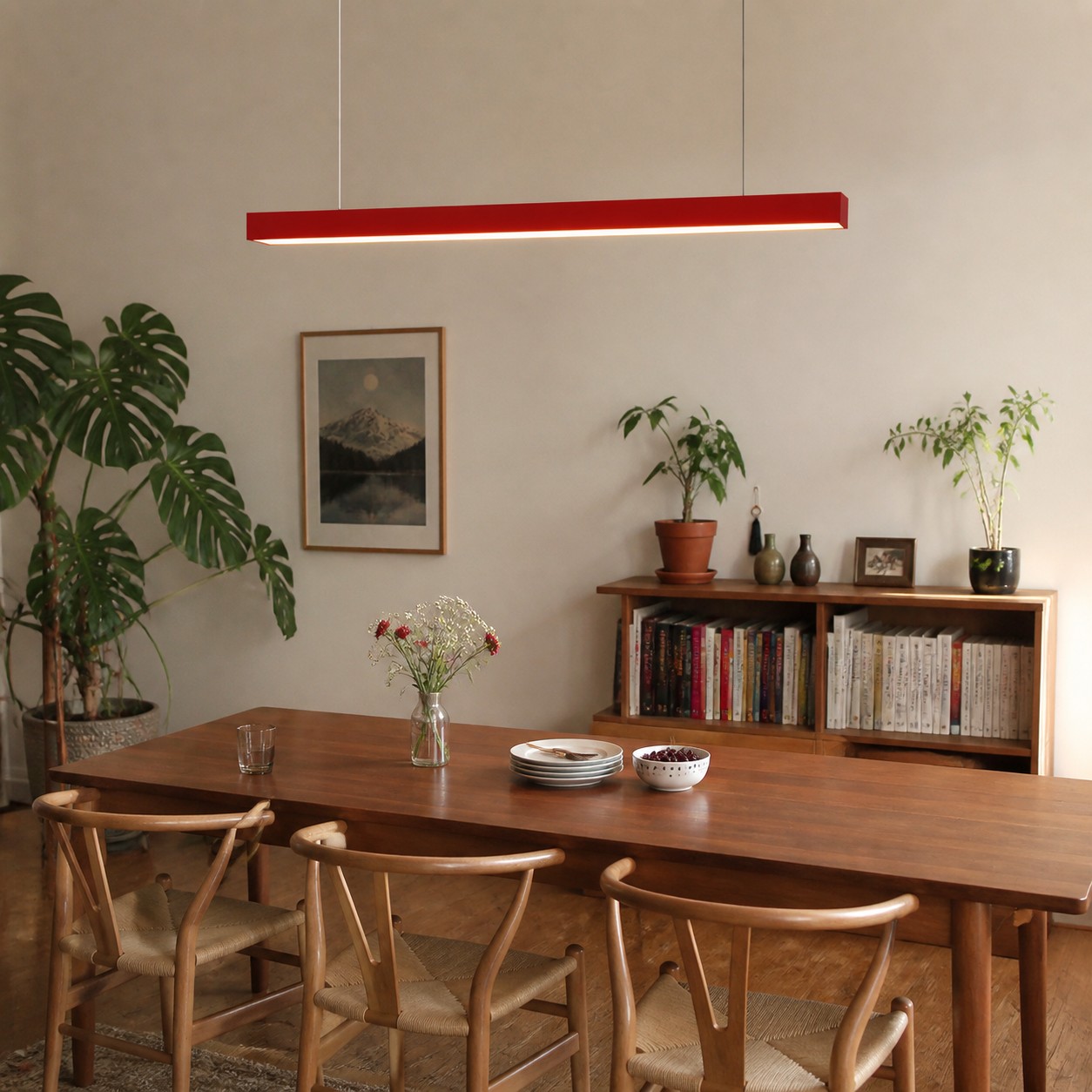
A dining table is rarely used as symmetrically as it is styled. One end may hold a high chair. The far seats may be used only on holidays. A vase can disappear the moment serving dishes arrive. Watch how the table works for a week, then decide which portion deserves emphasis.
A long pendant should make the seated group feel gathered without creating a visual barrier. Sit in every chair and look across the table. Stand at both ends. Check whether the underside appears intrusive and whether the bar relates to the occupied length. Visual balance matters, but so does conversation. A technically centered fixture that dominates every face-to-face view has missed the point.
Kitchen Islands: Separate Alignment From Coverage
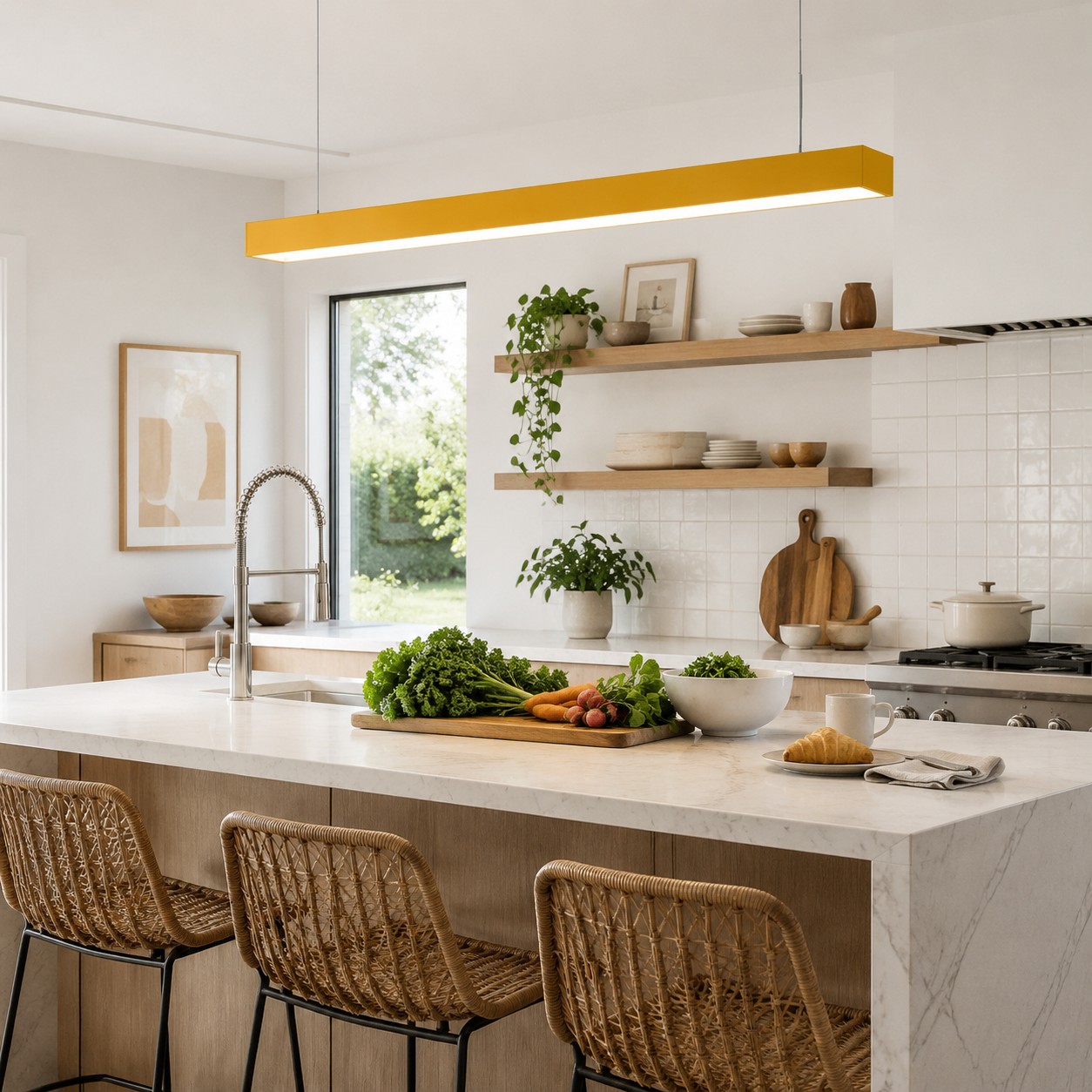
Islands make size advice particularly slippery because they can be prep stations, breakfast bars, storage blocks, and social boundaries at once. Decide which job the pendant is supporting visually. Aligning a rectangular bar with the long edge can organize the kitchen, but alignment alone does not prove that the integrated light will cover every chopping or serving task.
The Edge listing identifies a straight metal bar with an underside light source, but it does not provide enough photometric detail to guarantee a particular spread across every island. Plan visual proportion and task illumination as related but separate decisions. Supporting light may still be necessary, especially near sinks, cooking zones, and circulation paths.
Office Desks and Meeting Tables Need Faces and Screens in the Test
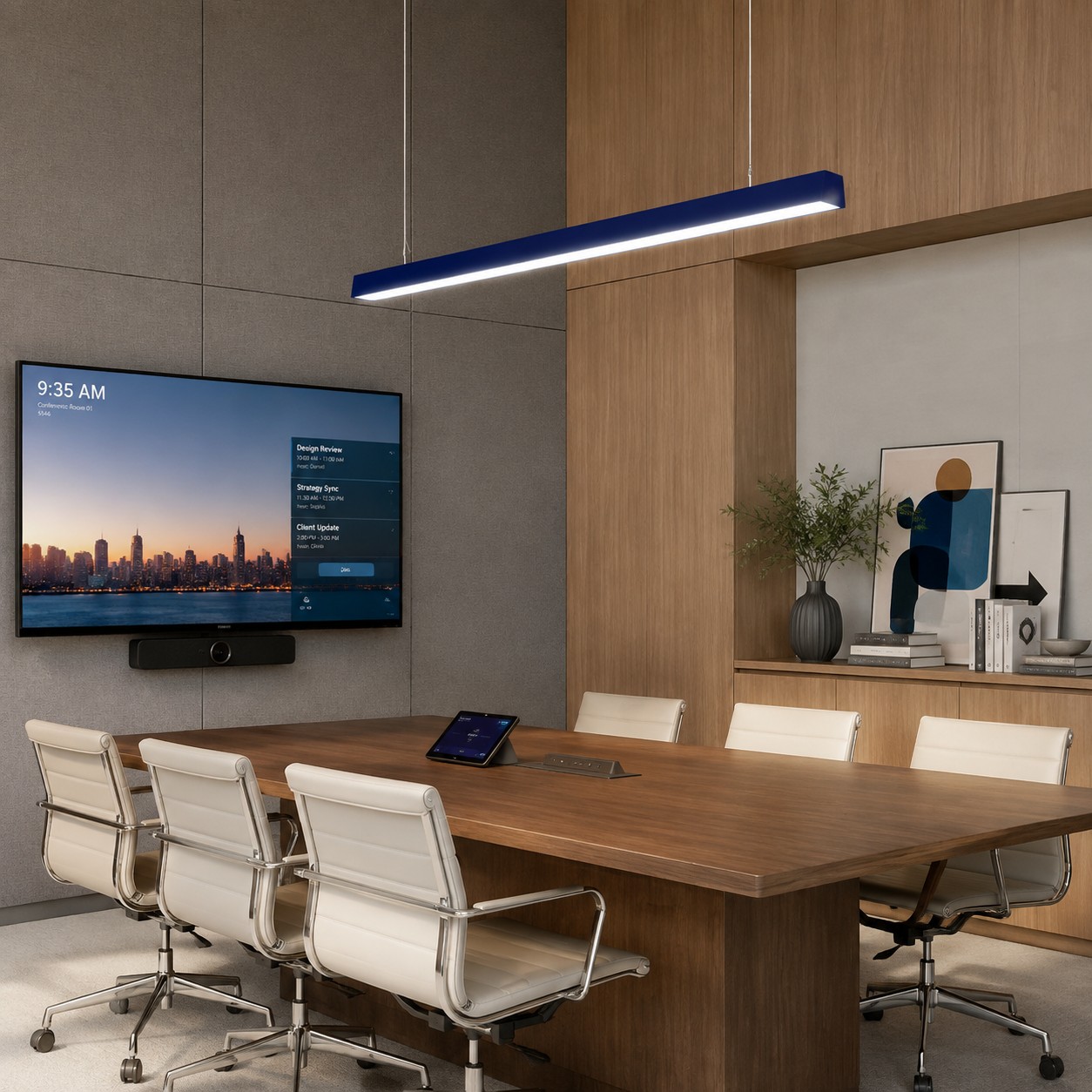
At a home office desk, check the monitor, webcam, and the path of anyone walking behind the chair. At a meeting table, sit where a video call screen is visible and look across to the opposite seats. The fixture should help identify the work zone without becoming the most prominent participant in every conversation.
Reflective screens and pale tabletops can also change how an underside source feels. The listing does not establish glare performance for your setup, so test viewpoints and ask for the technical information your workplace requires. Size is not merely how much ceiling a pendant occupies; it is how the complete assembly behaves around real work.
Build the Cheapest Full-Size Prototype You Can
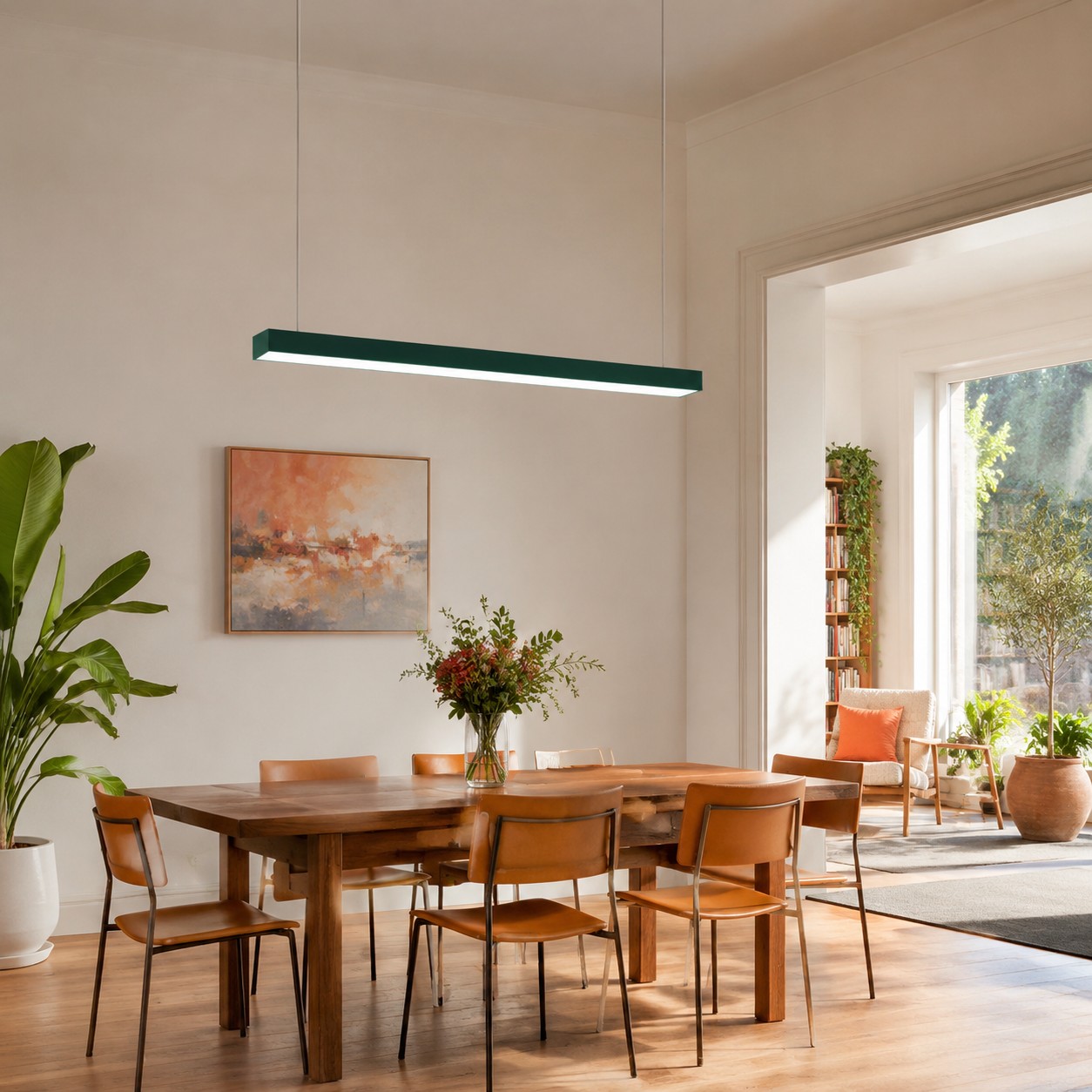
Cut a cardboard strip to the listed 120 cm by 5 cm body size. Mark the matching rectangular canopy on the ceiling with removable tape and hang two strings where the suspension cables would fall. The result will not win a design award. It will answer more useful questions than a beautiful rendering.
Photograph it from the doorway, kitchen, sofa, and seated positions. Walk around it carrying a tray. Check the line in daylight and after dark. If the mock-up looks too short, too dominant, or oddly detached, you have learned this before ordering. Compare the Edge dimensions and colors against the prototype rather than relying on imagination alone.
Color Changes Visual Weight
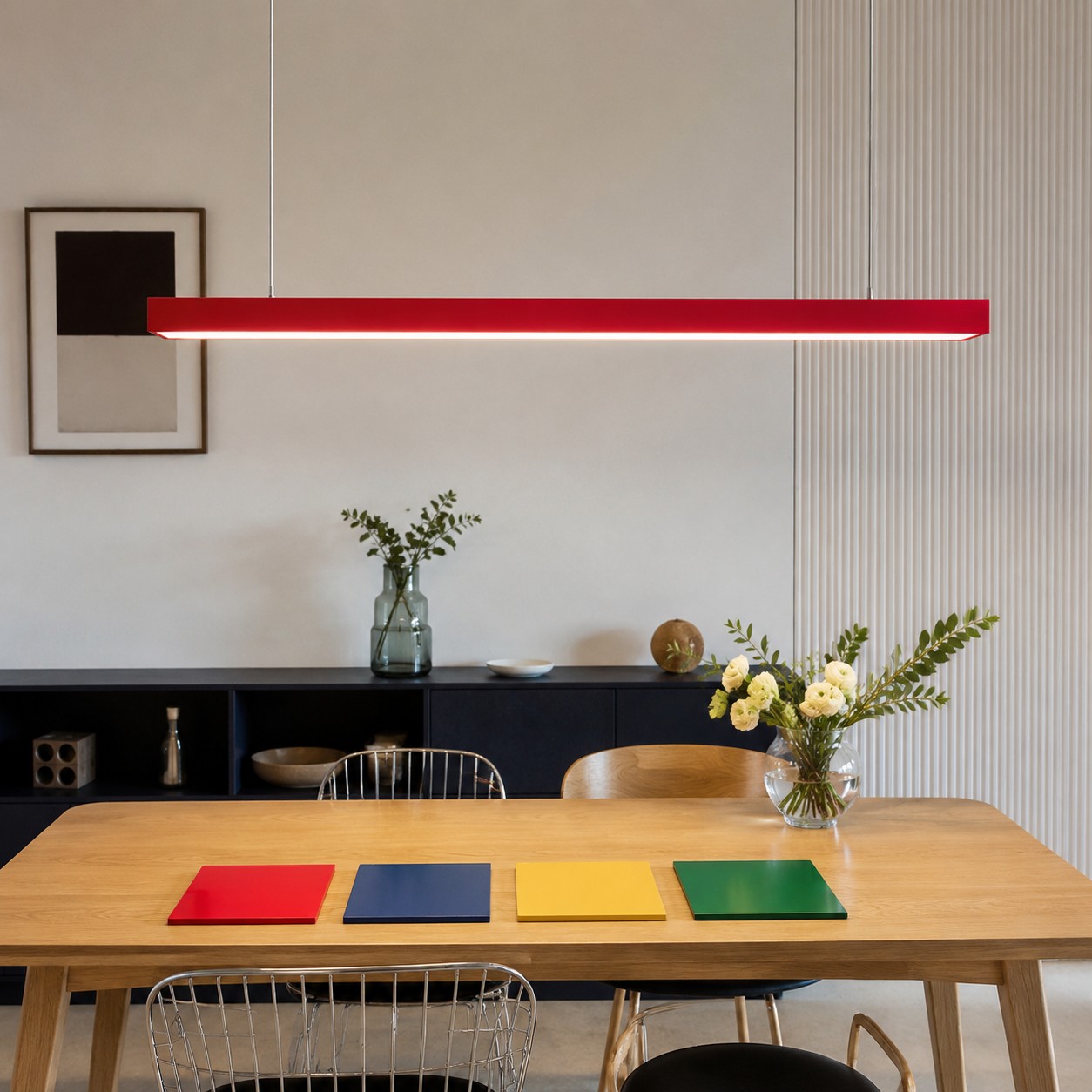
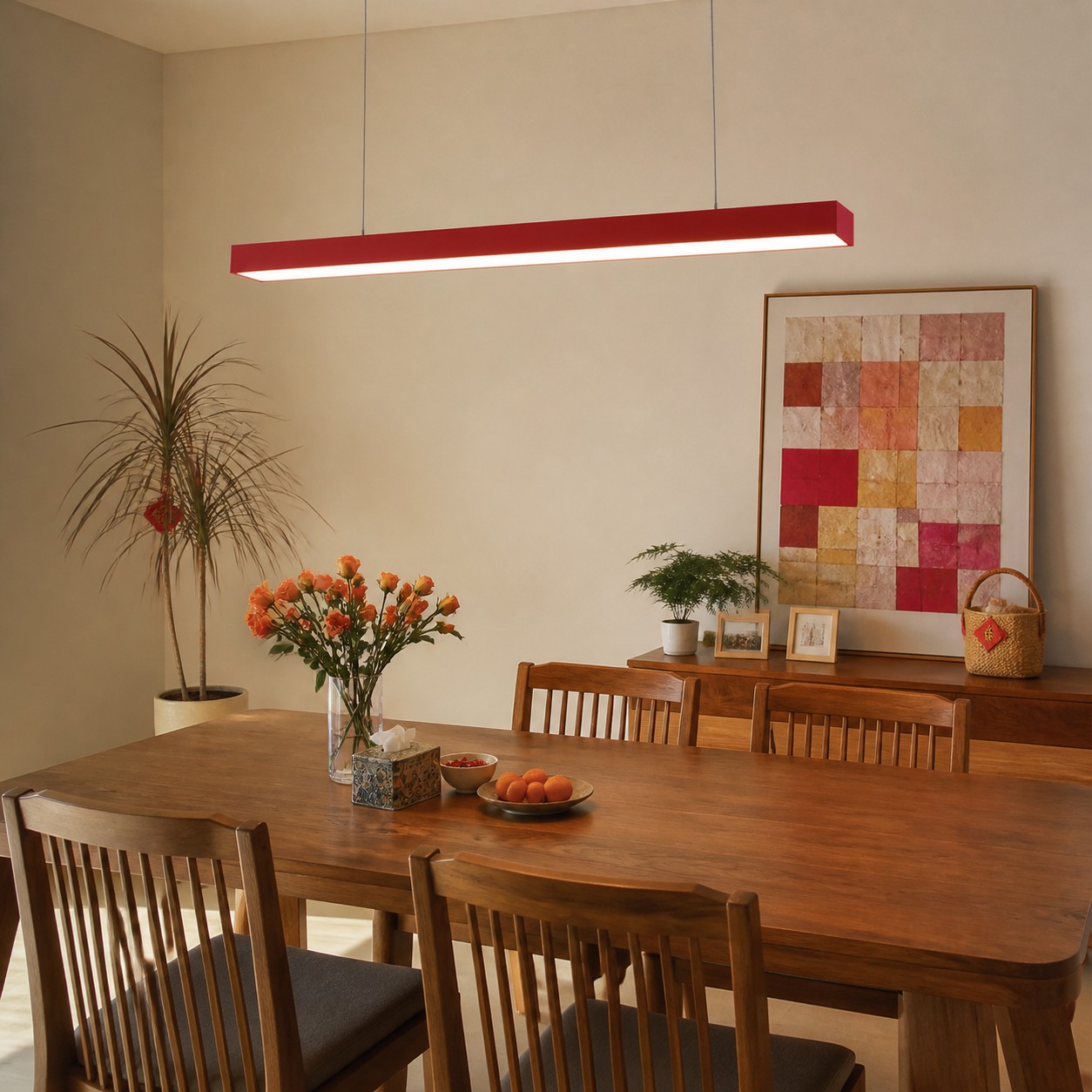
Two fixtures of identical dimensions can feel different when one blends into the ceiling and the other is bright red. Strong contrast makes the line appear more assertive. A related color can feel quieter. Test the actual finish beside cabinetry, stone, timber, and textiles rather than evaluating it on a white screen.
If you want a confident fixture without turning the room into a collection of loud objects, see Statement Lighting Without Maximalism: The New Quiet Drama. Its central lesson applies here: leave enough calm around one strong decision. Color can make a modest line feel substantial, which may be exactly what the room needs—or evidence that a quieter finish would work better.
A Good Size Should Give the Room a Center
The point of proportion is not to satisfy a formula. It is to make the table, island, or desk look intentionally placed. If the furniture already fills the room but still feels temporary, When a Room Feels Empty, Try Adding Color Over the Table explains how a clear ceiling-to-surface relationship can create focus without adding more objects.
Once the mock-up establishes that center, remove a nearby decorative item and look again. If the room improves, the pendant is doing useful organizational work. If the room remains scattered, revisit furniture placement before increasing the fixture size.
Know When One Rectangular Pendant Is the Wrong Tool
An L-shaped island, several separated work zones, a low ceiling, or a table sitting beneath complex beams may not suit one straight bar. The Edge construction is deliberately simple: one perfectly straight, non-bending rectangular body, a matching canopy, and two vertical suspension cables. It cannot curve around architecture or divide itself between unrelated surfaces.
Choose it when one clear horizontal line helps the room. Choose another strategy when the room asks for distributed light or several independent focal points. Before ordering, check the current Edge listing and resolve every unanswered installation and performance requirement.
Should a pendant be shorter than the table?
Often it is, but the useful relationship depends on occupied area, sightlines, ceiling space, and the fixture's visual weight. Test a full-size outline.
Can the same pendant work above an island and a desk?
Possibly, but the tasks, viewpoints, screen reflections, circulation, and lighting needs differ.
Does a longer fixture guarantee better coverage?
No. Physical length and light distribution are different facts.
What should I measure first?
Measure the occupied surface, then map room axes, approach views, seated sightlines, and available ceiling space.


