
Rectangular Pendant Light for Dining Tables: Fix Uneven Table Lighting
A dining table can be beautifully set and still look oddly lit. The center glows, the ends disappear, and whoever sits beneath the brightest patch feels as if dinner comes with a spotlight. When a round pendant is asked to cover a long rectangular surface, the problem is often not the bulb. It is the shape of the relationship.
A rectangular pendant light can improve that relationship by giving the table a longer, clearer source position. It does not guarantee perfect illumination, and it cannot replace a proper lighting plan. But its geometry can help the eye and the light follow the table instead of stopping at the middle.
Why the Ends of the Table Feel Forgotten
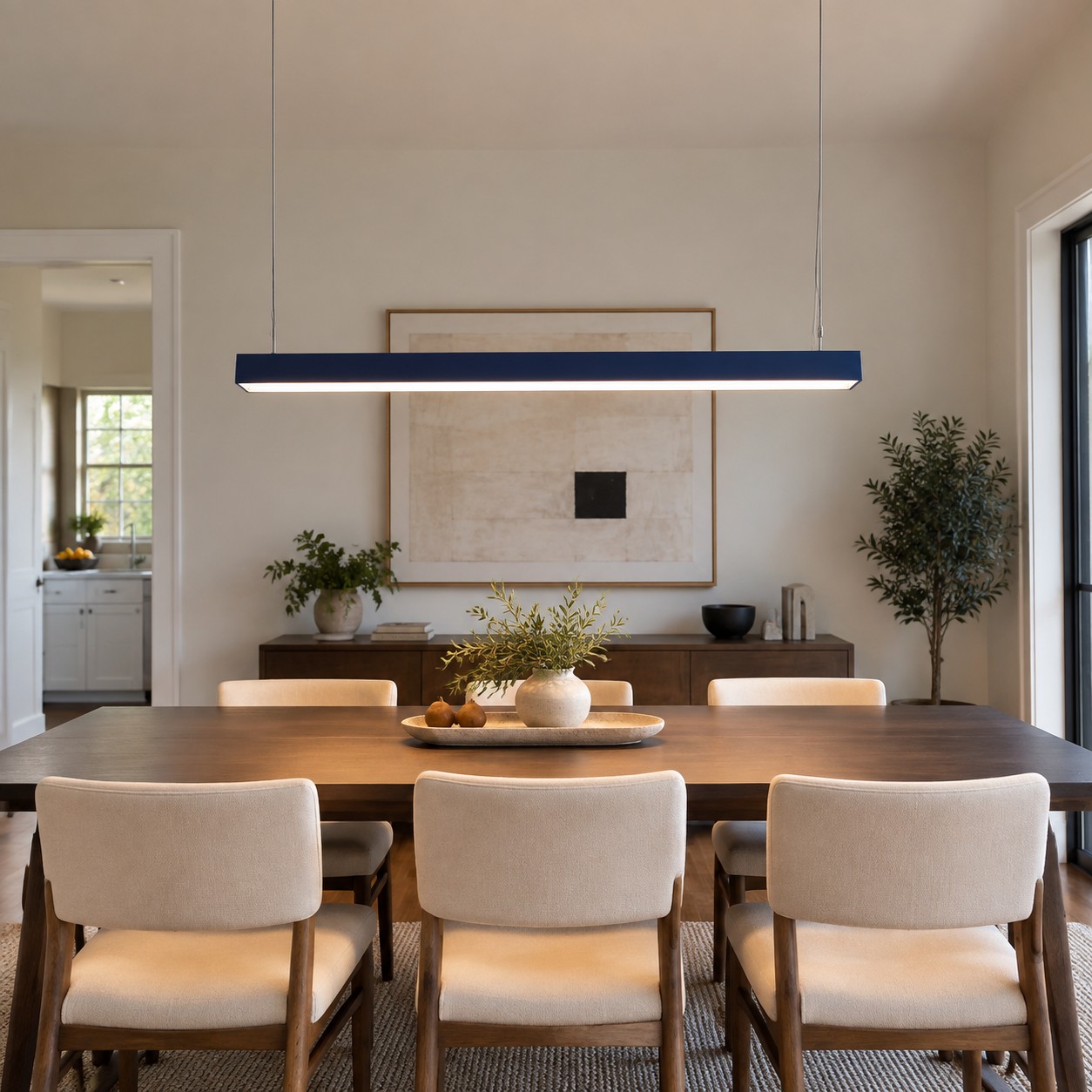
Most dining tables are used across their full length, but many fixtures concentrate attention in a smaller central area. A round shade creates a compact pool. A short centered bar may do the same. At the ends, plates can sit in lower contrast, faces can fall into shadow, and the table may look visually divided even when the fixture is perfectly centered.
Before changing the light, observe the room at dinner. Is the dark end caused by the fixture, a tall centerpiece, reflective surfaces, or the room's surrounding ambient light? Online discussions about dining lighting often jump straight to fixture size, but the useful diagnosis starts with where the shadows actually land.
A Rectangle Repeats the Table's Direction
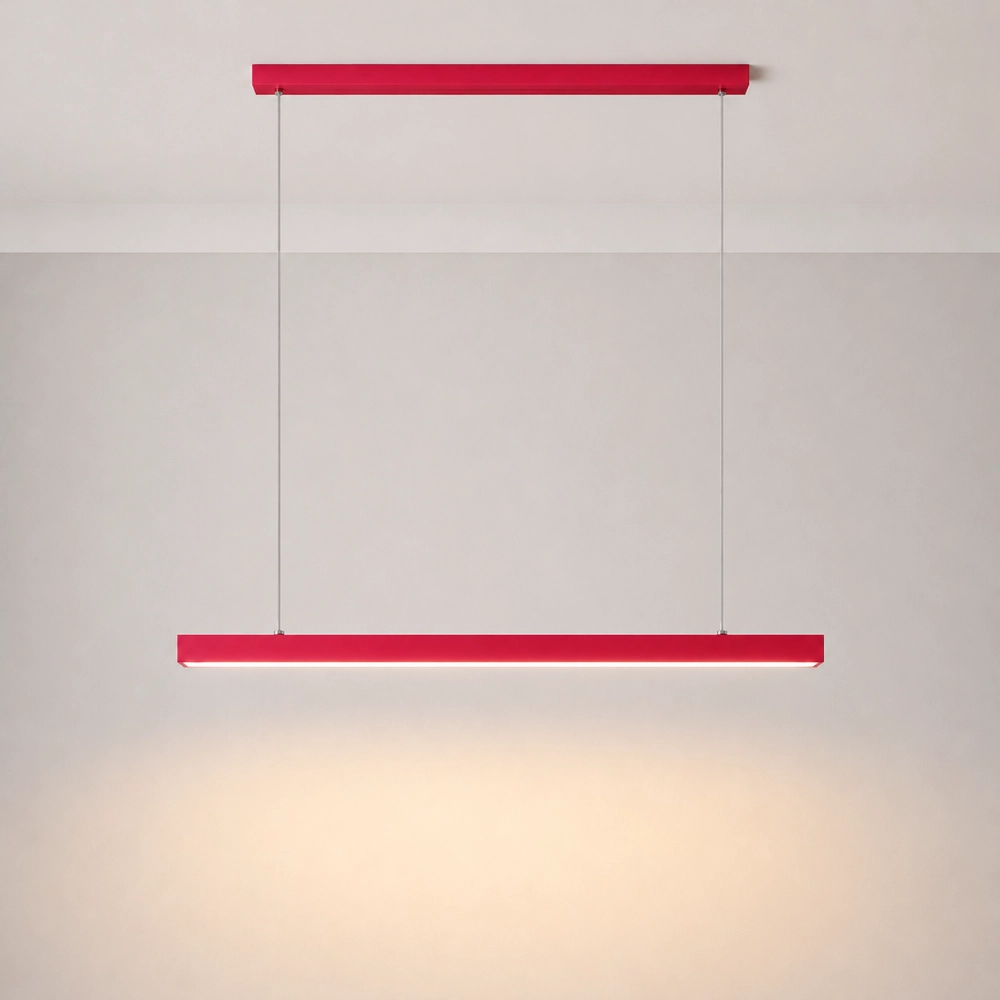
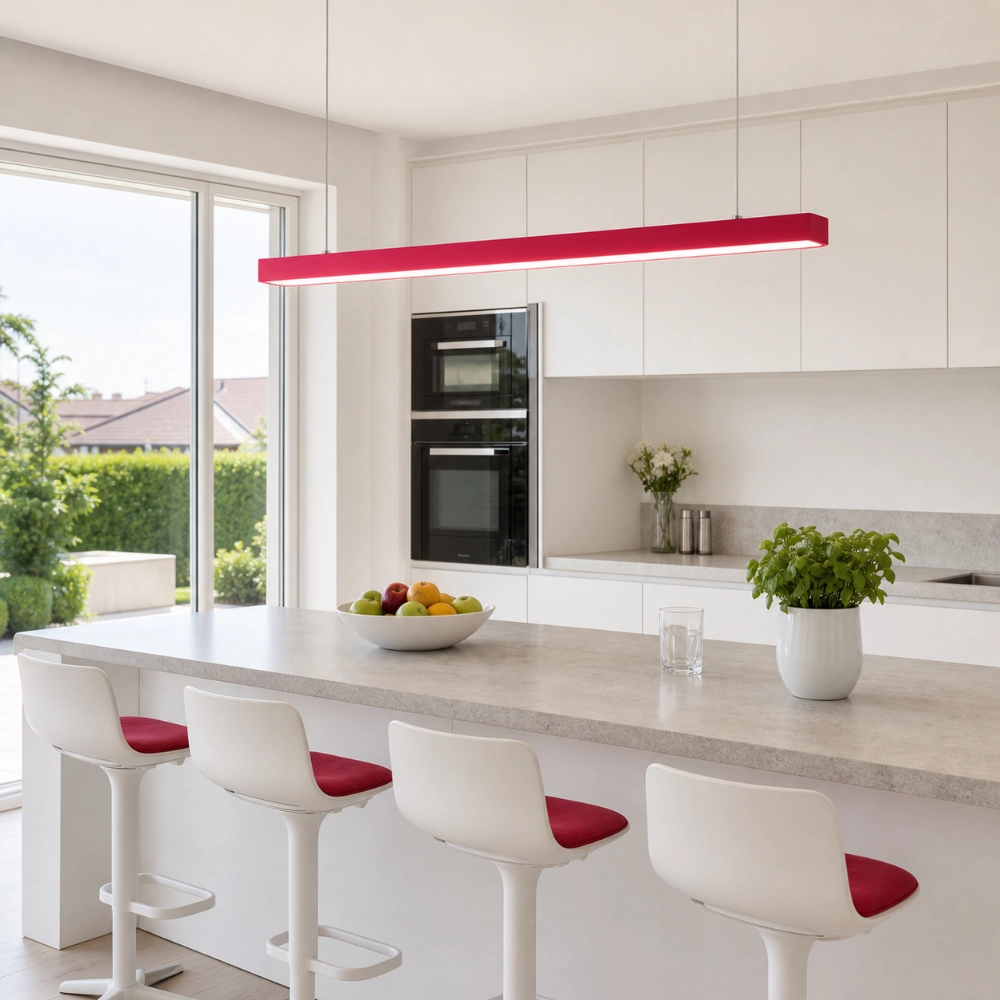
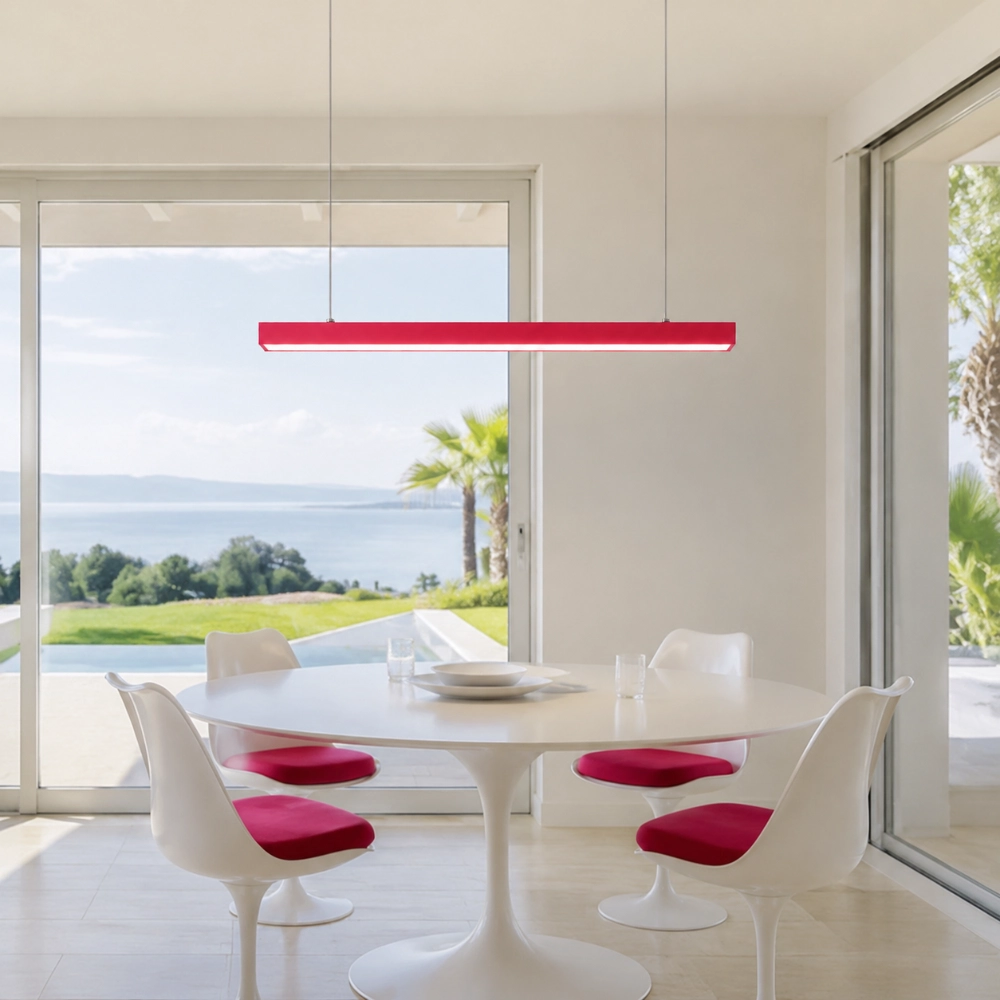
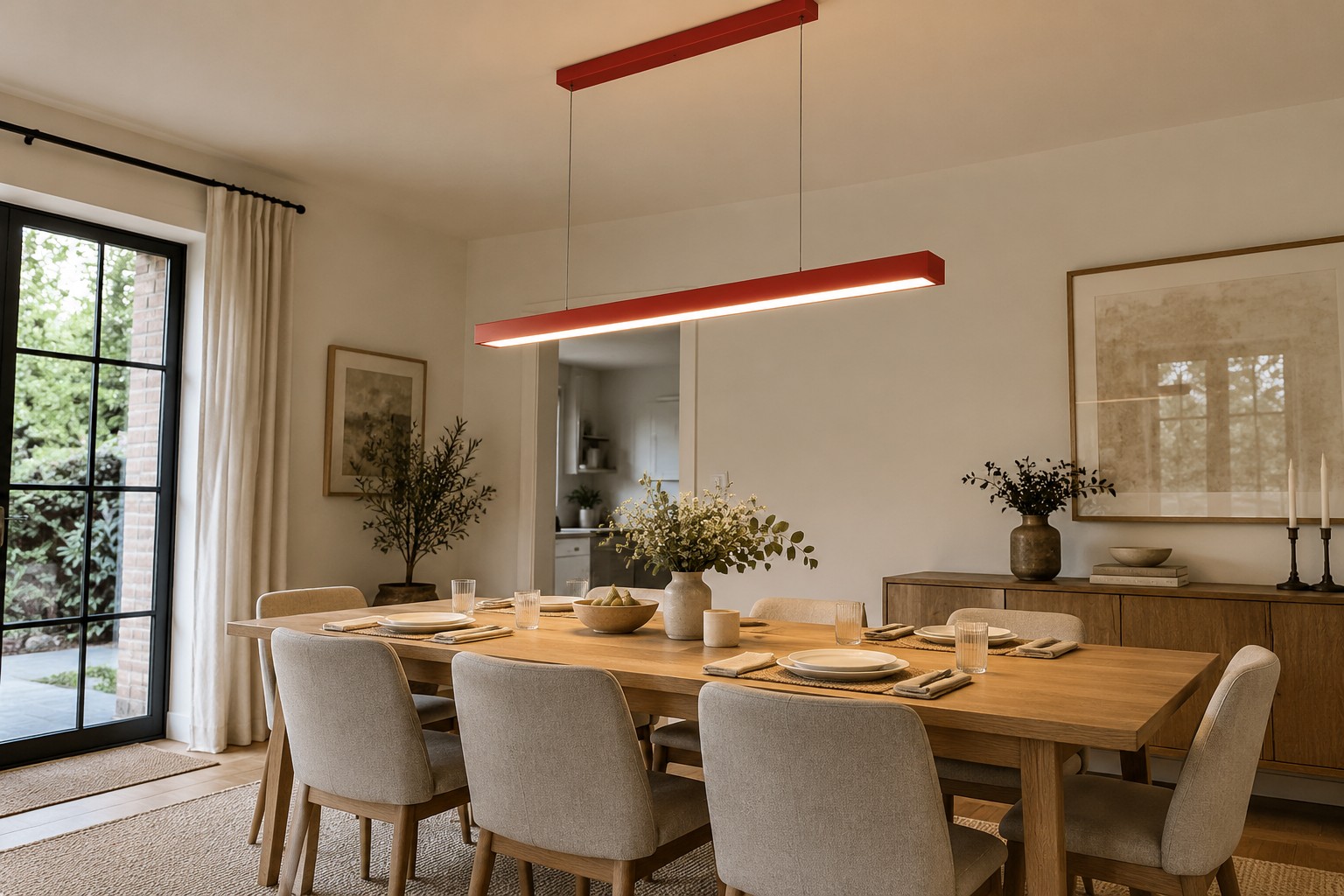
Dining tables already give the room a strong horizontal axis. A rectangular pendant repeats it overhead and makes the furniture feel anchored to the ceiling. That visual alignment can be especially helpful in open plans where the table otherwise floats between kitchen and living areas.
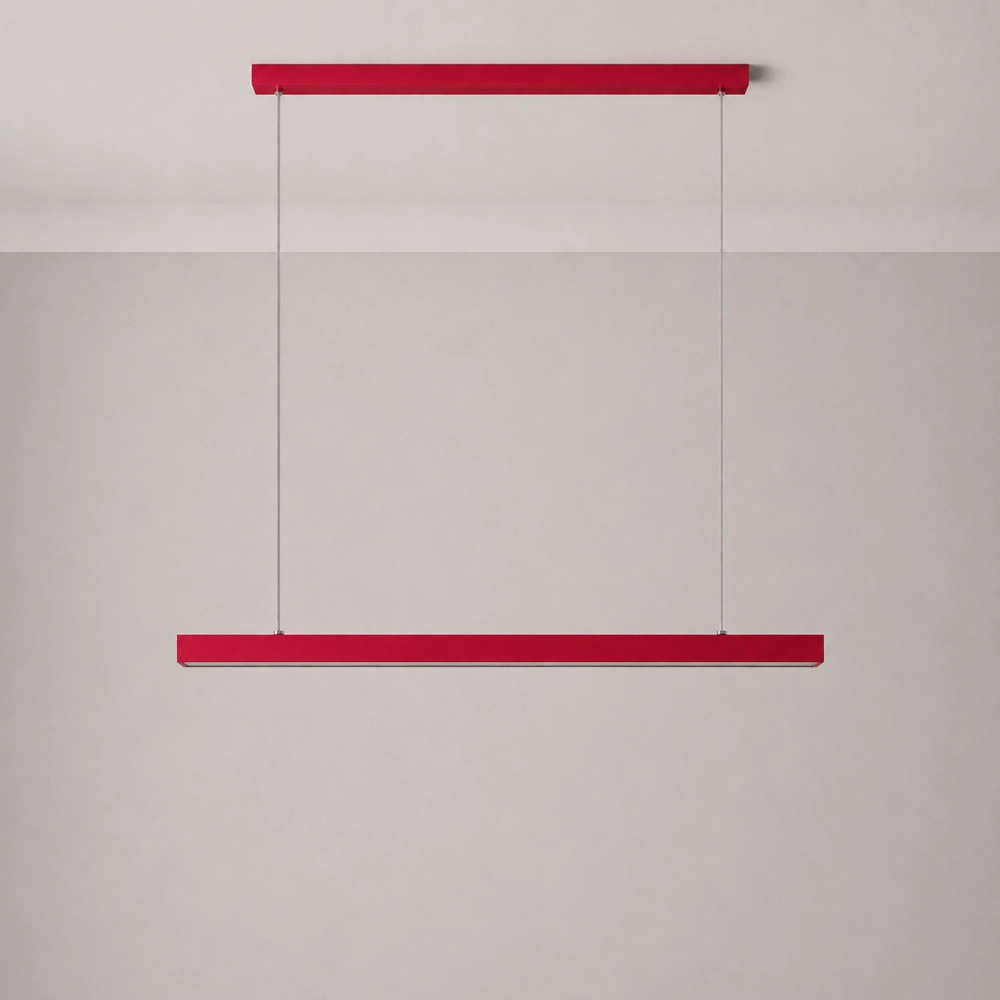
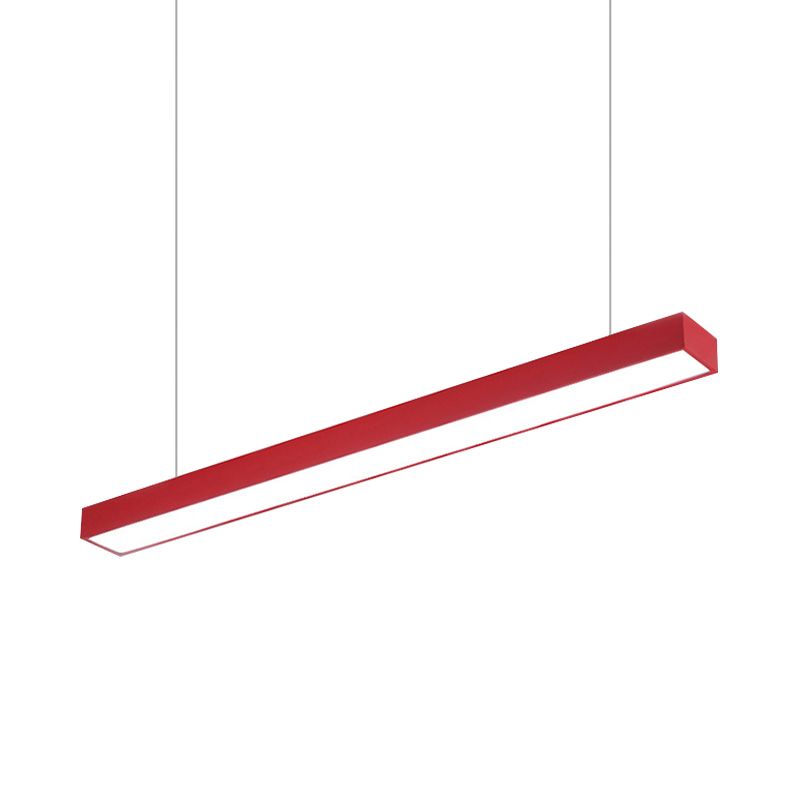
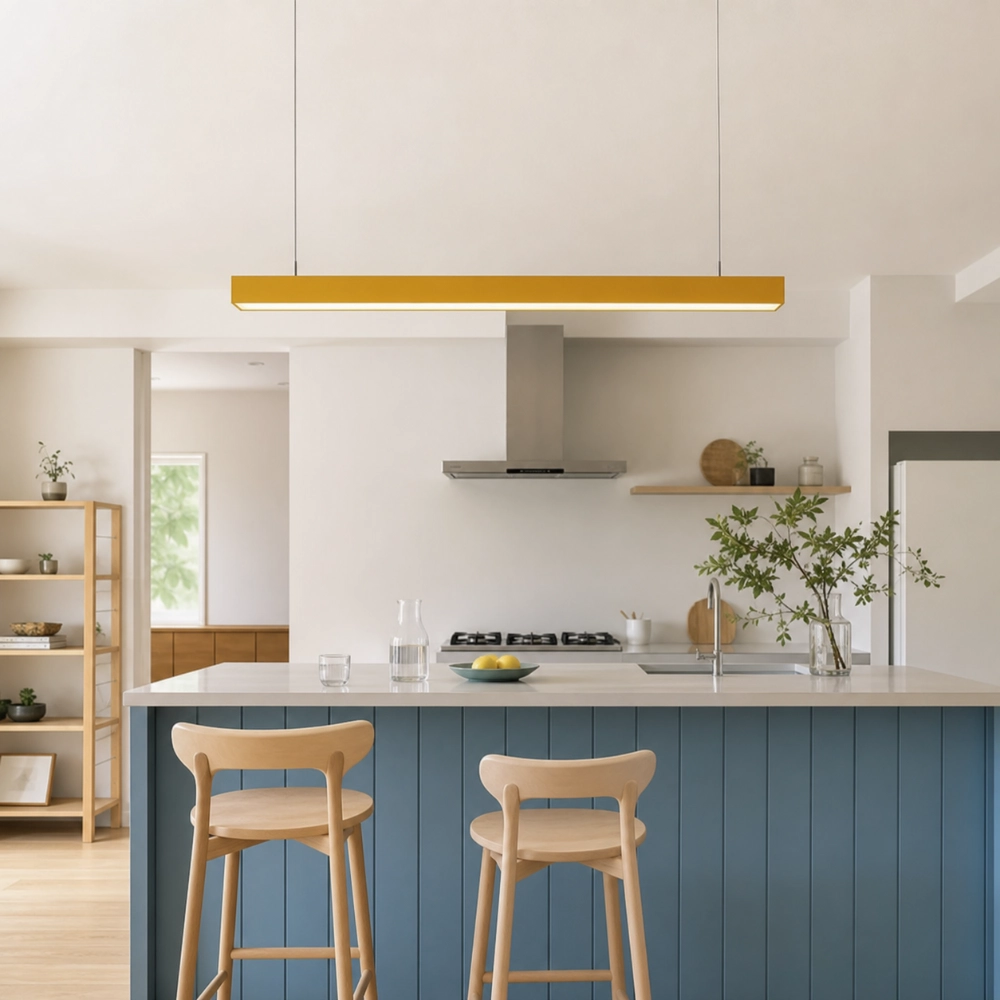
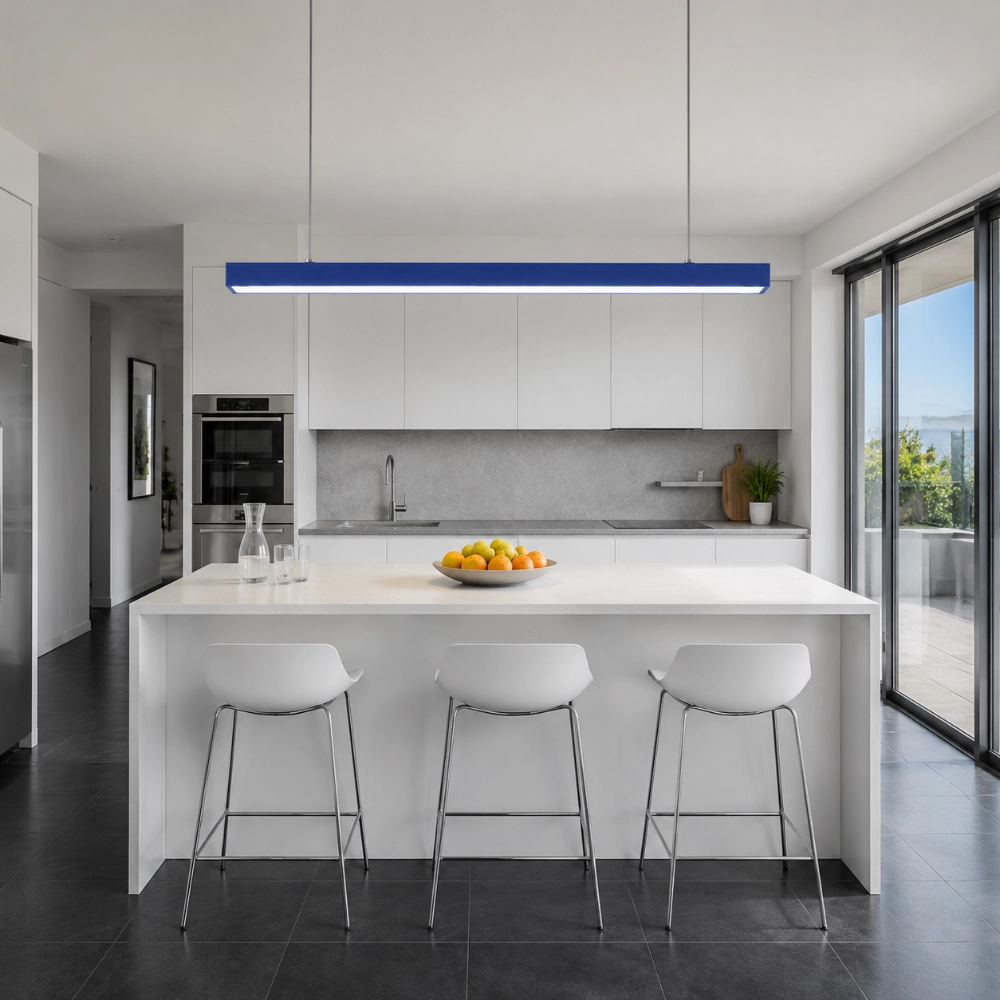
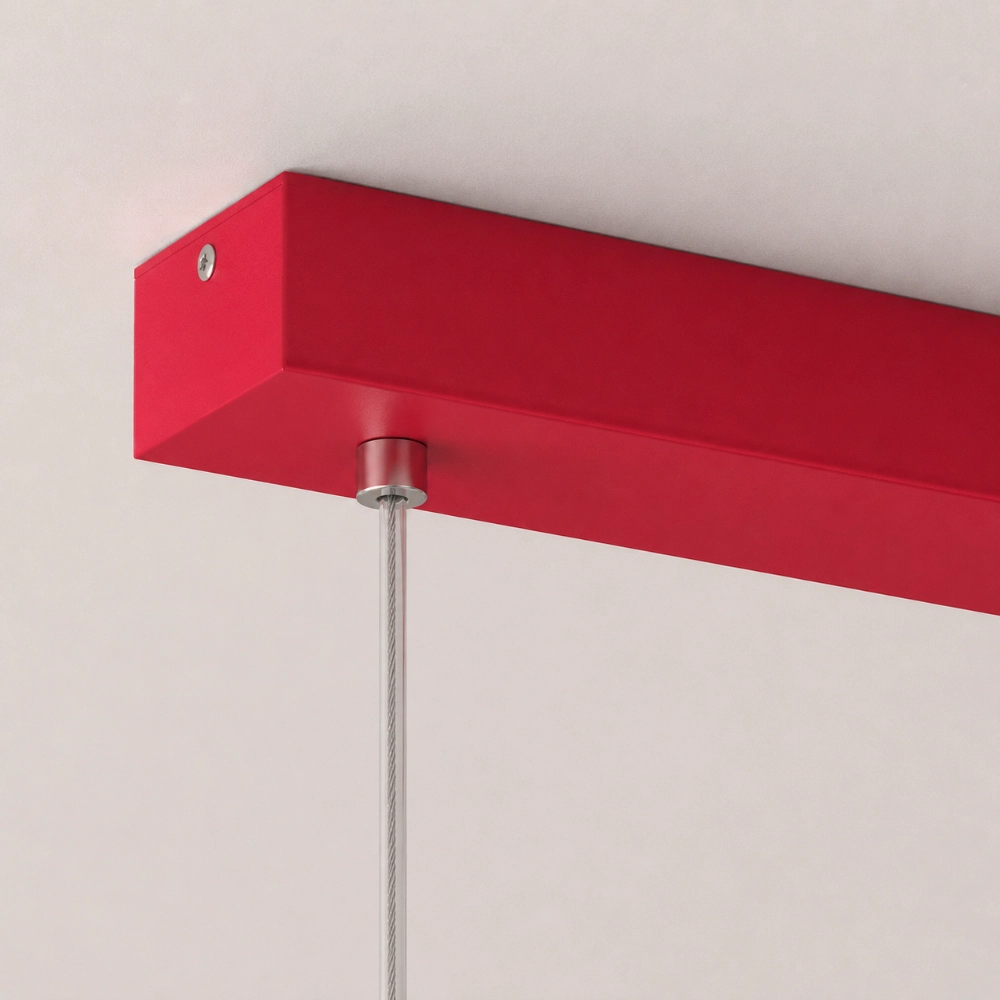
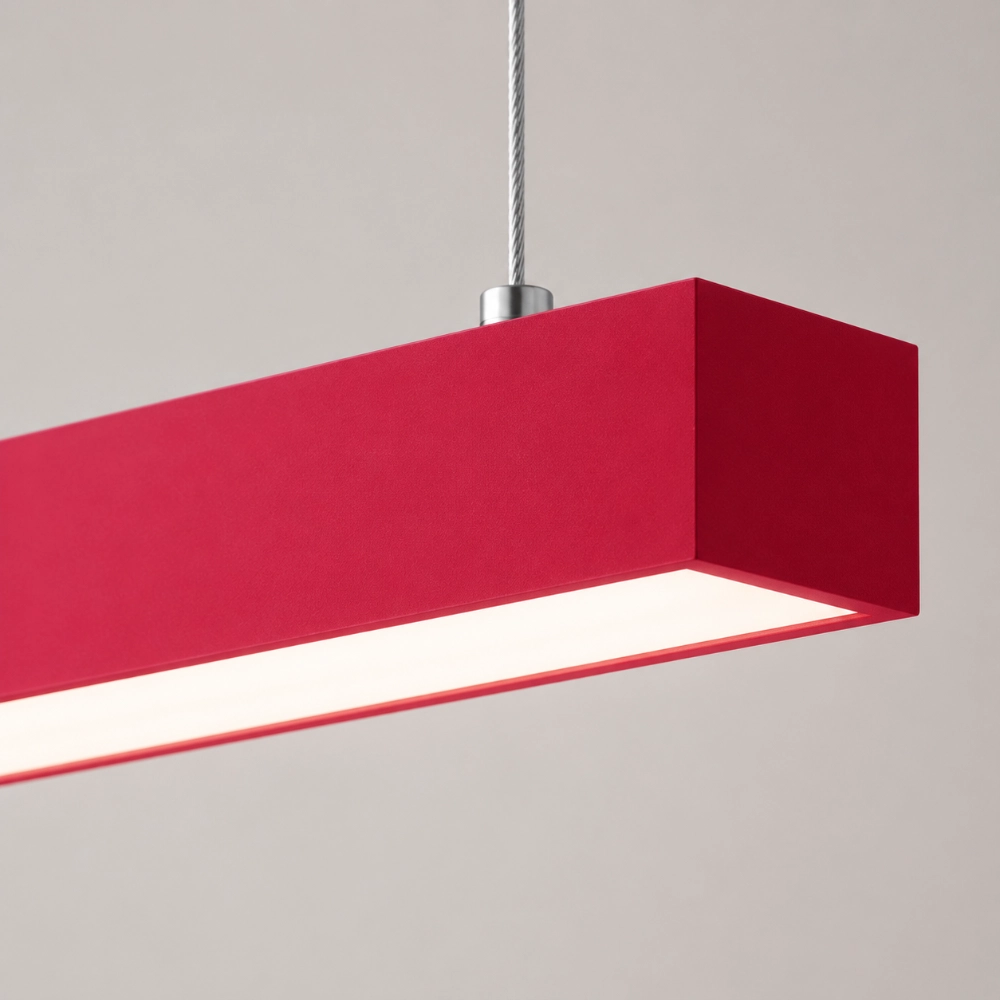
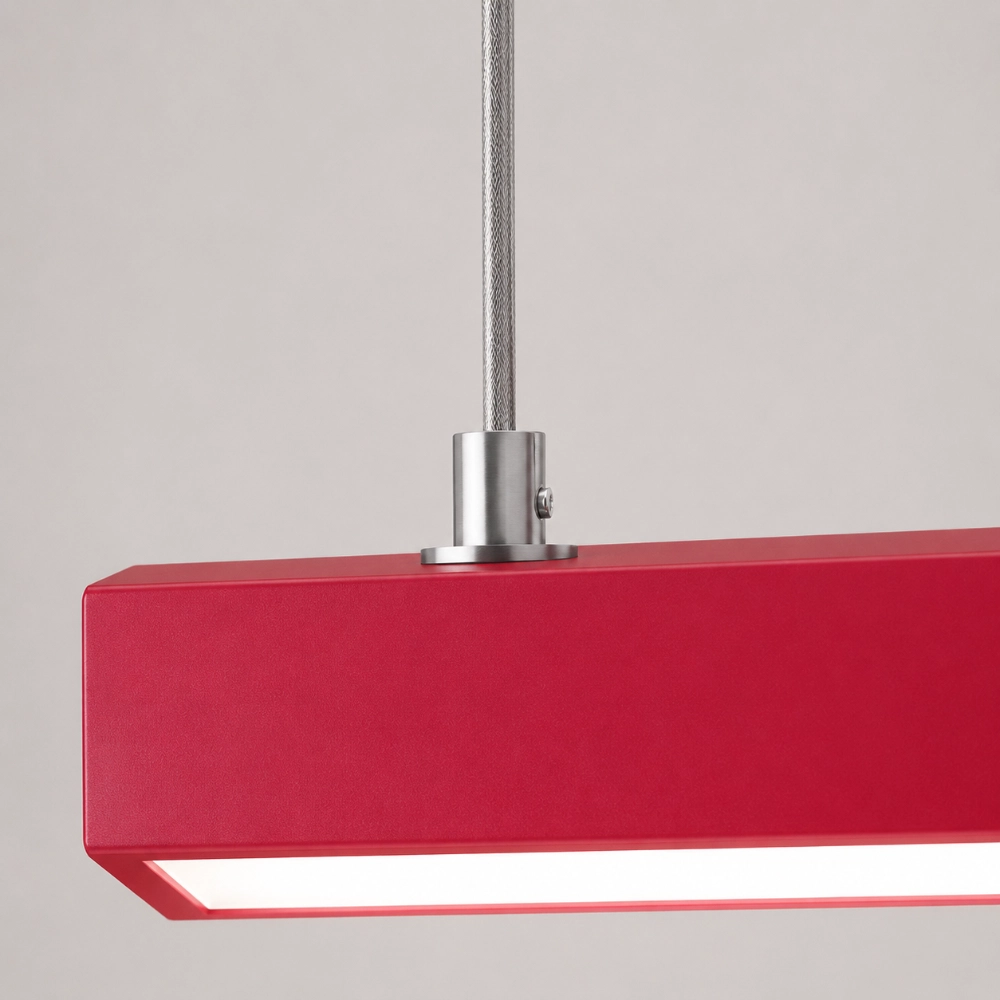
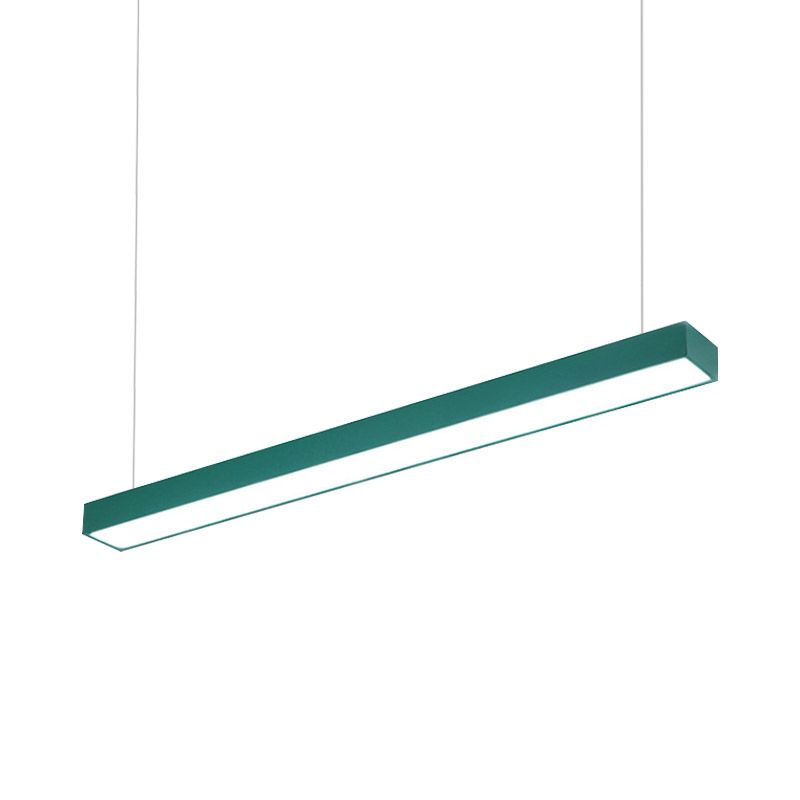
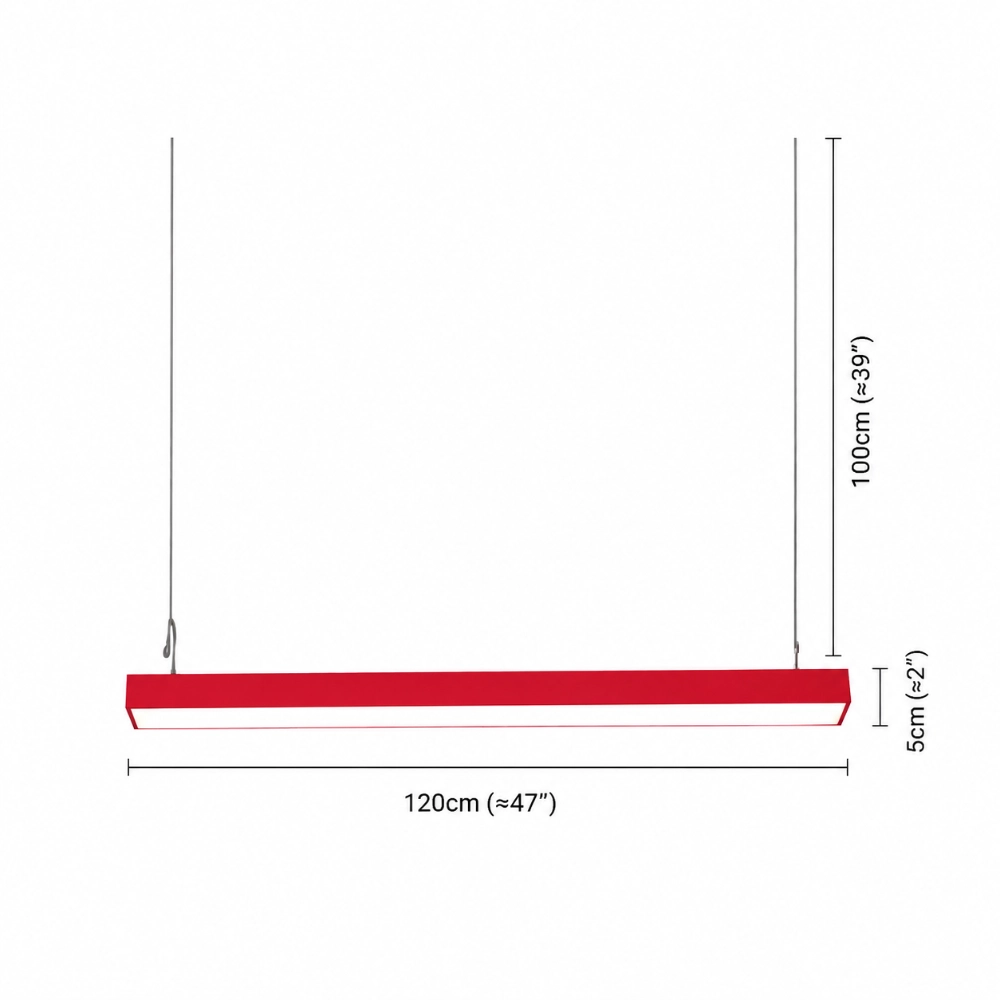
The Edge rectangular pendant uses a straight body and a matching canopy, so the silhouette is easy to read from the room's main approaches. View the Edge rectangular pendant with your table length, chair positions, and sightlines in mind rather than judging it as an isolated object.
Even Coverage Starts With the Occupied Area
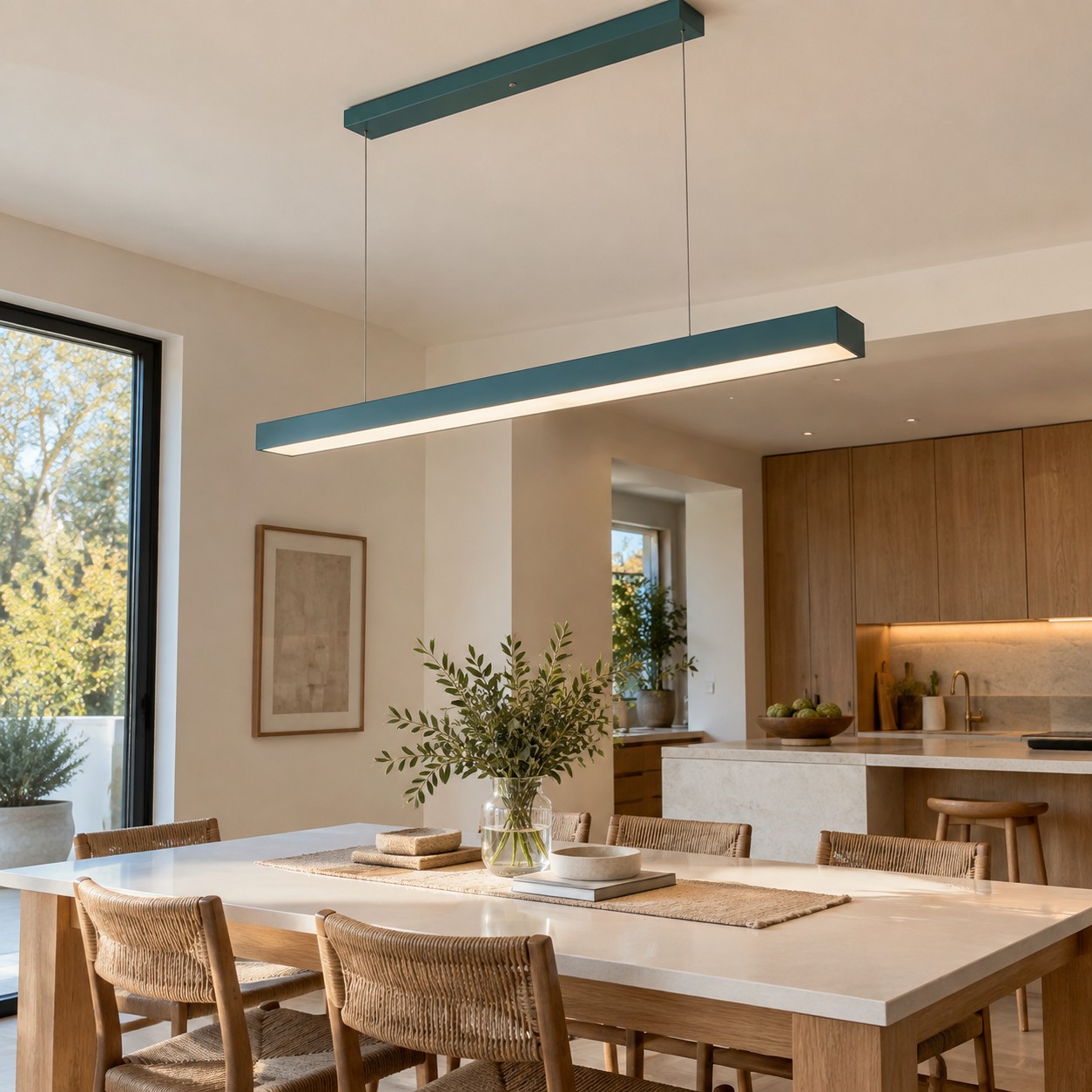
Measure where people actually sit, not only the tabletop's outside edge. A child seat, a serving zone, or an end chair can shift the useful area several inches. Mark those positions with removable tape and compare them with the proposed body length.
Then ask a separate question: does the product provide the distribution your table needs? A longer fixture may improve visual alignment while still leaving a shadow if its underside source is narrow or highly directional. The product page should be checked for output, diffuser, controls, and installation details; do not convert the shape into a promise it has not made.
Height Changes the Conversation
The light needs to sit high enough to preserve eye contact and low enough to connect with the table. A fixture that hangs directly in the sightline can make one end of dinner feel visually blocked. A fixture that disappears into the ceiling may leave the table unanchored.
Use a cardboard body and temporary strings to test the height from every chair. Check the view while seated, standing, serving, and walking past the table. This is where a full-size mock-up beats a generic installation number. Your ceiling height, furniture thickness, and room approach are specific to your home.
Color Can Make the Light Feel More Even
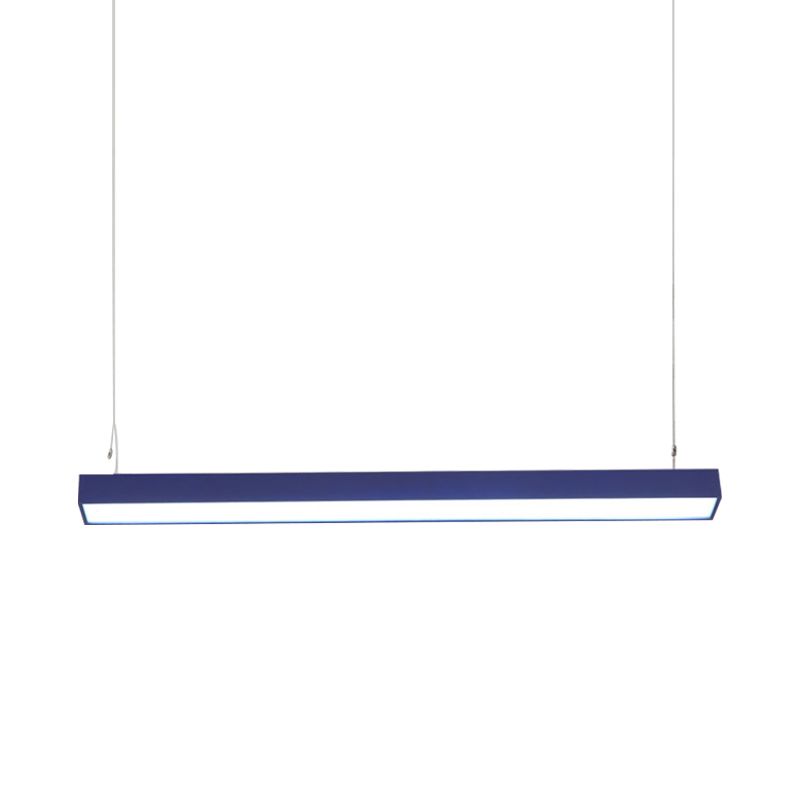
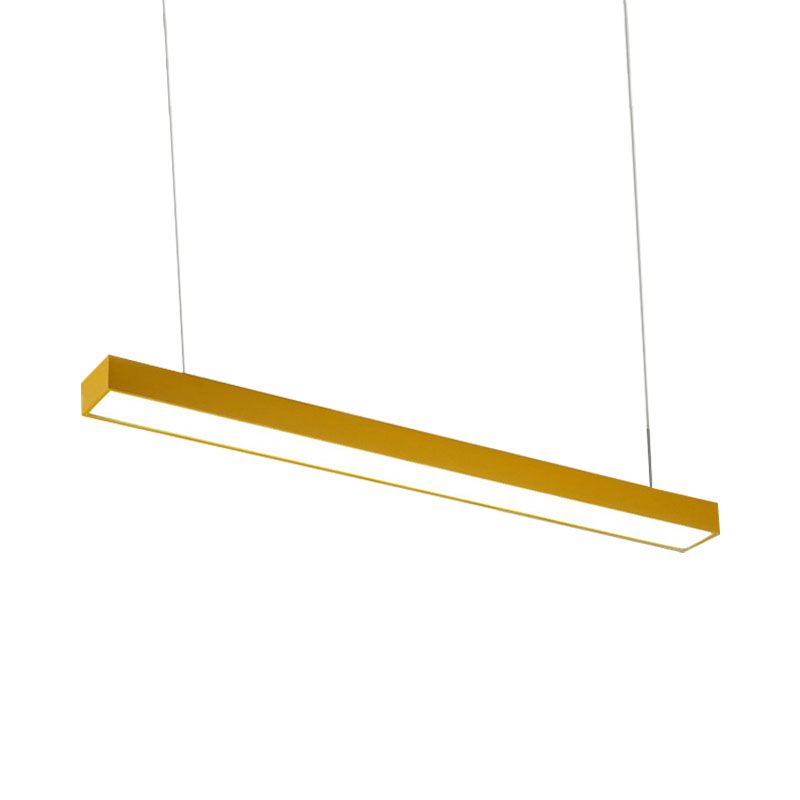
Visual balance is not only about measured illumination. A high-contrast fixture can make the table feel more centered because the eye reads the whole line at once. A softer finish can blend into the ceiling and leave the room feeling quieter. Neither is automatically correct.
Test the finish beside the table, floor, wall, and upholstery in daylight and after dark. If you want a stronger focal point without adding more objects, Elara colorful tiered metal pendant offers a more layered alternative. If the table already has expressive materials, the simpler Edge line may be the better editor.
Do Not Chase a Perfect Ratio
Search results are full of neat rules about fixture length and table length. They can be useful as a starting point, but no ratio can account for a doorway, a beam, a sideboard, or the fact that your table is used asymmetrically on weeknights. Start with proportion, then test the room.
For the broader argument behind choosing one long fixture instead of several small ones, read Why Long Pendant Lights Are Replacing Multiple Small Pendants. It treats the long fixture as a visual editing tool, not merely a larger source.
Compare Alternatives Before You Commit
A rectangular pendant is not the only fix. A longer linear chandelier, a pair of carefully aligned fixtures, or improved surrounding ambient light may suit the room better. Browse the Dining table crescent pendant lamp and the Modern ribbed pendant light as product-page comparisons, then return to the table rather than choosing from the thumbnail alone.
Ask which option gives the room one readable center, keeps faces comfortable, and leaves enough clearance for serving. For a smaller utility-space application of color and clearance, read Laundry Room Lighting Ideas: How a Colorful Pendant Makes Chores Feel Less Dull. A visually elegant fixture that creates glare or blocks a view is not an improvement.
Let Dinner Be the Final Test
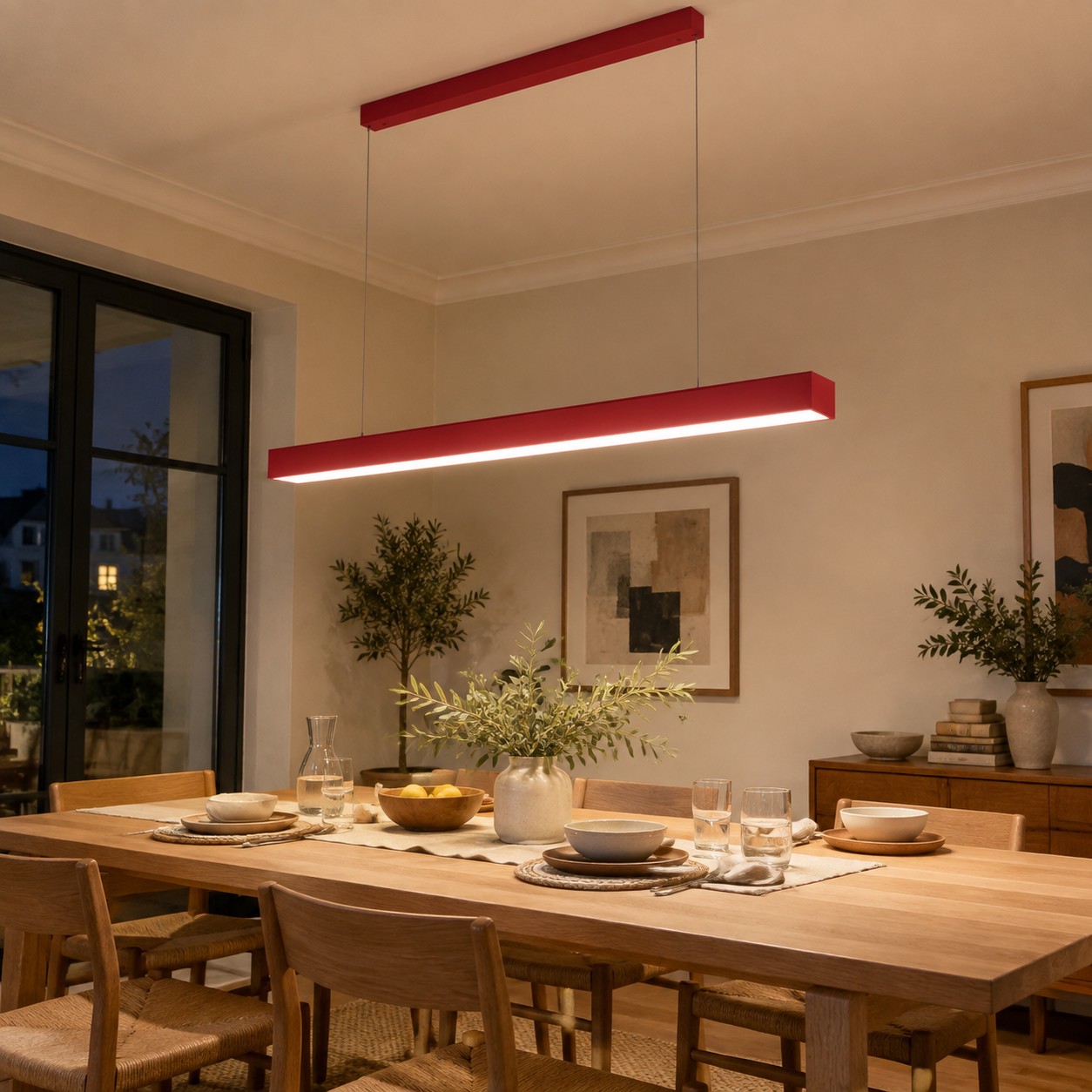
Set the table as you normally would, including plates, glasses, serving bowls, and the centerpiece you actually use. Turn on the proposed fixture at its evening setting. Sit in every chair and photograph the table from the doorway and the kitchen. Look for dark ends, harsh reflections, blocked faces, and a line that feels disconnected from the furniture.
If the table looks calmer and more evenly held, the rectangular form is doing useful work. If the ends remain dark, investigate the source and distribution rather than simply buying a longer body. The best dining table lighting improves the meal, not just the photograph.
Does a rectangular pendant light eliminate dark ends?
It can improve alignment and coverage, but the result depends on the source, diffuser, height, table use, and surrounding light.
Should the pendant match the table shape exactly?
No. It should relate to the occupied area and preserve comfortable sightlines.
How do I test the size?
Make a full-size cardboard outline, mark the suspension points, and live with it through a normal dinner.