
Long Pendant Lights: Why One Long Fixture Is Replacing Multiple Small Pendants
There is a moment in a kitchen renovation when the ceiling starts looking like a row of punctuation marks. One small pendant over the island, another, another, and suddenly the room has more visual stops than the sentence can carry. That is why long pendant lights are showing up in more open-plan homes: one continuous line can do the work of several small fixtures while making the room feel calmer.
This is not a universal rule. Multiple pendants still make sense when a surface is broken into separate work zones or when the architecture needs a rhythm of individual shapes. But for a long island, dining table, or studio desk, a single linear fixture often answers the practical question and the visual one at the same time.
The Real Problem With Several Small Pendants
Small pendants are easy to buy because each one feels manageable. The trouble begins after installation. Each canopy needs alignment, each cord creates another vertical line, and each shade becomes a separate object competing with cabinets, shelves, beams, and views. On a long island, tiny shifts in spacing are surprisingly visible. The eye reads the group as a pattern, so the pattern has to be very good.
Homeowners on design forums often describe the same frustration in less technical language: the ceiling feels busy, the pendants look crooked from the hallway, or the kitchen starts to resemble a showroom. A long pendant reduces those decisions to one axis. That does not make installation effortless, but it gives the installer one strong reference line instead of a collection of small guesses.
One Line Follows a Long Surface Better
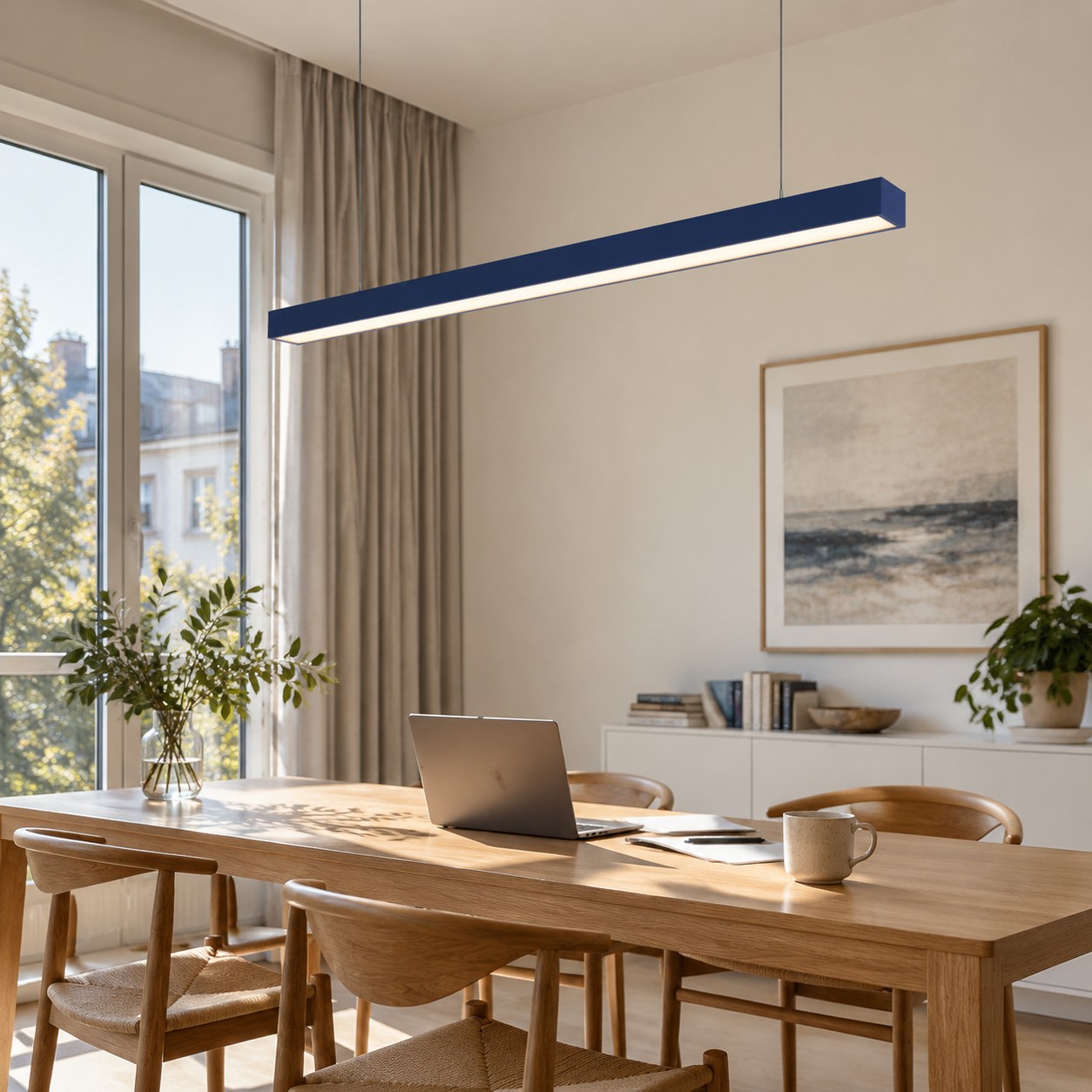
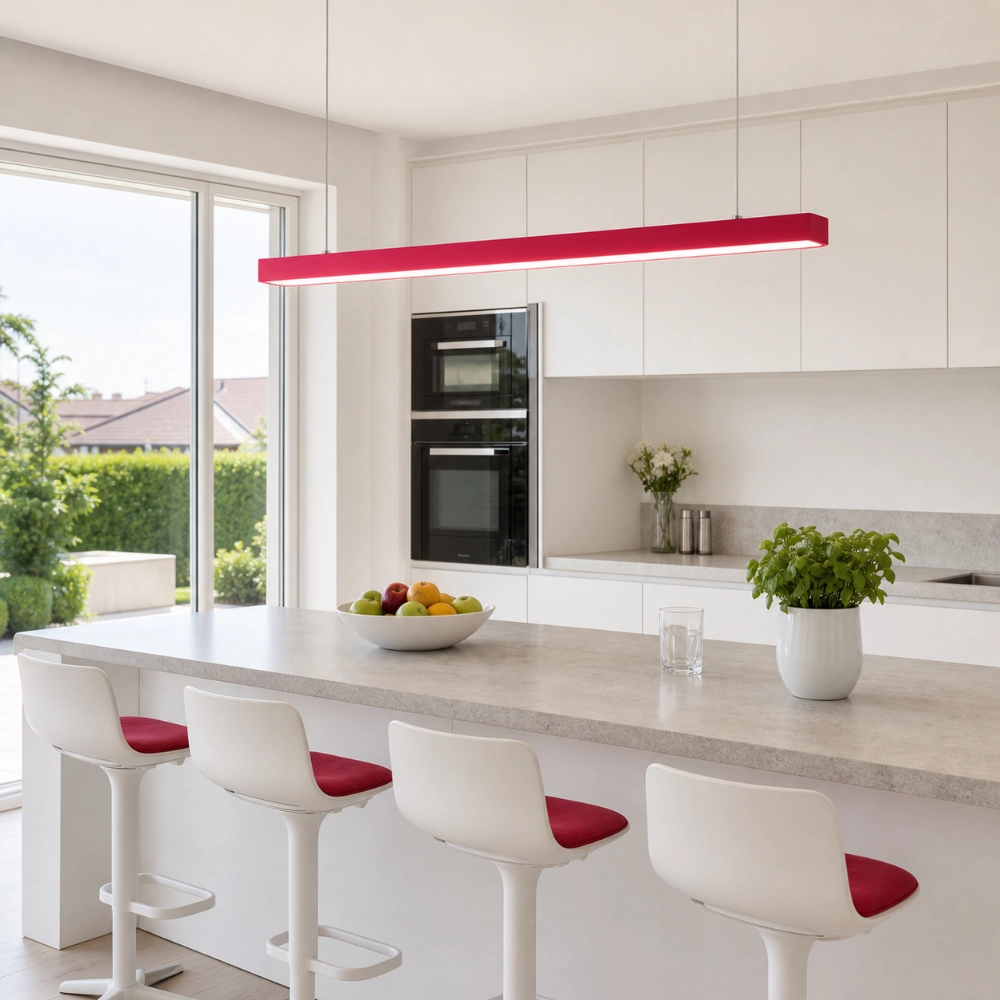
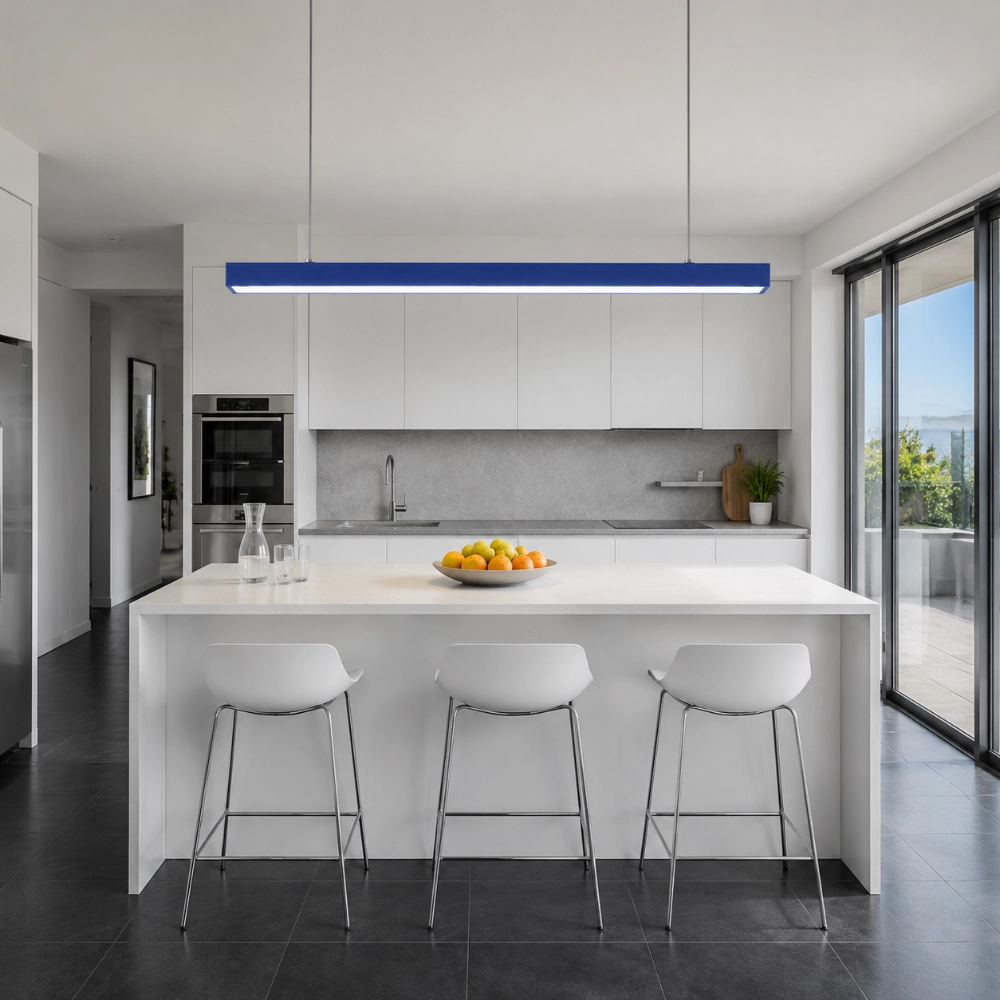
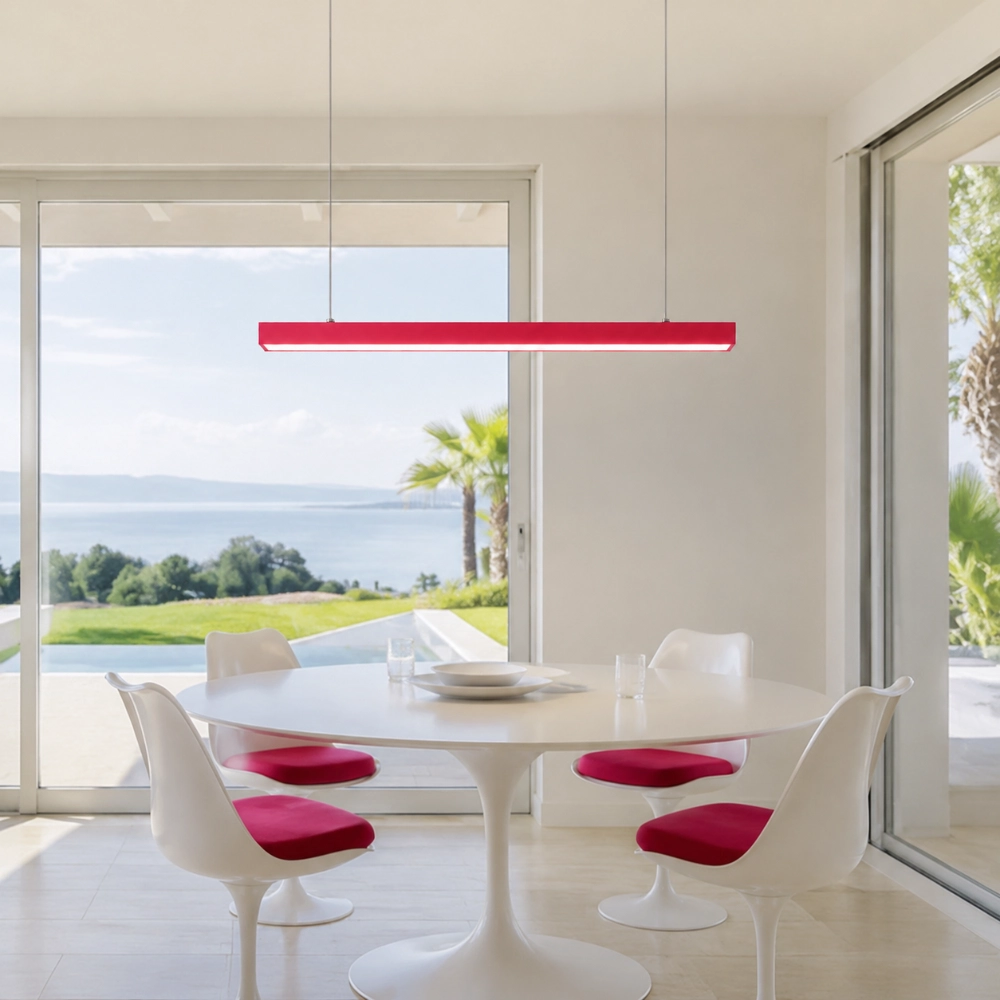
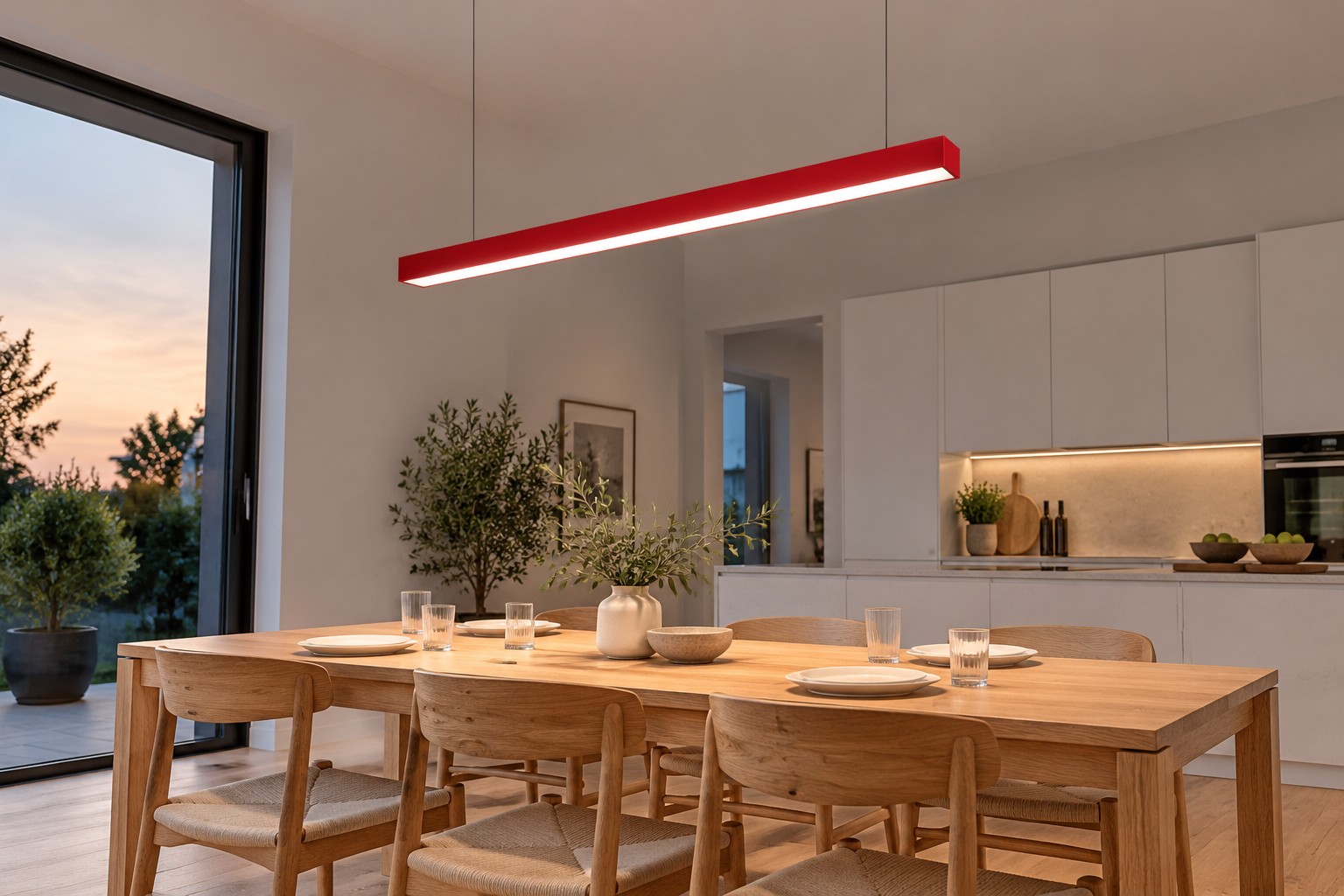
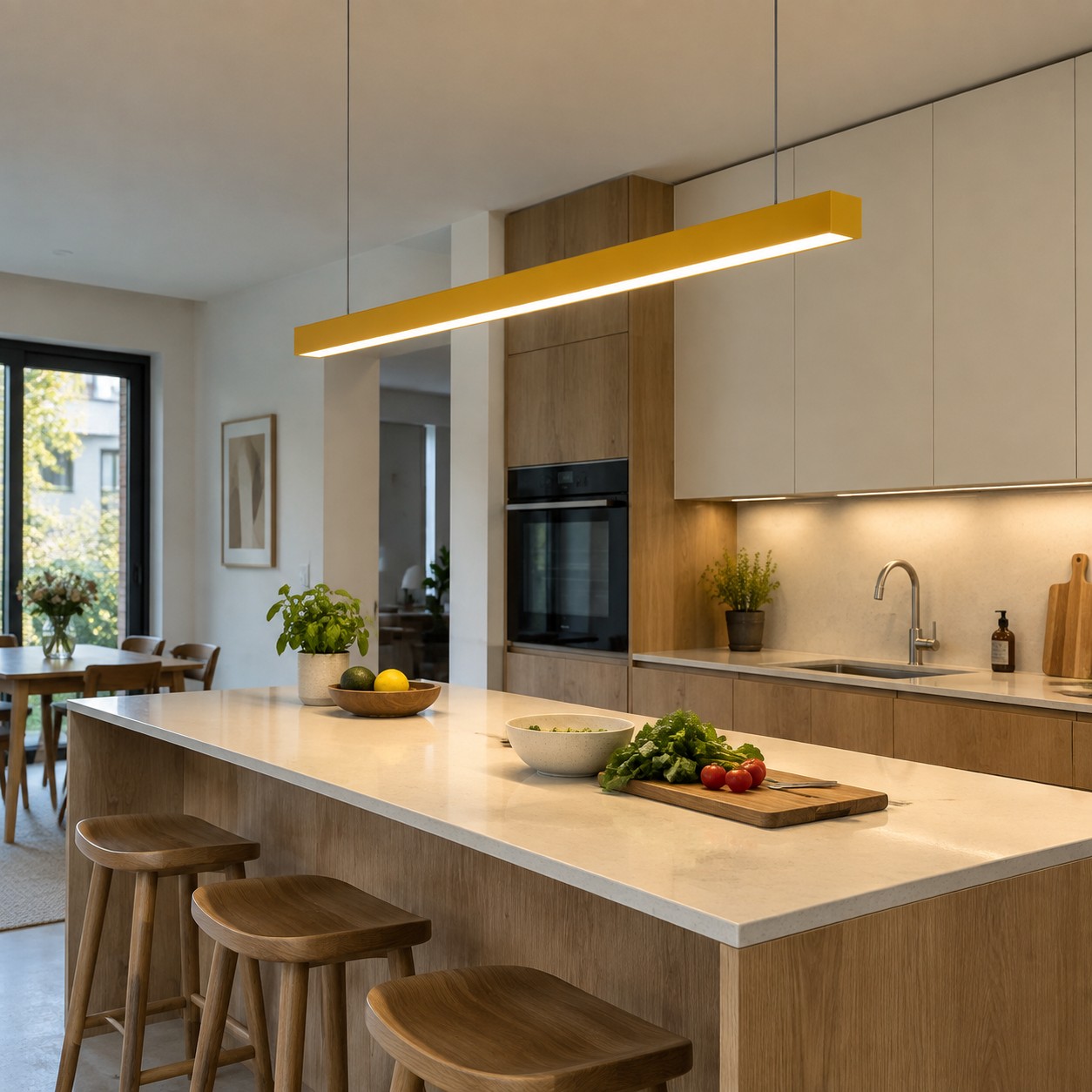
Long fixtures make sense when the furniture below already has a long edge. A rectangular island, six-seat dining table, or shared desk is read as one surface. A continuous body acknowledges that shape and helps the ceiling belong to the furniture. The result can feel more intentional than three identical shades suspended above it.
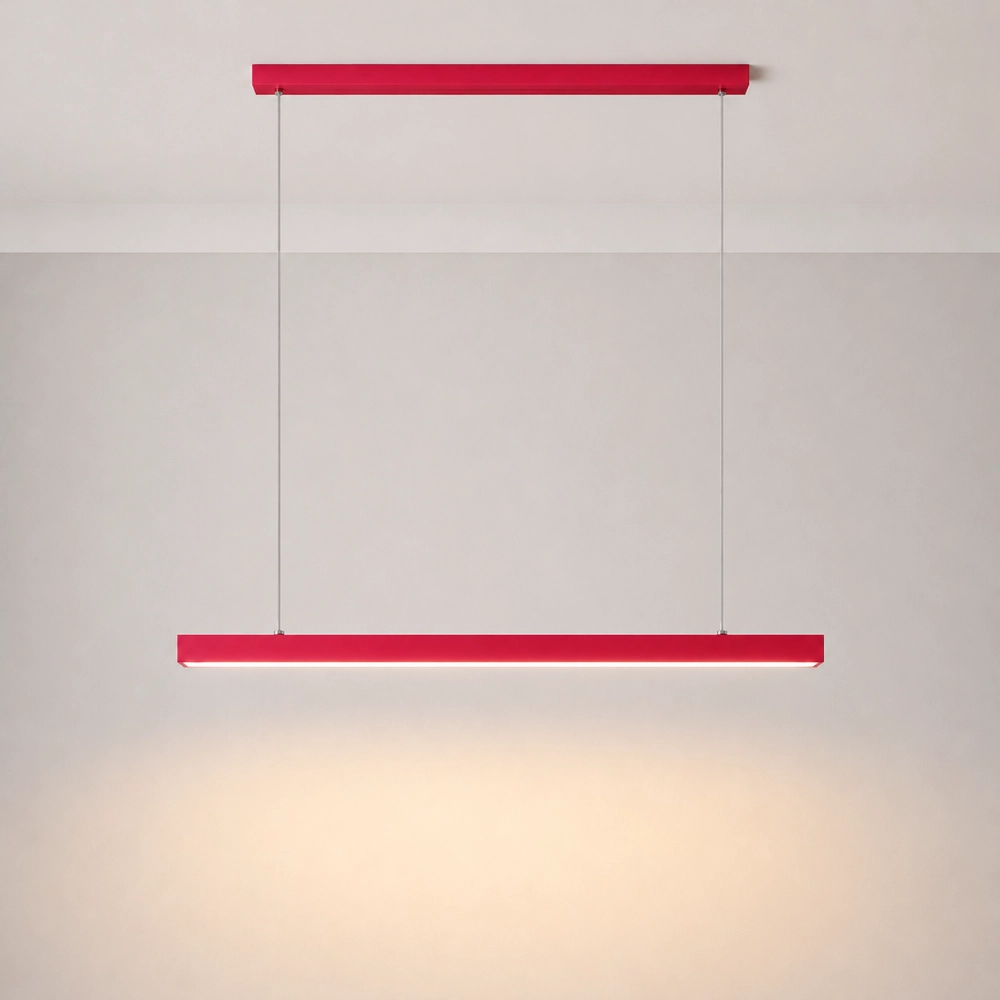
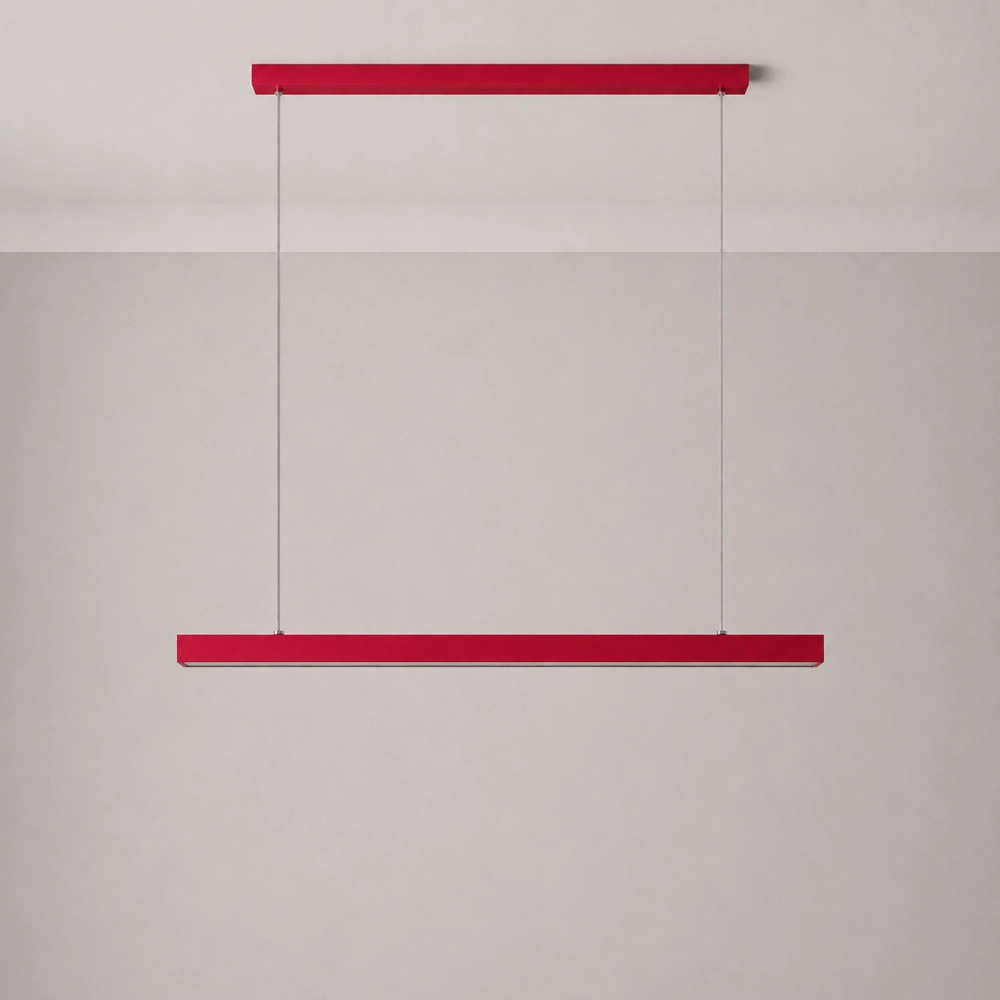
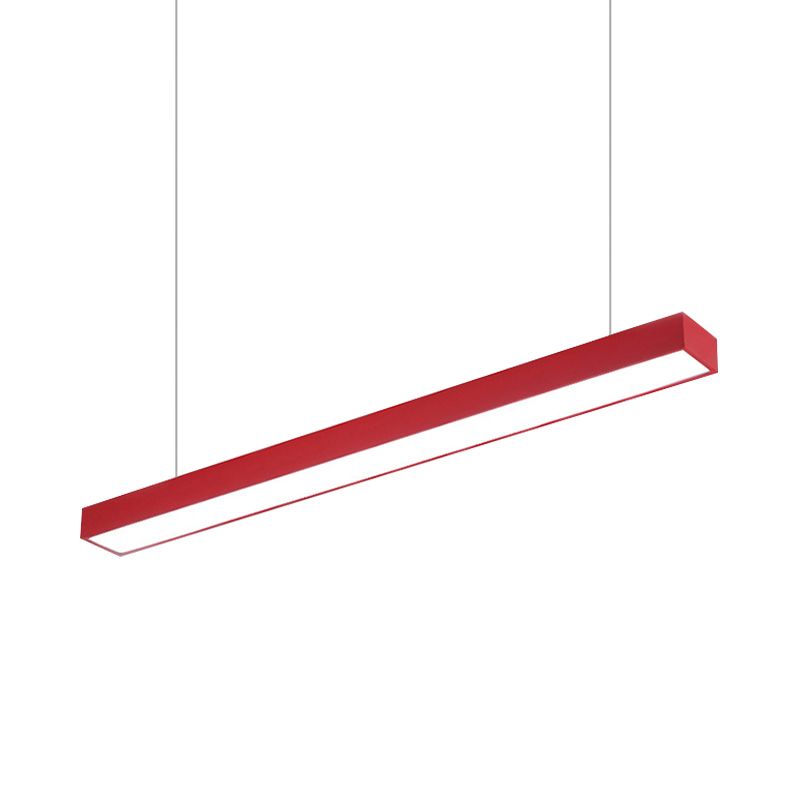
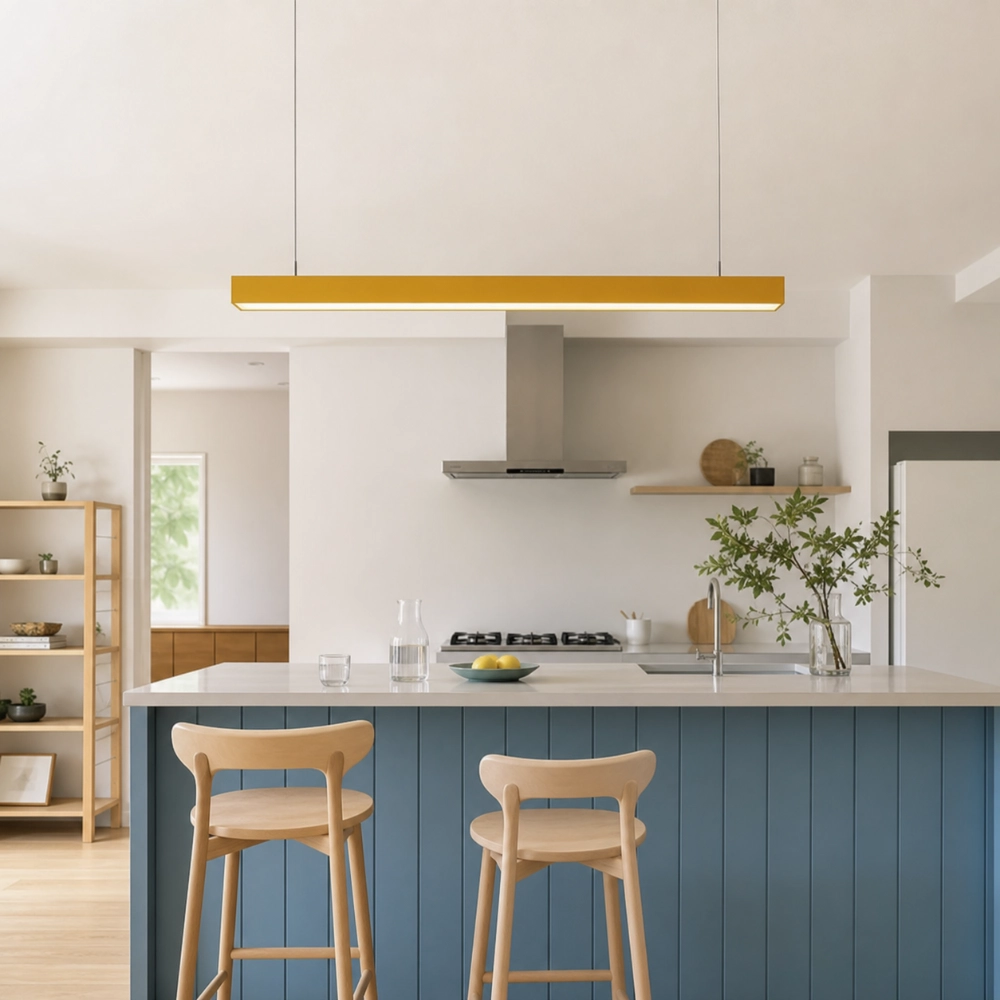
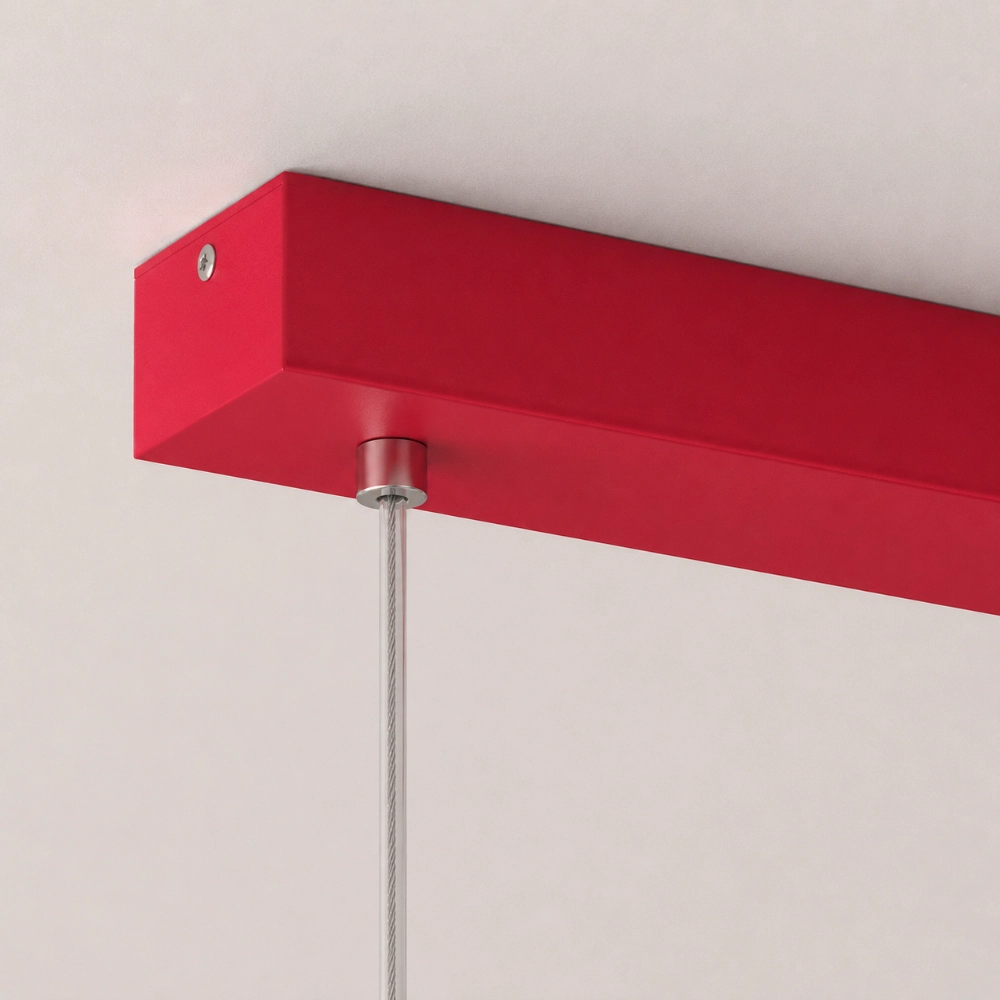
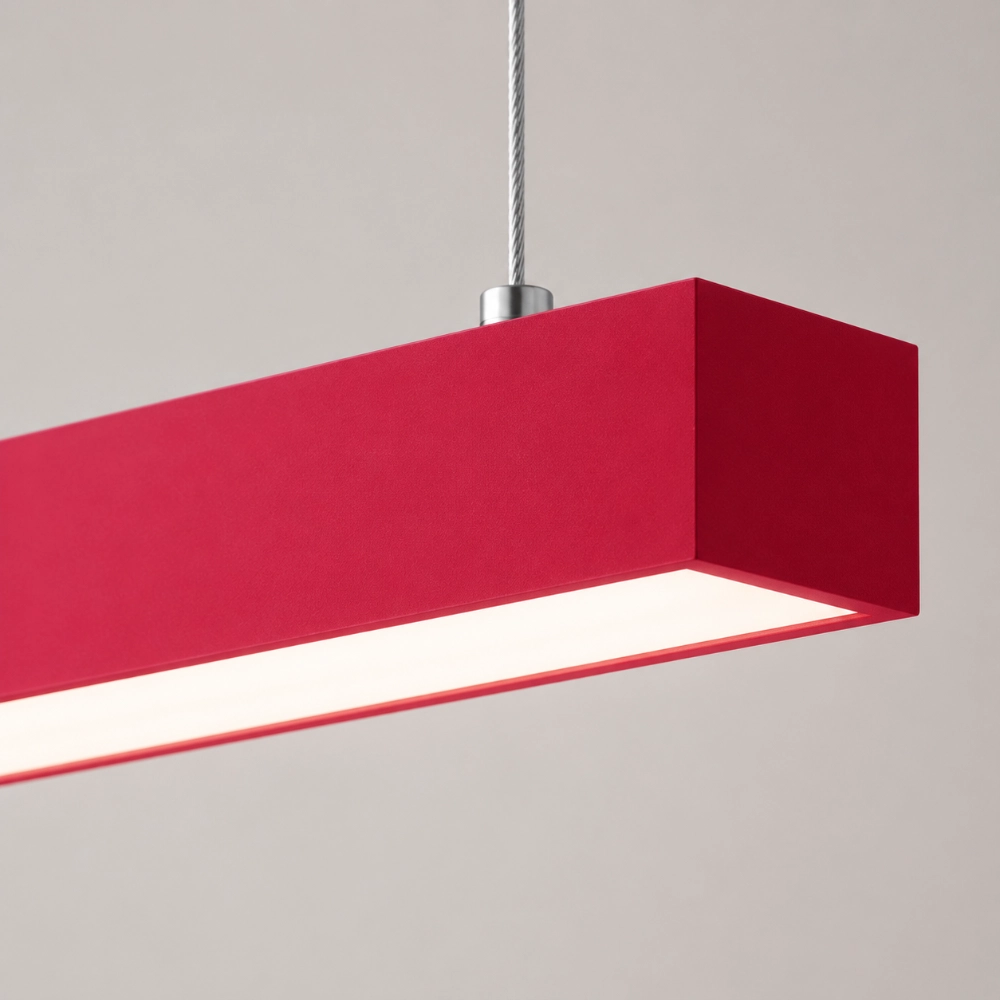
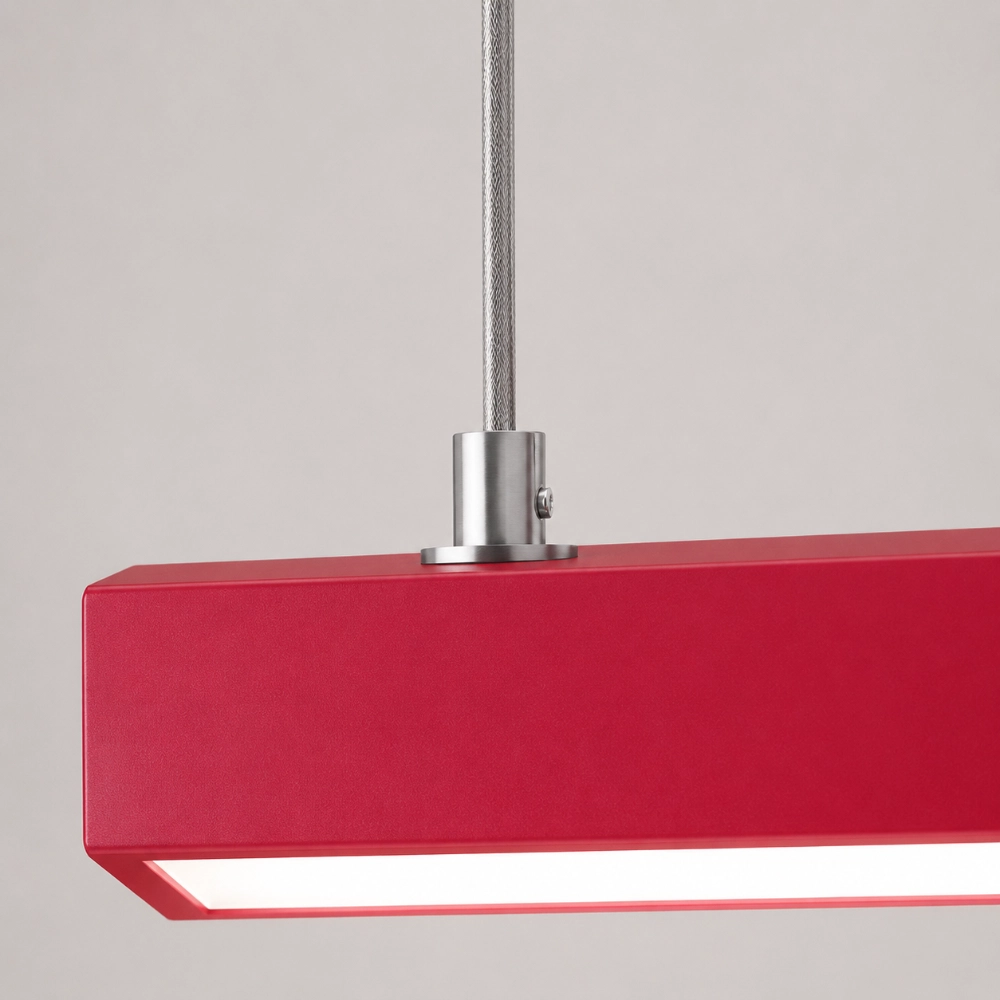
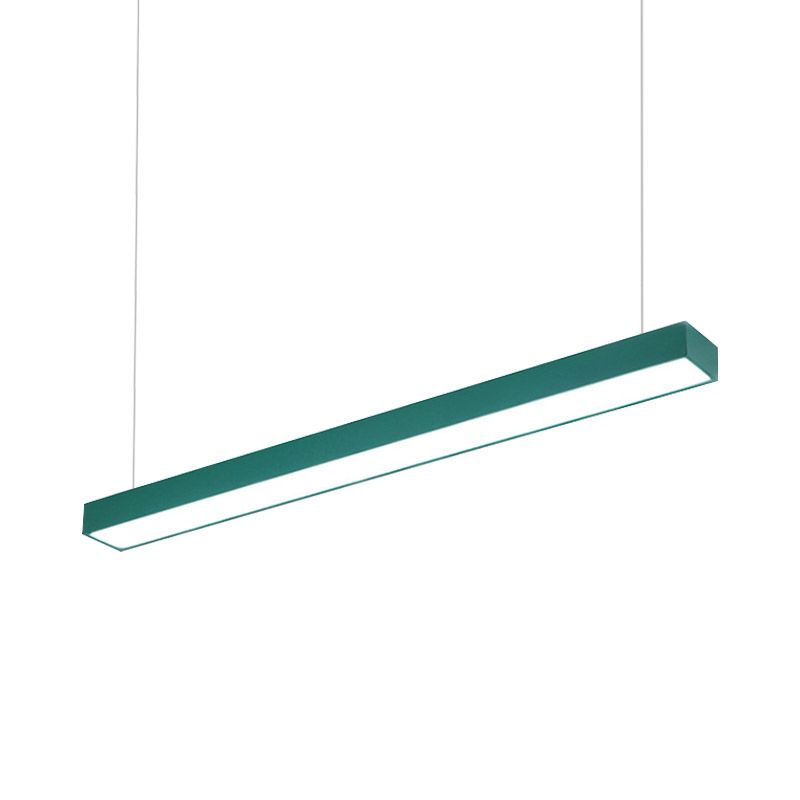
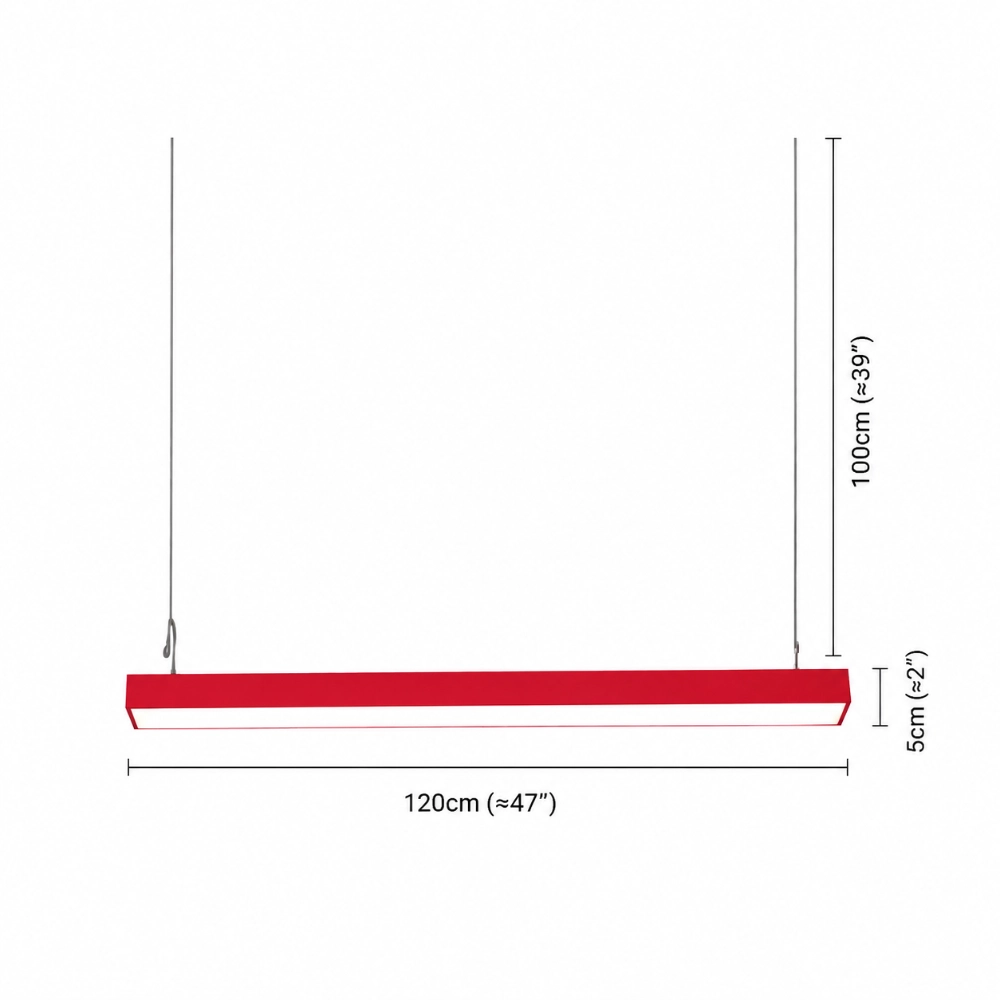
The Edge rectangular pendant is a good example of this visual logic: a straight metal body, a matching rectangular canopy, and two slim suspension points. Its simplicity leaves the line legible from the kitchen, the dining end, and the approach to the room. See the Edge rectangular pendant before deciding whether one continuous bar suits your ceiling.
Coverage Is Not the Same as Length
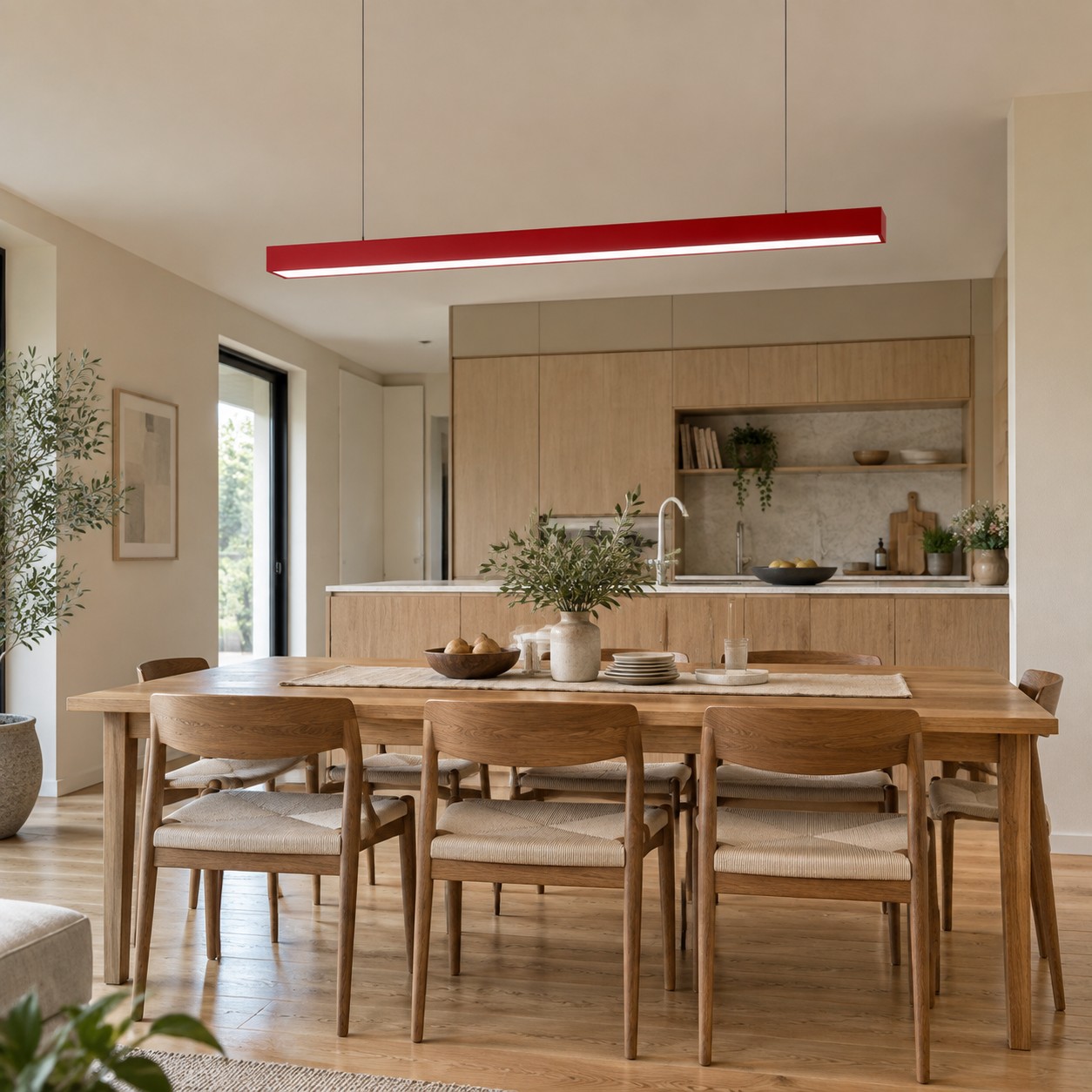
A longer body can help distribute light along a surface, but physical length does not guarantee even illumination. The product page may list an integrated underside source, yet it may not give enough photometric detail to promise a particular lux level at every seat. Treat visual coverage and measured lighting performance as two separate checks.
For a dining table, look for shadows on place settings and faces. For an island, check the prep zone, sink edge, and the spot where people actually stand. If the fixture cannot provide the task light you need, supporting sources may still be necessary. The advantage of the long pendant is that it can organize the room while those quieter sources handle the less visible work.
The Ceiling Looks Quieter Because the Geometry Is Clearer
Several small pendants create a repeated beat. A long pendant creates a single stroke. That difference matters in open plans where the kitchen, dining area, and living room are visible at once. One horizontal line can mark the kitchen zone without adding a cluster of objects to the shared ceiling.
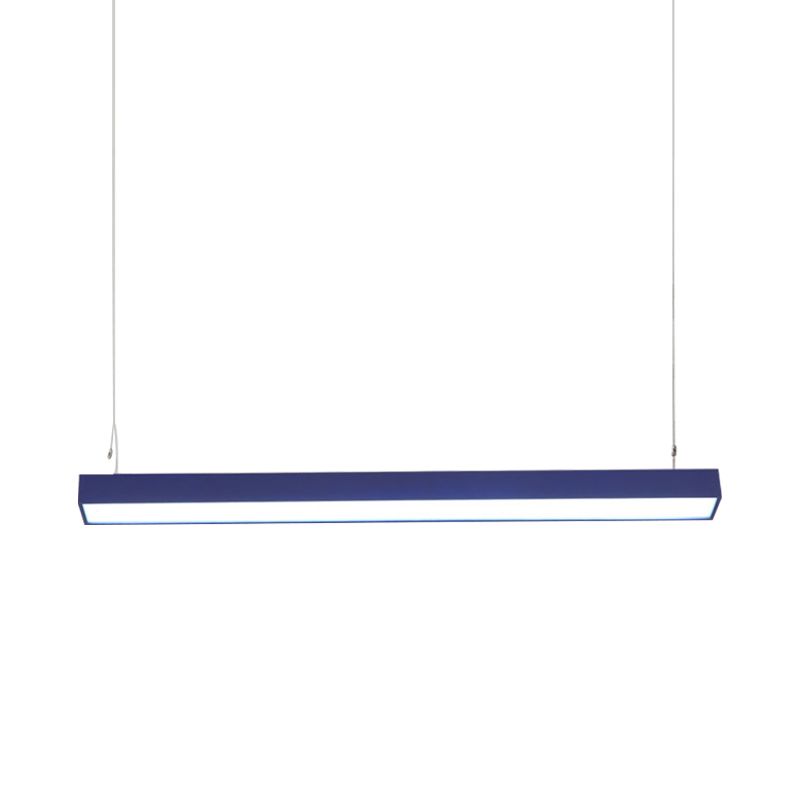
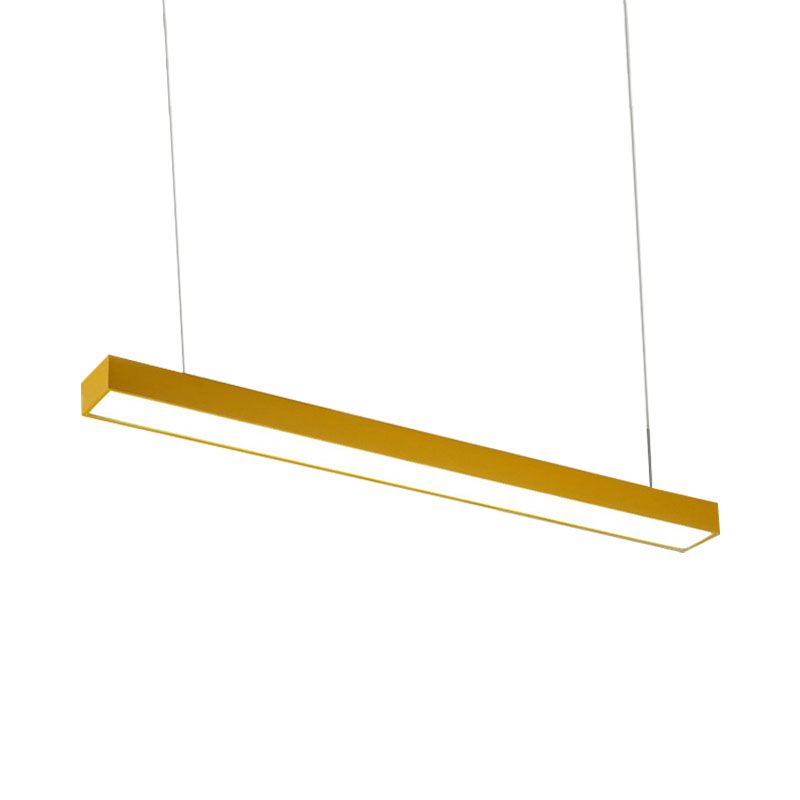
Color can strengthen the effect. A blue bar against warm wood reads as a deliberate accent; a yellow or red body can turn a neutral island into an anchor. Keep the rest of the ceiling quiet so the color has room to work. Elara colorful tiered metal pendant offers a different, more layered direction if a single bar feels too restrained.
When Several Pendants Still Win
Choose separate pendants when the surface is short, the ceiling has multiple structural bays, or the room genuinely needs several pools of light. A breakfast bar may benefit from two compact fixtures because the seating is divided into clear positions. A long, narrow bar can also look awkward if its ends extend beyond the furniture or collide with a beam.
There is a practical reason to keep the smaller fixtures in some homes: replacing one pendant after a renovation is easier than replacing a custom-length bar. Maintenance access, ceiling boxes, and the availability of replacement parts deserve a place in the decision. Design is not only what looks best on installation day.
Measure the Furniture Before You Shop
Do not begin with the product photograph. Measure the occupied surface, including the places where stools pull out and chairs move back. Then mark the proposed fixture on cardboard and tape the canopy position to the ceiling. View it from the hallway, the sink, the sofa, and both ends of the table.
For a practical comparison with another long-fixture approach, read Dining Table Light Feels Uneven? How a Rectangular Pendant Improves Table Lighting. A mock-up exposes problems that a percentage formula misses: blocked sightlines, a bar that feels too timid, or a suspension point that lands over a walkway.
Installation Has Fewer Pieces but Still Needs Care
One fixture does not mean one-minute installation. The canopy must be centered, the suspension points must land where the structure can support them, and the body must hang level along its full length. Confirm ceiling height, junction-box position, cable adjustment, and the manufacturer's installation instructions before ordering.
Also check the room from seated eye level. A pendant that looks beautifully slim while standing may sit directly in a conversation sightline once people are seated. The right height depends on the room, the furniture, and the fixture's visual density. Never use a generic number without testing the actual view.
The Best Reason Is Often Editing
Long pendant lights are replacing multiple small pendants because they let a room make one confident decision. They simplify the ceiling, strengthen the relationship with long furniture, and make color easier to read. They are not automatically brighter, easier, or right for every plan.
Before you commit, compare the bar with the furniture, test the views, and separate visual organization from task-light performance. For a smaller utility-space application, continue with Laundry Room Lighting Ideas: How a Colorful Pendant Makes Chores Feel Less Dull. Then browse the Artisan industrial linear cage chandelier if you need a more open, architectural alternative. The winning fixture is the one that makes the room feel edited rather than merely filled.
Are long pendant lights better than three small pendants?
They can be better for a long continuous surface because one line is easier to align and visually quieter. Several small pendants remain useful for separate zones.
Do long pendant lights give more light?
Not automatically. Check the actual light source, distribution, controls, and performance data.
How do I stop a linear pendant from looking too short?
Mock up its full length over the occupied surface and view it from the room's main approaches.