
Kitchen Island Lighting Is the New Fireplace: Warm Light for Winter Gatherings
A fireplace used to tell you where winter was happening. You faced it without being asked. You talked across it. You stopped pretending the formal room was the point of the house. In a lot of open kitchens now the chimney is a piece of millwork and the island does the social work. Coats land on stools. Someone opens wine next to a cutting board. The gathering forms around a rectangle of stone, not a grate.
If kitchen island lighting is only filling a hole in the ceiling, the room has a dead hearth. Warm light over that surface is what makes a winter night feel hosted instead of temporarily occupied. The job is not to look festive. The job is to keep faces readable and food honest while people refuse to leave the counter.
Winter Gatherings Moved to the Island
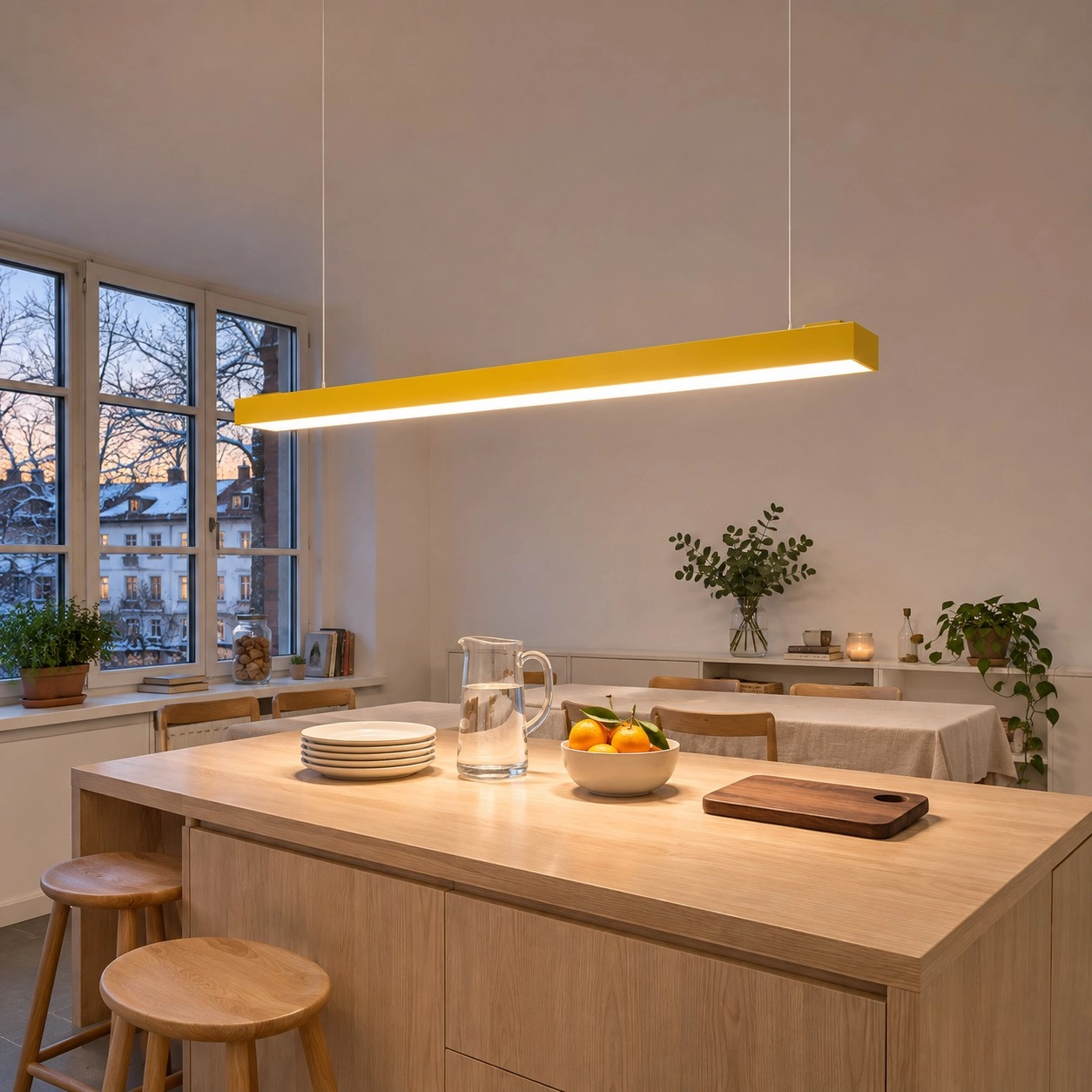
People still photograph the dining table. They still sit there, eventually, when the roast is carved and someone insists. The standing part of the evening happens at the island because hands are busy and nobody has to pick a seat yet. A fireplace gathered people because it was the brightest, warmest object in the room. The island can do that if the light is continuous and close enough to feel like a place, not a corridor with snacks.
That is why winter hosting advice that starts with napkin folds misses the room. The first hour is a buffet that never admits it is a buffet. Trays arrive. Someone cuts citrus. Someone “just puts out cheese.” If you want the lighting to follow the food instead of the seating chart, read Kitchen Island Lighting for Cookie Trays, Cheese Boards, and Accidental Afterparties.
A Fireplace Heats Faces. Island Light Has to Feed Them.
Search results keep asking what type of lighting is best for a kitchen island, as if there were one virtuous answer. For winter gatherings the useful answer is blunt: you need a task field you can cook in and a gathering cue people can stand under. Tiny clustered pendants often give you three puddles and two dark cuts through a board of crackers. A linear bar washes the worktop in one readable strip.
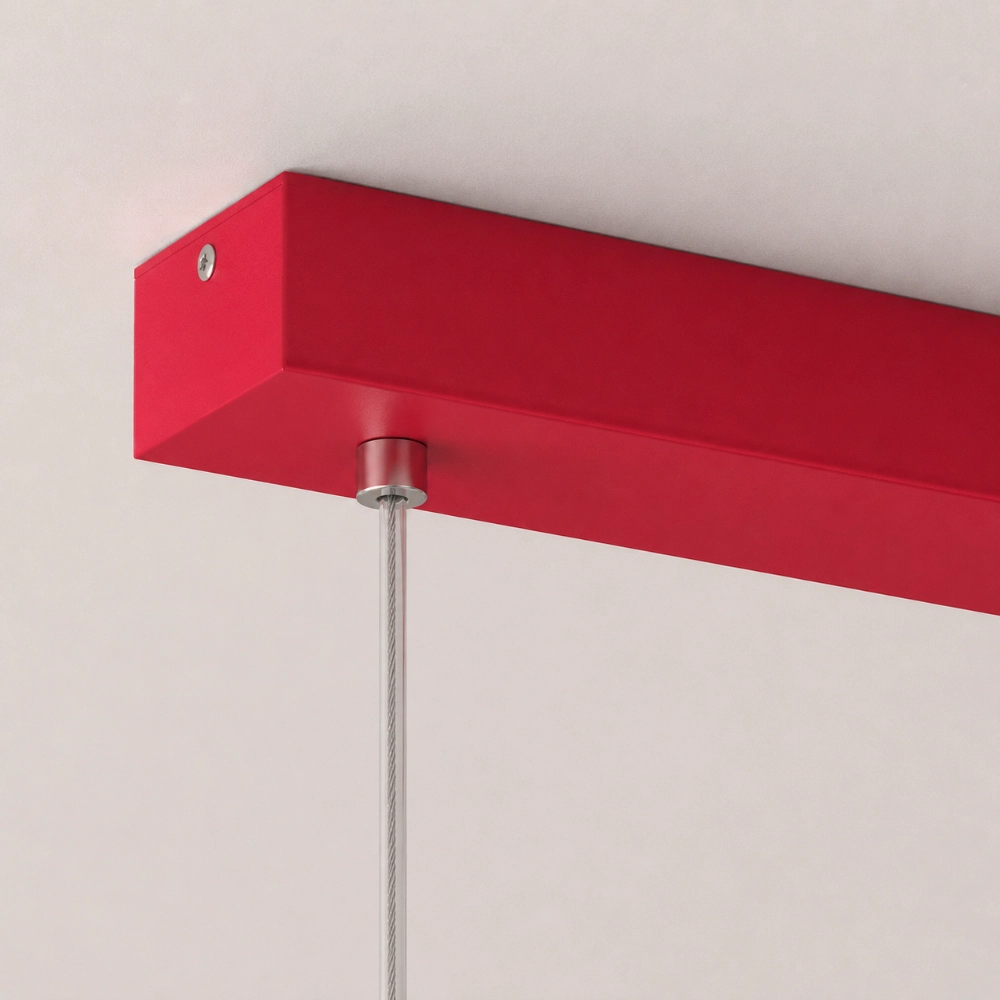
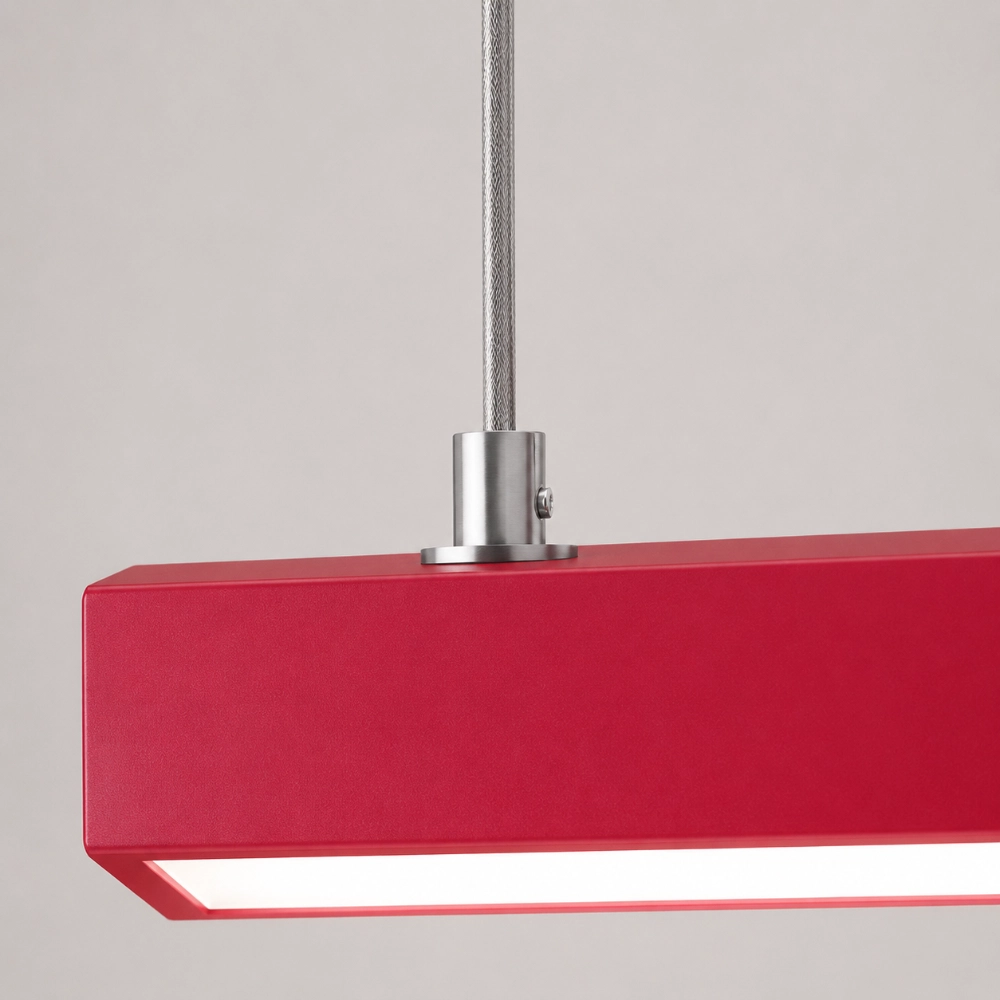
Do not confuse warm with dim. Winter already makes rooms look tired. The light over the island has to show the difference between browned butter and a burnt edge. Look at the actual source rather than a lifestyle caption. Edge is LED, metal, hardwired at 110–240V, with an anti-corrosion body. That is the unromantic part that keeps a hearth from being a prop.
Give the Room One Hearth Line
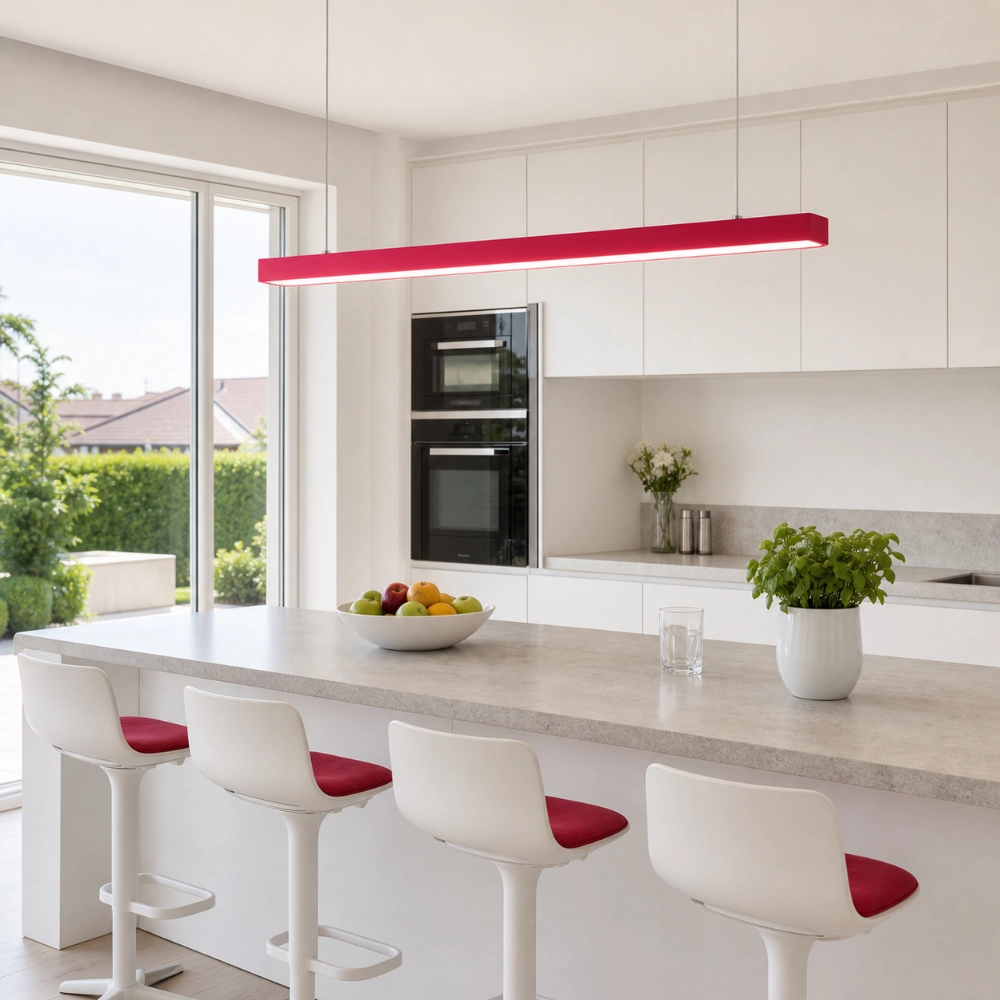
A long island already has a direction. Kitchen island lighting works when it repeats that direction instead of sprinkling ornaments along it. One straight rectangular bar becomes the line people gather under, the way a mantel used to collect elbows. From the living room it should read as a single object, not a committee.
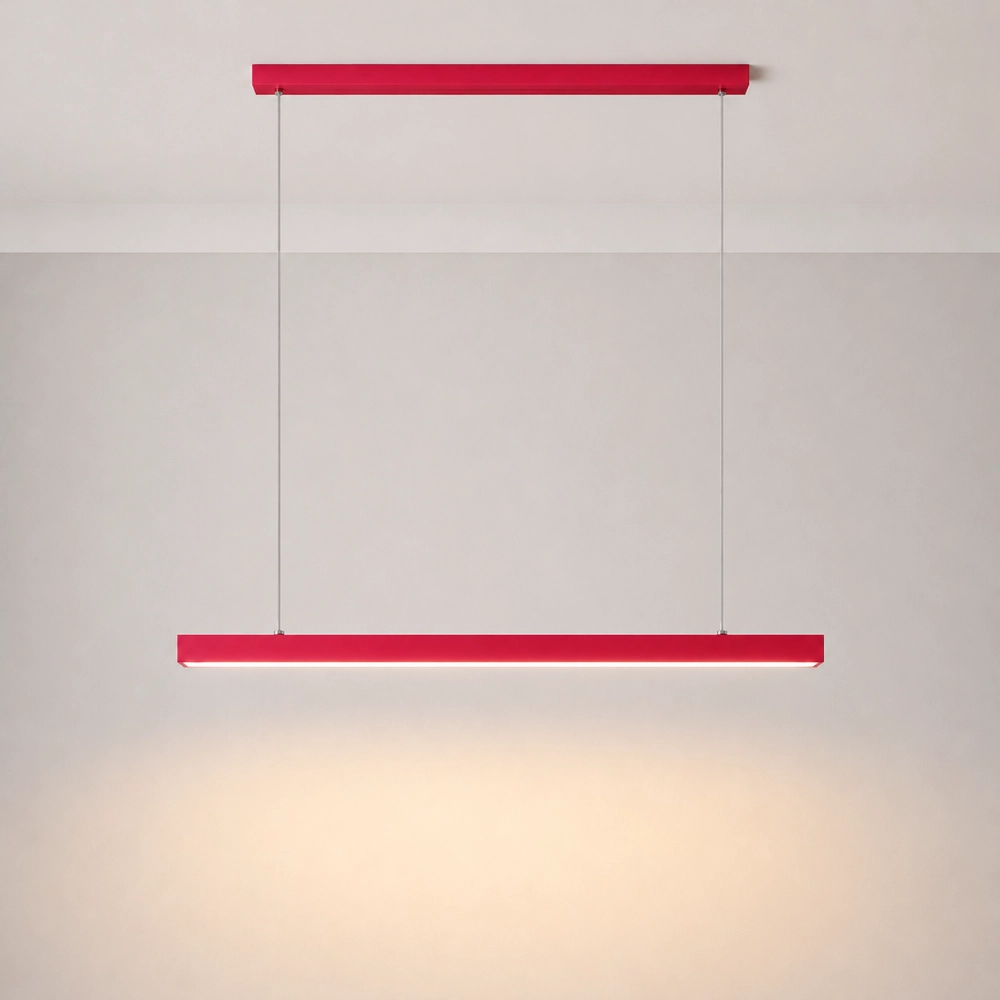
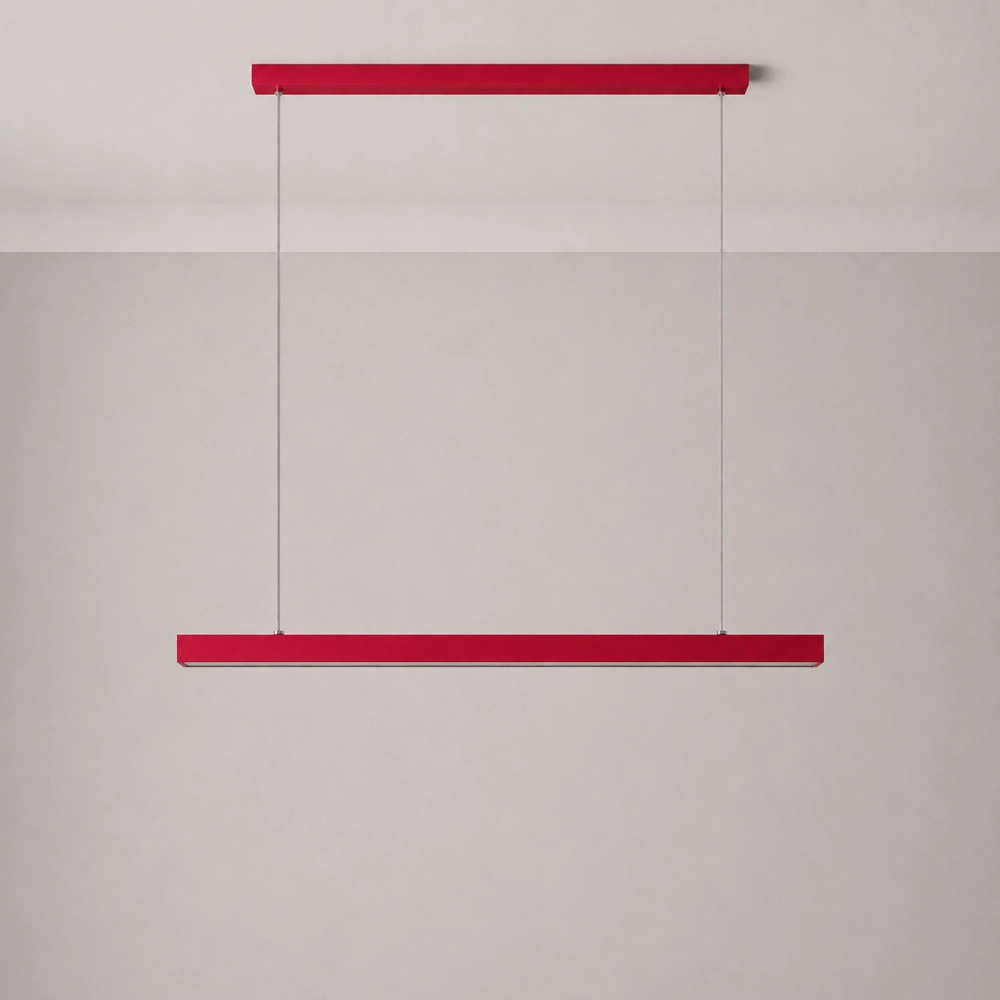
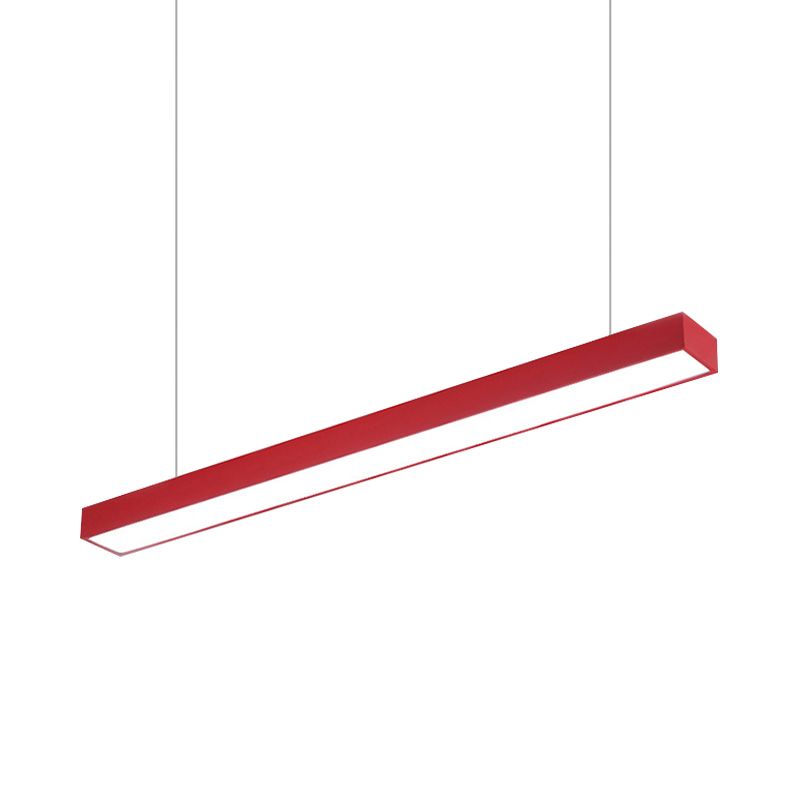
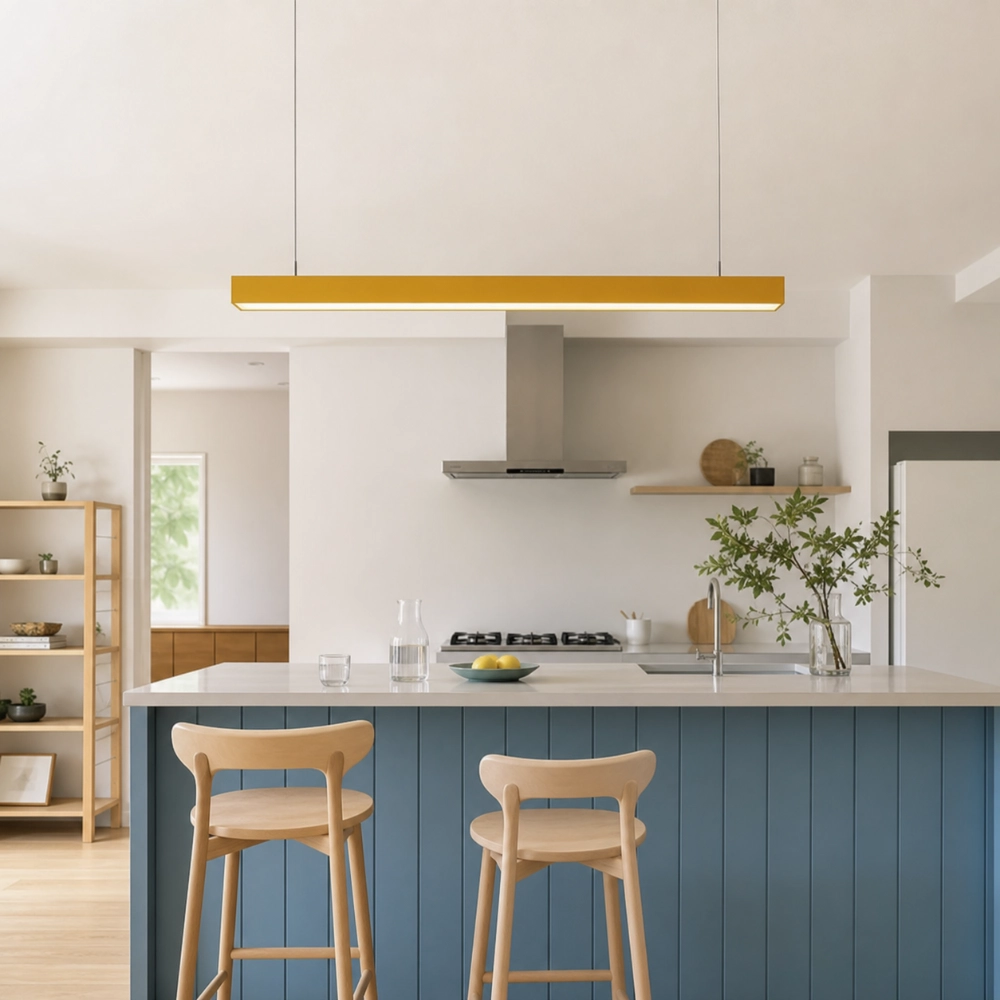
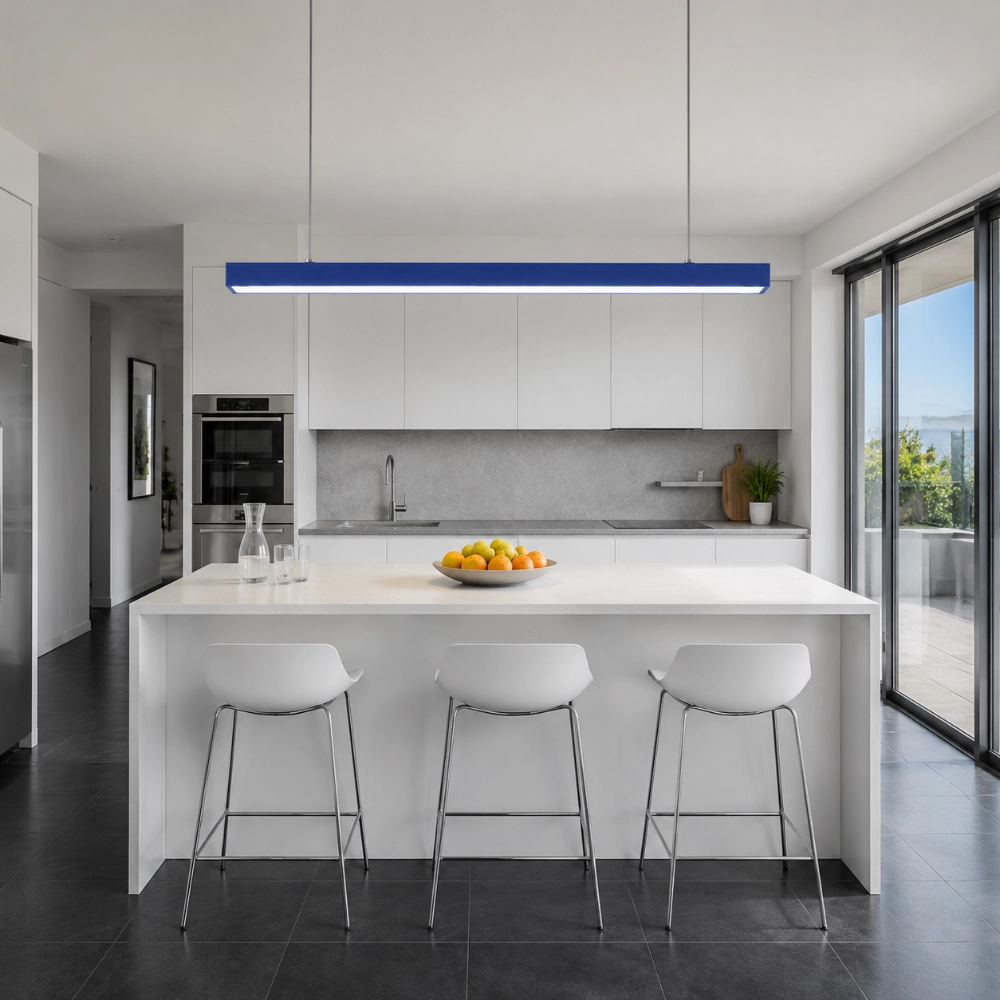
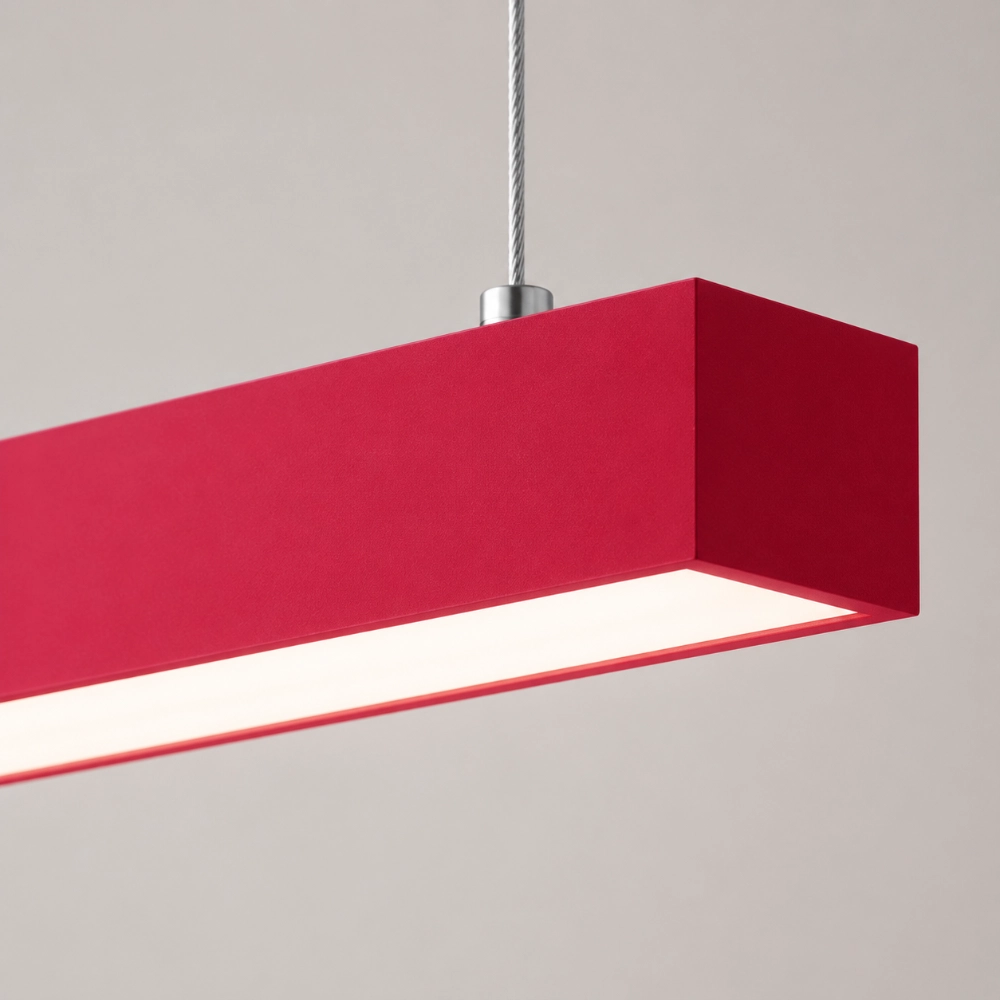
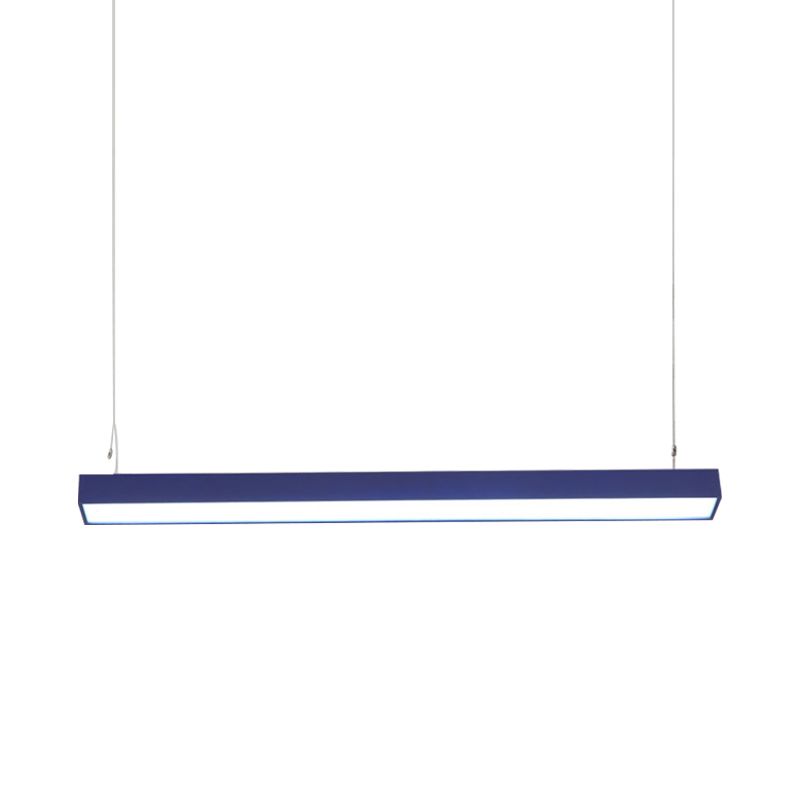
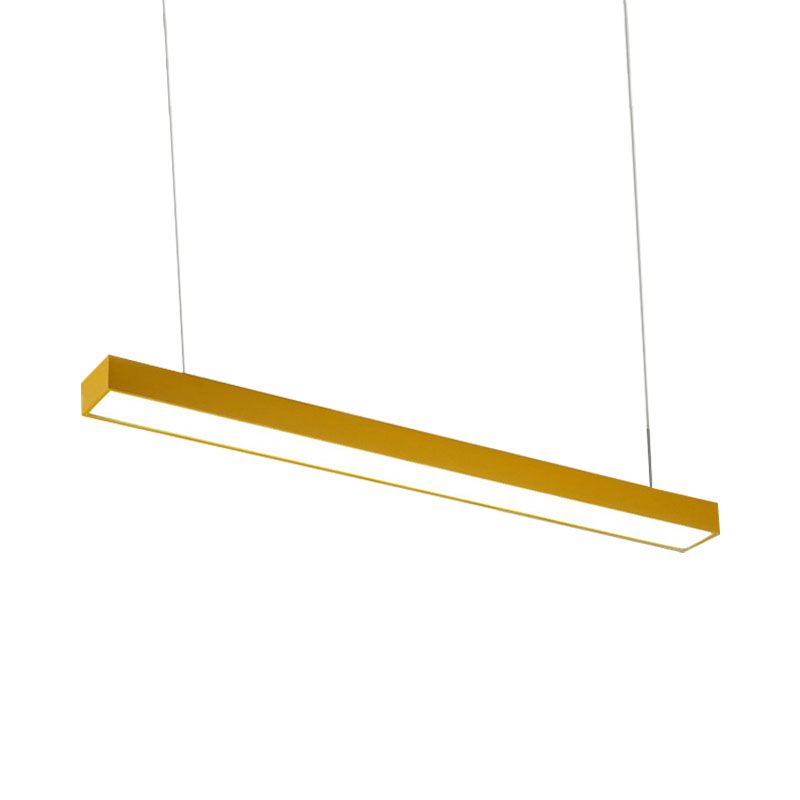
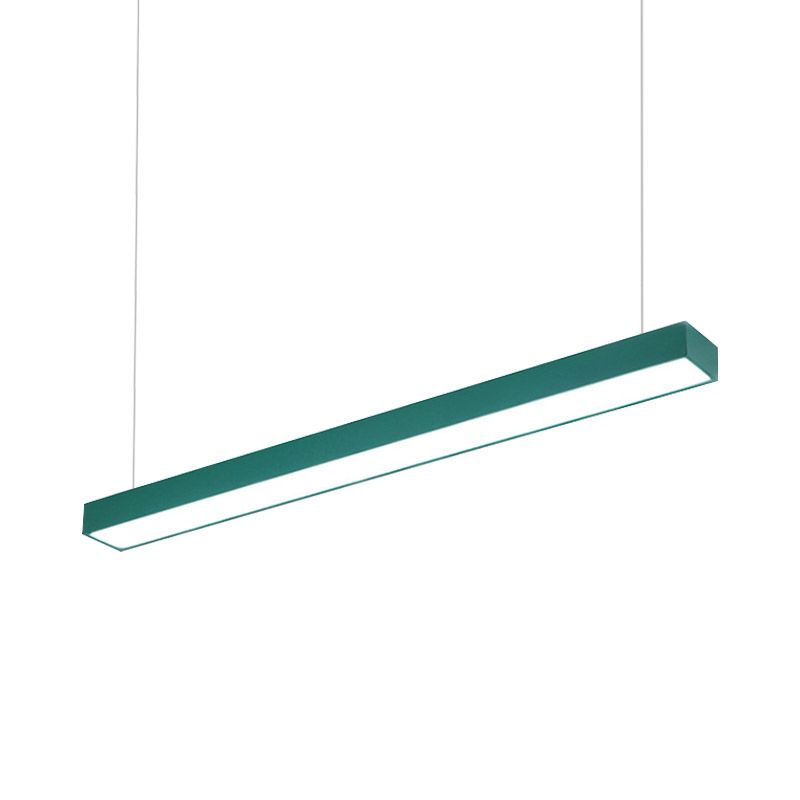
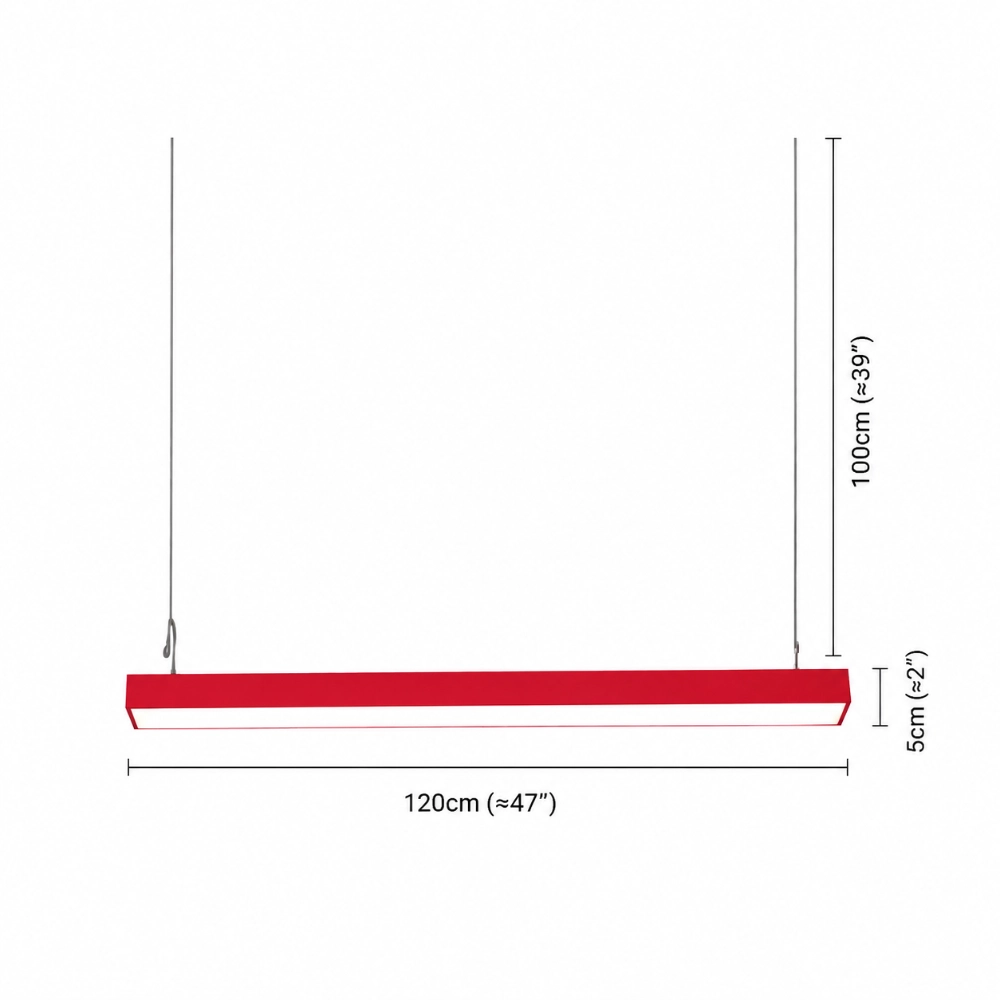
The Edge pendant is useful here because the geometry is blunt on purpose: a 47-inch metal body, a matching rectangular canopy, two thin cords, and an underside LED. It is sold for offices and kitchen islands, which is a polite way of saying it already understands a work surface that also has to host people. The cord is adjustable, so the same bar can sit higher when guests are talking across the stone and lower when the island turns back into a prep table. See the Edge rectangular pendant against your island length before you buy a more theatrical shape that only looks like a hearth in photographs.
Color That Feels Warm Without Looking Costumed
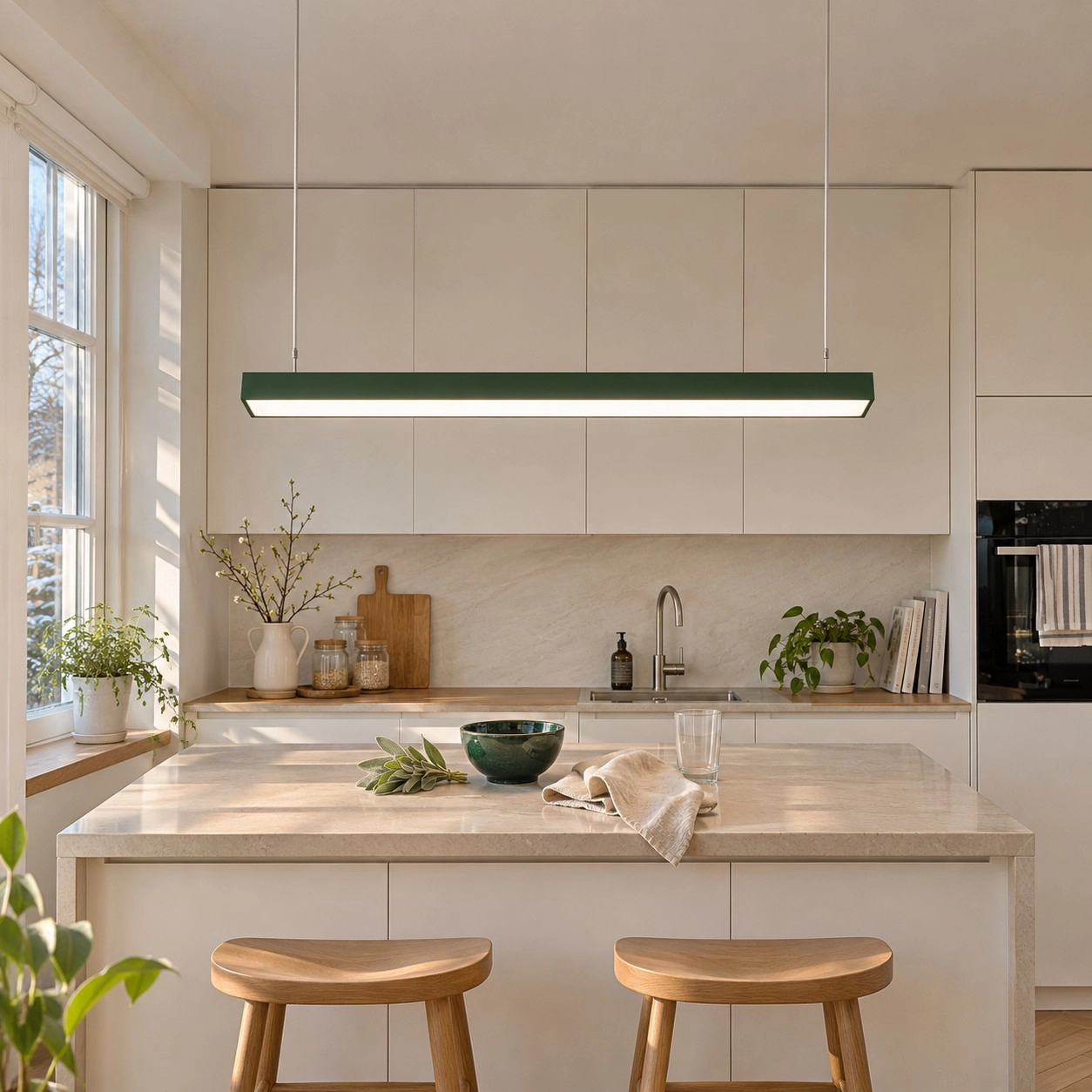
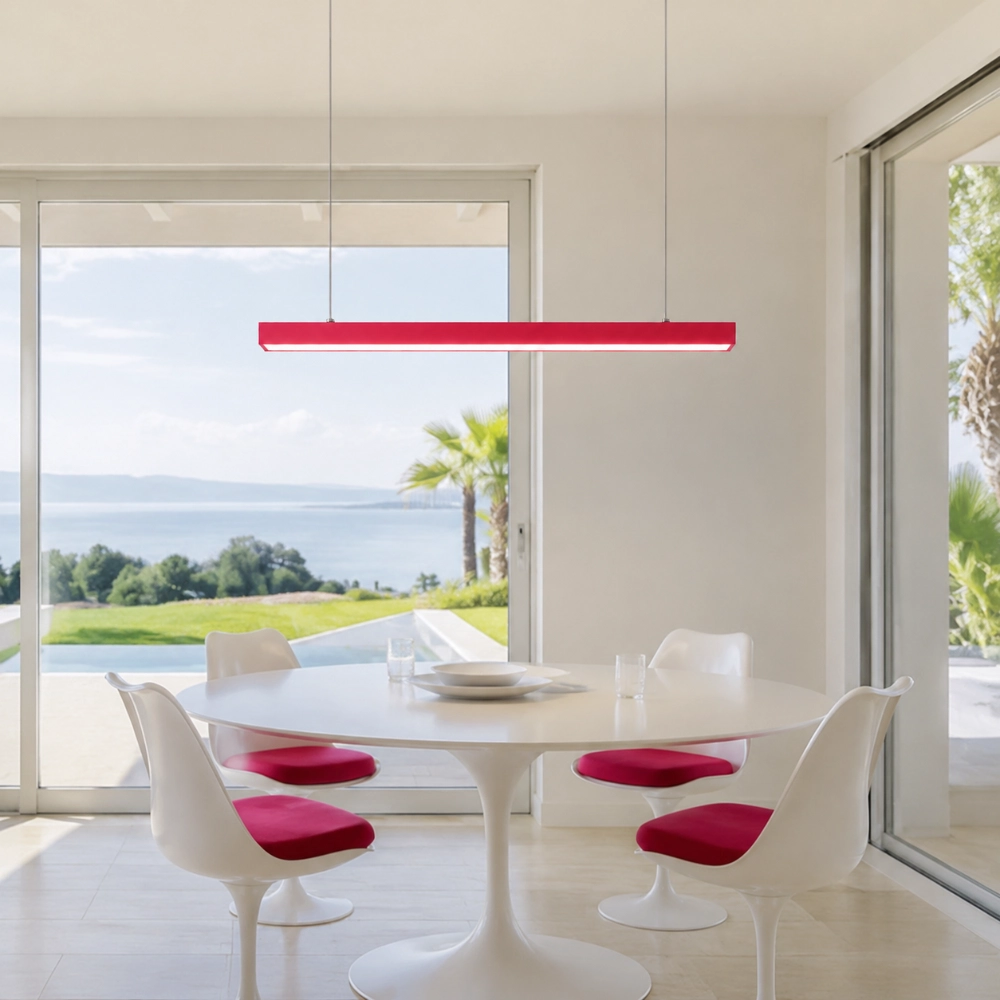
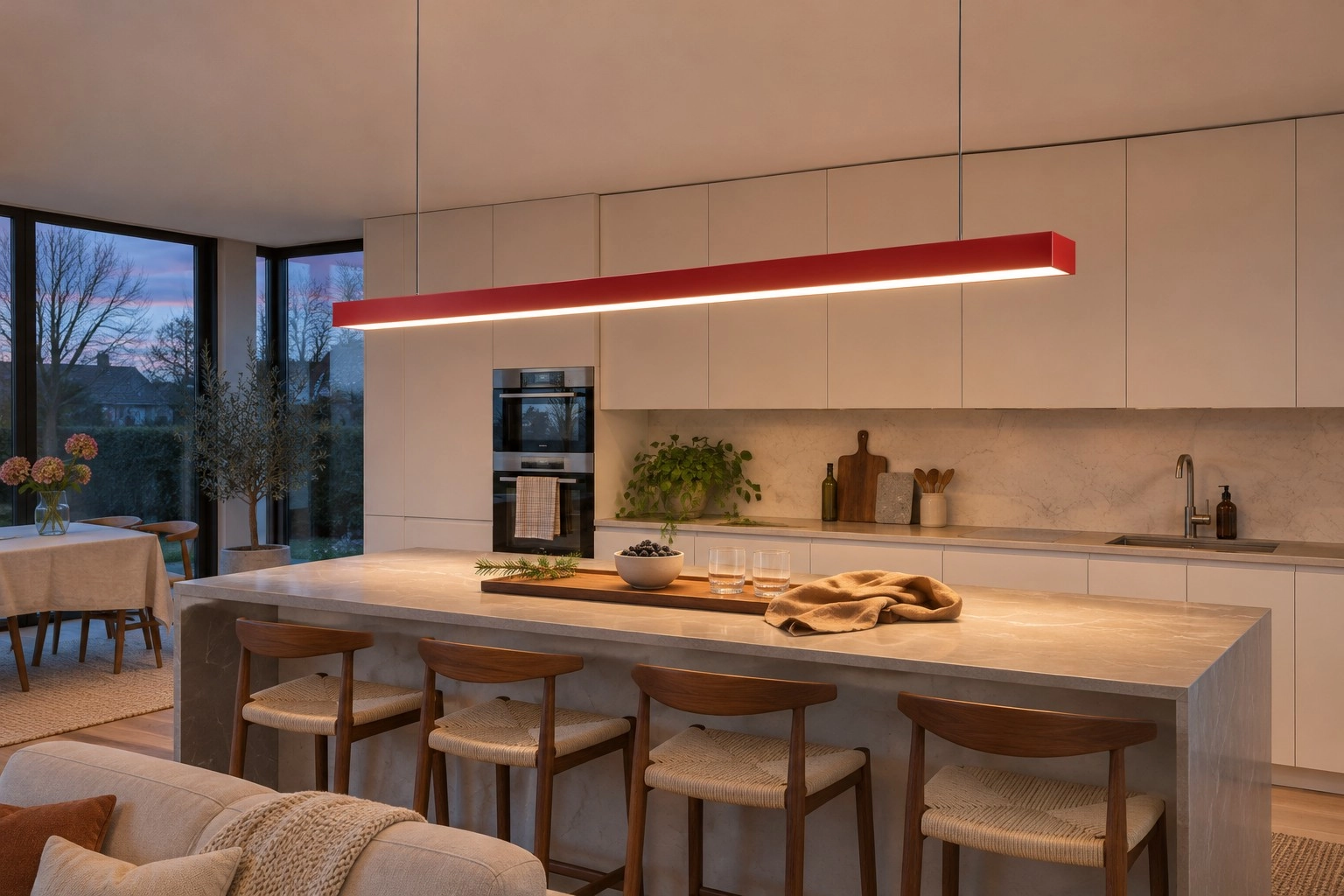
Black can disappear, which is sometimes the point and sometimes a missed chance. Red against pale stone can feel like a stove front. Yellow is oddly kind to pastry and tired faces. Green sits well with leftover herbs. Blue keeps a white kitchen from looking like a rental during a crowded open house. Pick one color and let it repeat once on a bowl or a napkin. Do not dress the ceiling in tinsel.
The finishes are red, yellow, blue, and green. That is enough palette for winter without a storage bin of seasonal shades. The light should still make sense in February, when nobody wants a reminder of December clutter and the island is just where soup gets served.
Let Nearby Ceilings Stay Quiet
A hearth only works if the rest of the room does not shout. If a hallway or a dining alcove needs its own object, keep it a different type so the island remains the gathering line. The Thalya wood disc ceiling light is a quieter ceiling piece, closer to furniture than to a party prop. If the adjacent room should almost disappear, the Vesta ceramic flush mount sits close to the plaster and leaves the island bar as the one object people walk toward.
The point is not to fill every box in the ceiling plan. It is to decide which surface is the winter fireplace and stop lighting the house as if every room were equally on stage.
Practice a Tuesday Night, Not Just Christmas Eve
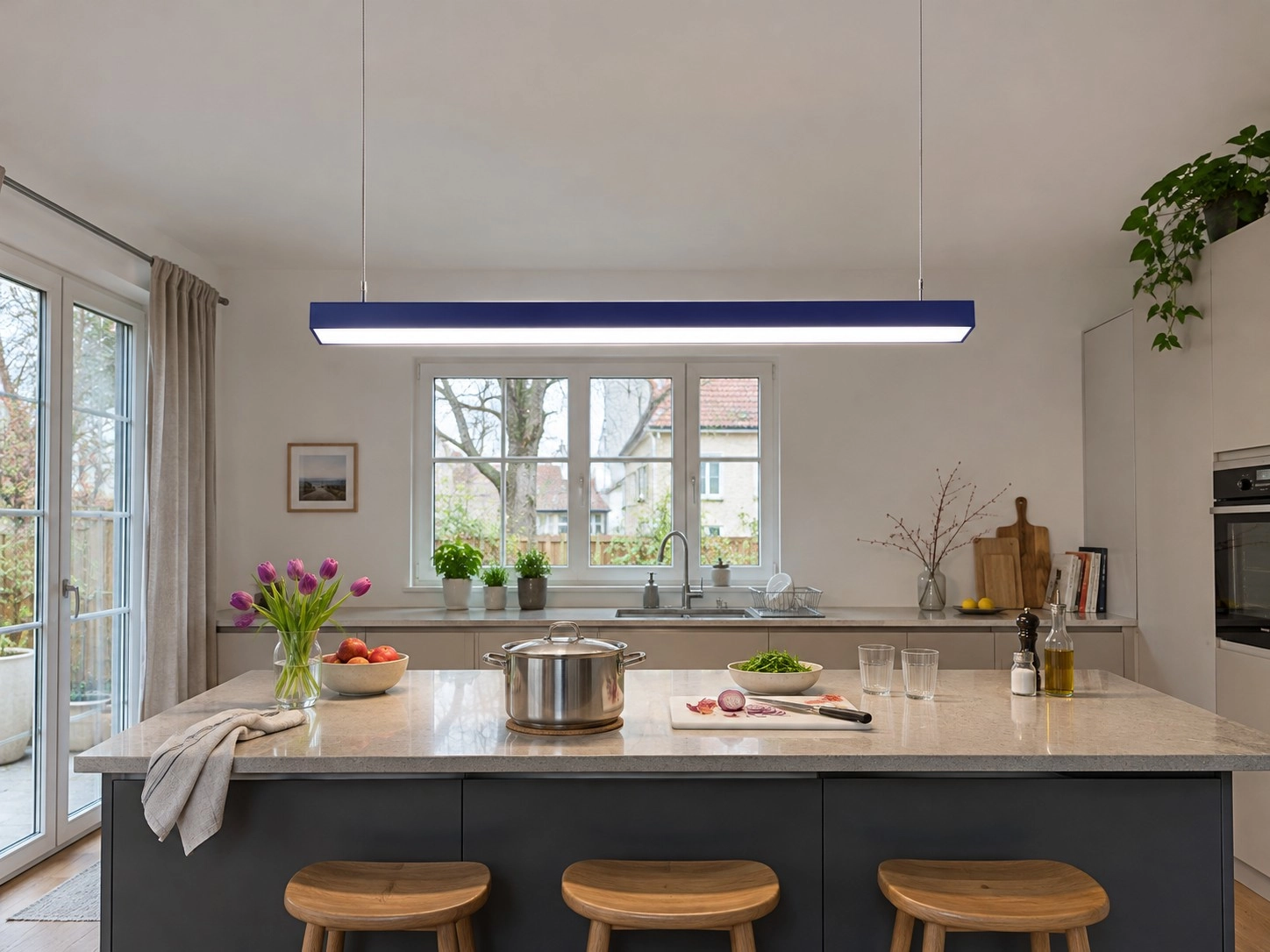
Peak season is a terrible moment to discover that hardwired lighting needs a licensed installer. Order with enough time. Tape the canopy location. Hang a paper bar the real length. Put out the usual winter debris: a pot, a board, two glasses, a stack of plates. Look from the doorway. If it already feels like a place to stand on a nothing night, the holiday version will take care of itself.
If you are tempted to solve the mood with pine, ribbon, and a different color every month, stop. One durable color on a linear bar is the less exhausting route. That argument lives here: Colorful Kitchen Island Lighting for Holiday Hosting Without Seasonal Clutter.
A fireplace collected people because it was useful and warm in the same breath. Kitchen island lighting can do that work now, provided you light the surface people actually use. Keep the line, keep the color, and let the dining table wait until someone truly sits.
What type of lighting is best for a kitchen island in winter?
A continuous task line over the worktop, warm enough for faces and bright enough to cook, beats a cluster of tiny decorative pendants.
Can one linear pendant replace several small ones?
On a long island, one 47-inch bar often reads more like a hearth than three small shades with dark gaps between them.
How do I keep winter lighting from looking seasonal?
Choose a color that still fits the kitchen in February and keep holiday objects on the table, not on the ceiling.