
Kitchen Island Lighting for Cookie Trays, Cheese Boards, and Accidental Afterparties
Holiday food has a talent for refusing the dining table. Cookie trays cool on the island because that is where the oven is. Cheese boards land there because someone needed a free surface right now. Then the evening refuses to end, and the same stone becomes a bar with crumbs on it. If the light over that surface is patchy, the food looks like leftovers even when it is not.
Kitchen island lighting for this kind of night is not a styling exercise. It is how a tray of cookies stops looking like homework and a board of cheese stops looking like a gas-station picnic. Light the food first. The atmosphere will follow, or it will not, but at least nobody will be slicing in a shadow.
The Food Never Makes It to the Dining Table First
Hosts keep setting the table as if that were the opening scene. Guests keep eating standing up because the island is where the heat is, where the host is trapped in a friendly way, and where a board can be reached from both sides. Winter makes this worse. People arrive cold and stay near the kettle. The dining room can wait until someone is actually hungry enough to sit.
If you want the larger argument, that the island has taken the social job the fireplace used to have, it is here: Kitchen Island Lighting Is the New Fireplace: Warm Light for Winter Gatherings. This piece is narrower. It is about the food that never gets cleared, and the light that either makes it look generous or makes it look abandoned.
Cookie Trays Hate Spotty Light
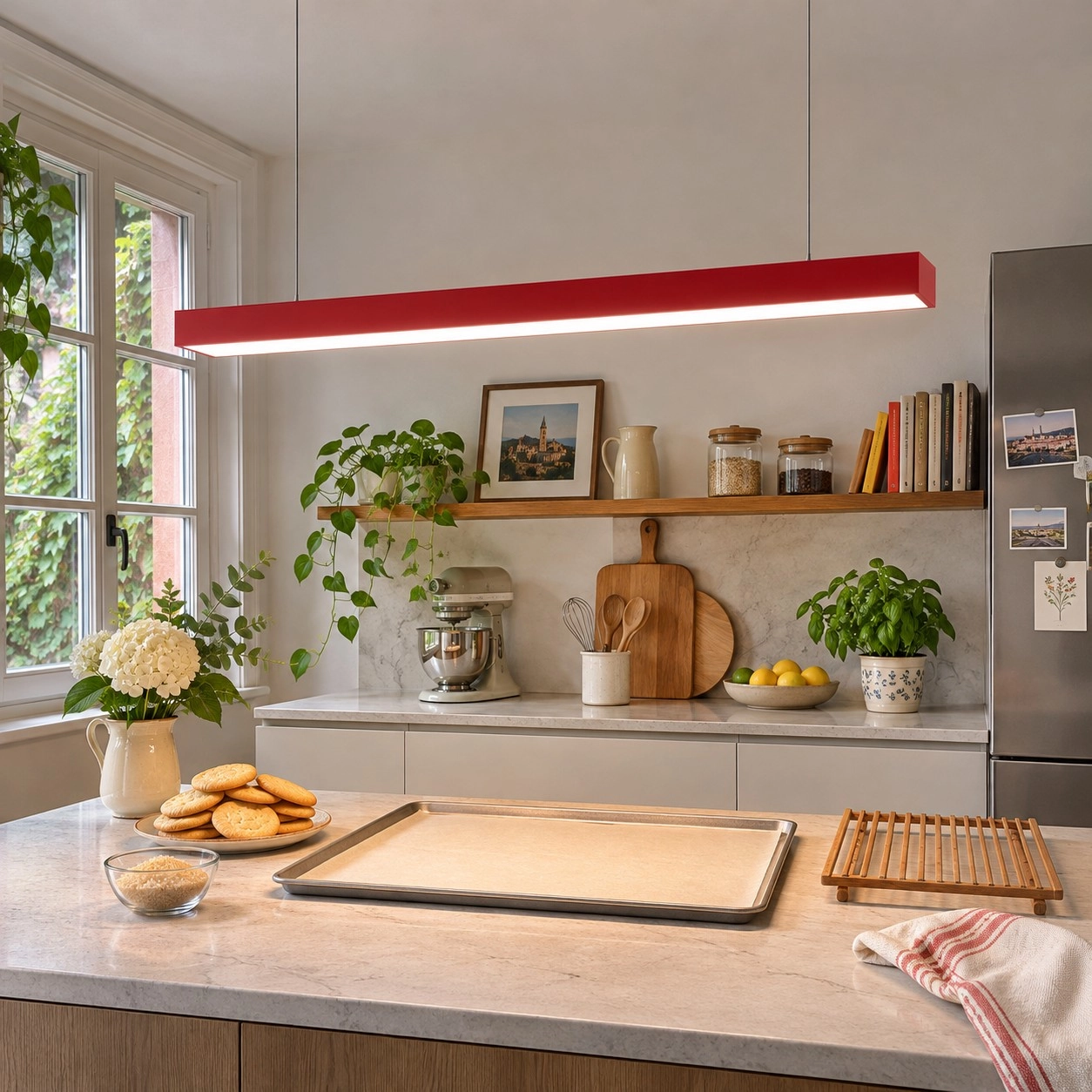
A cookie tray is a long object. It wants a long field of light. Three small pendants often leave a dark hinge in the middle, which is exactly where the last row of cookies is trying to look done. You end up turning the tray like a sundial. That is a ridiculous way to bake.
The usual height chatter is not the point here. Whether the bar sits a little higher or lower, the underside needs to wash the tray, not punch three coins of brightness through parchment. LED in a metal trough is boring in the best way. You can see sugar. You can see a pale center. You can stop guessing.
Cheese Boards Need a Continuous Run
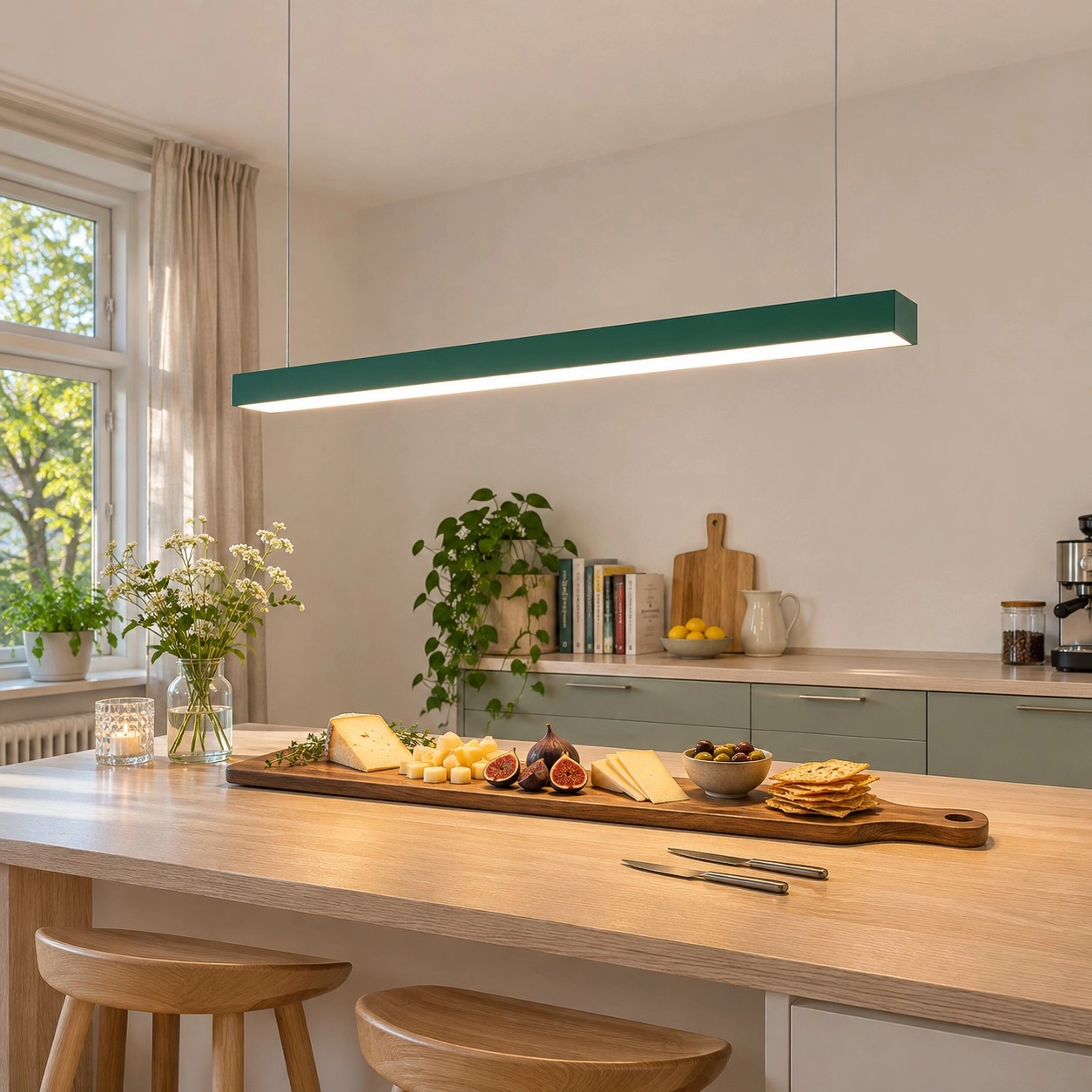
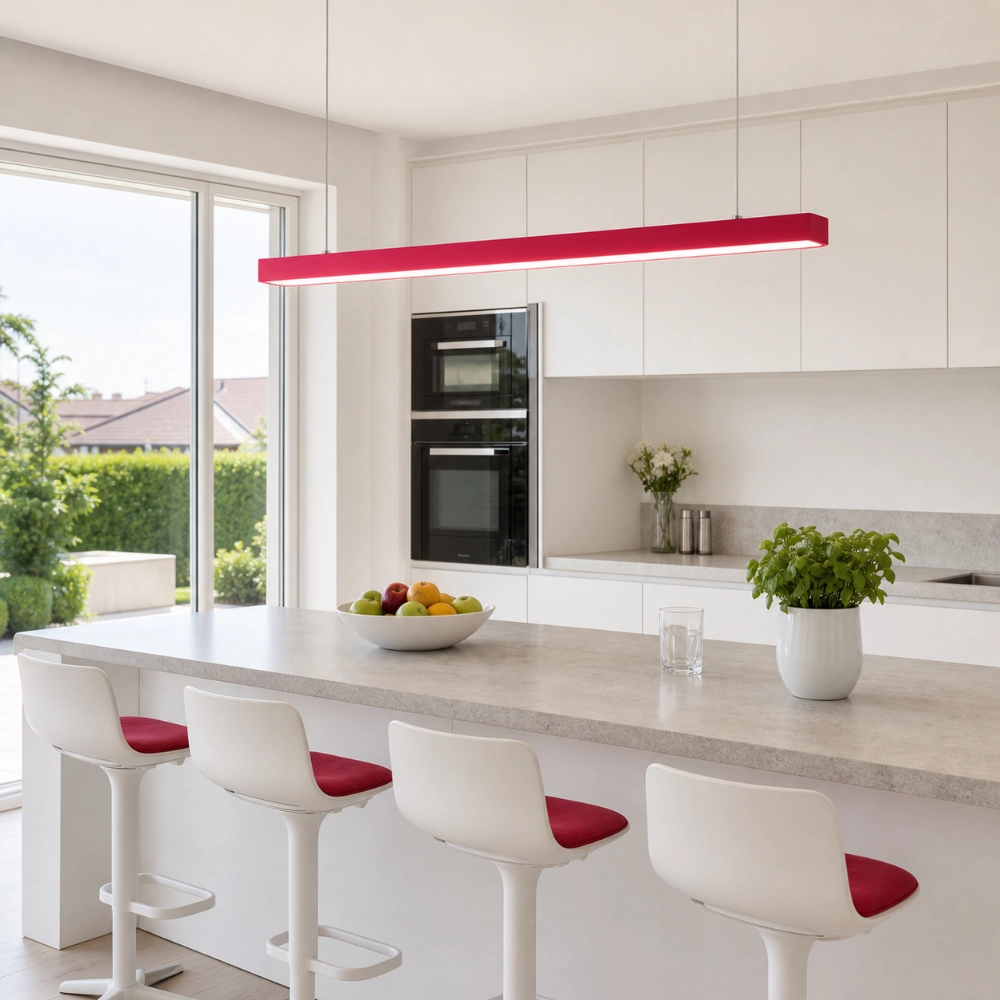
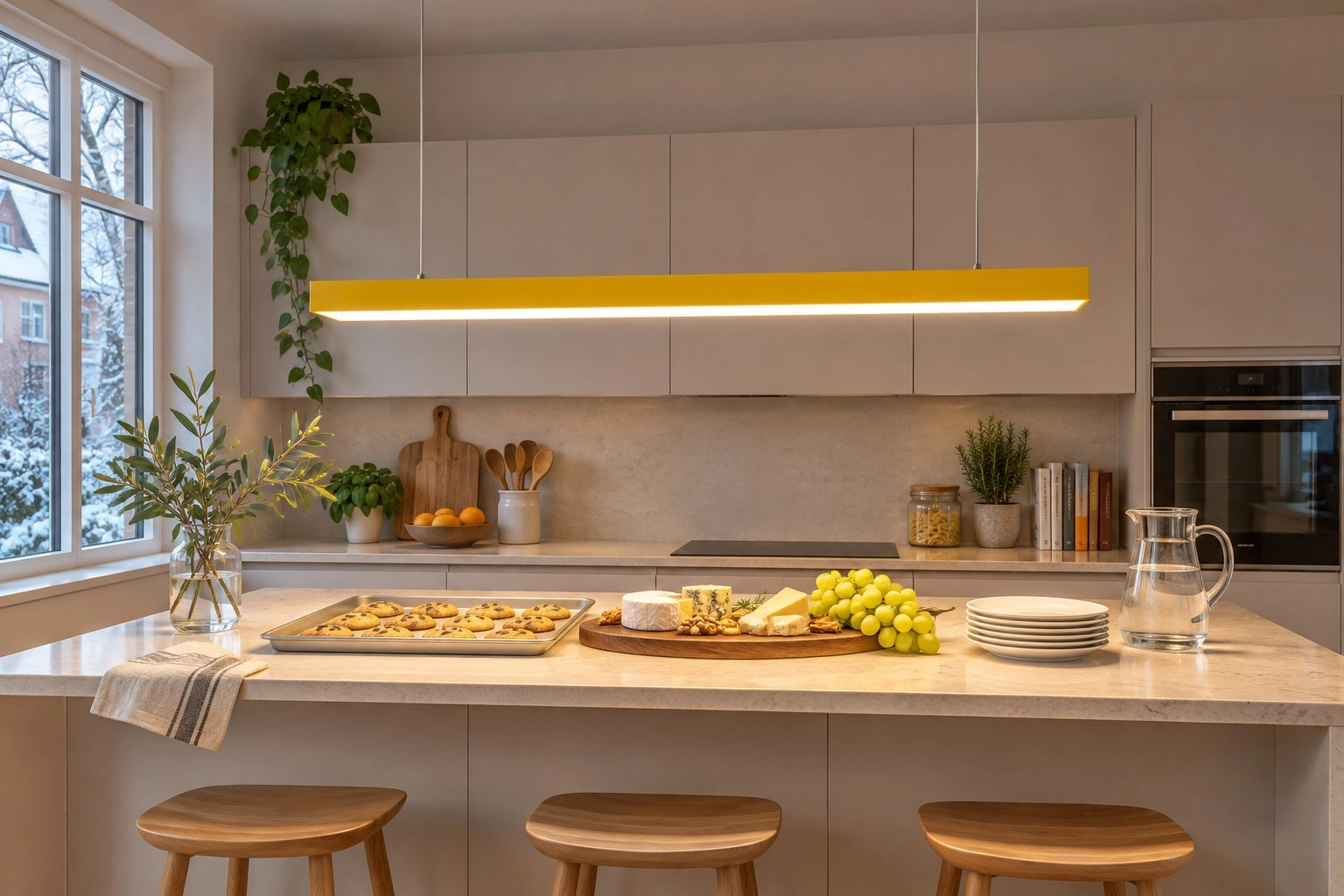
Cheese is unforgiving. Under broken light it looks gray. Under a continuous run it looks like you meant it. The board is usually longer than people admit, because someone keeps adding grapes, a knife, a bowl of olives, a stack of plates that were supposed to live on the table. The island becomes a runway. Kitchen island lighting has to cover the runway, not the middle third of it.
This is also why Reddit threads about two pendants versus three rarely settle. People are arguing about objects when they should be arguing about dark zones. If the board sits in a gap, the fixture count is already wrong, no matter how pretty the shades are.
Accidental Afterparties Stay Where the Light Is
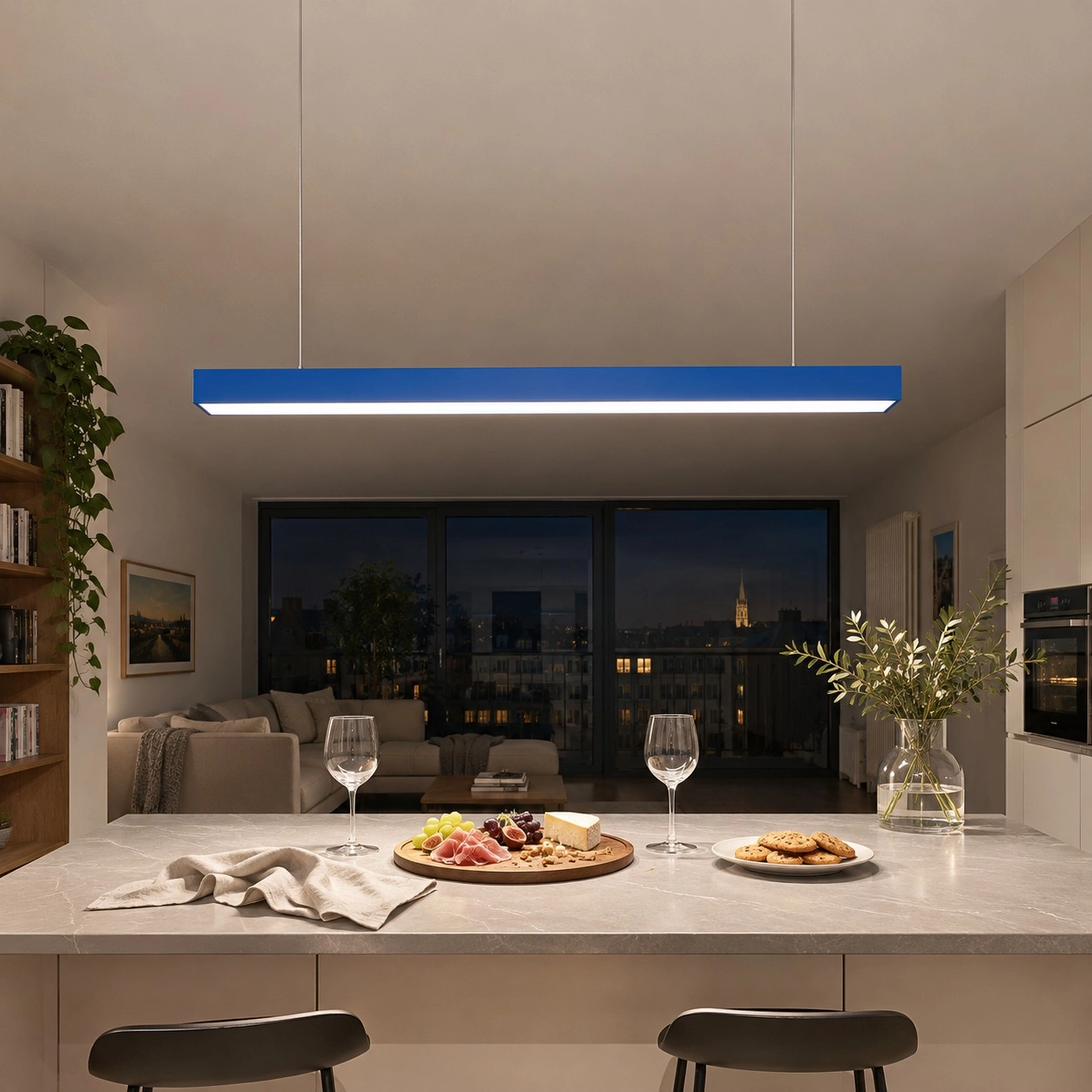
The afterparty is not scheduled. It is what happens when the tray is still out and nobody has the energy to move to the sofa. Drinks migrate back to the island because that is where the opener is. If that surface goes dim, people drift and the night thins out. If it stays readable, they keep talking with a hip against the stone.
You do not need a club. You need leftover food to look edible at 10:40 p.m. Warm illumination helps. Seeing the actual board helps more. Hardwired lighting at 110–240V is not a party trick, but it is how the same fixture still works on a Sunday soup night when the accidental guests are just family.
One Bar Beats a Cluster of Dark Gaps
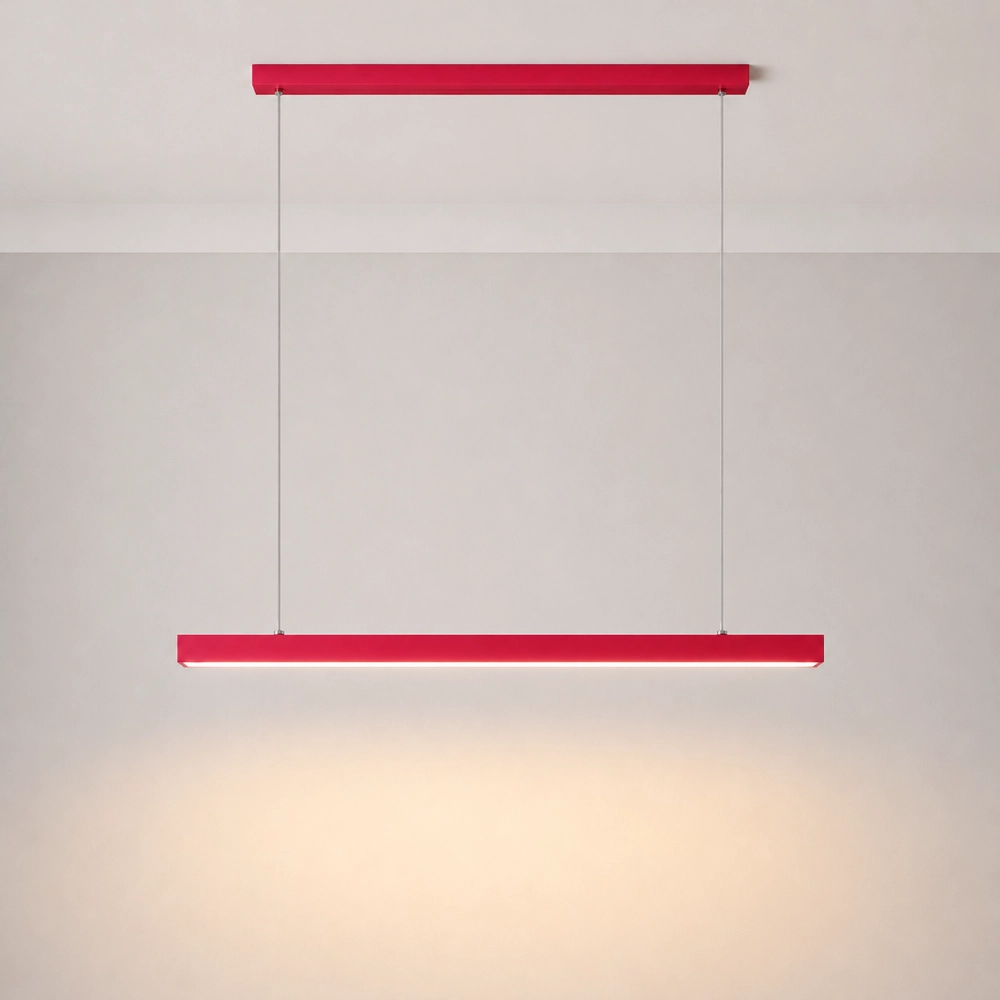
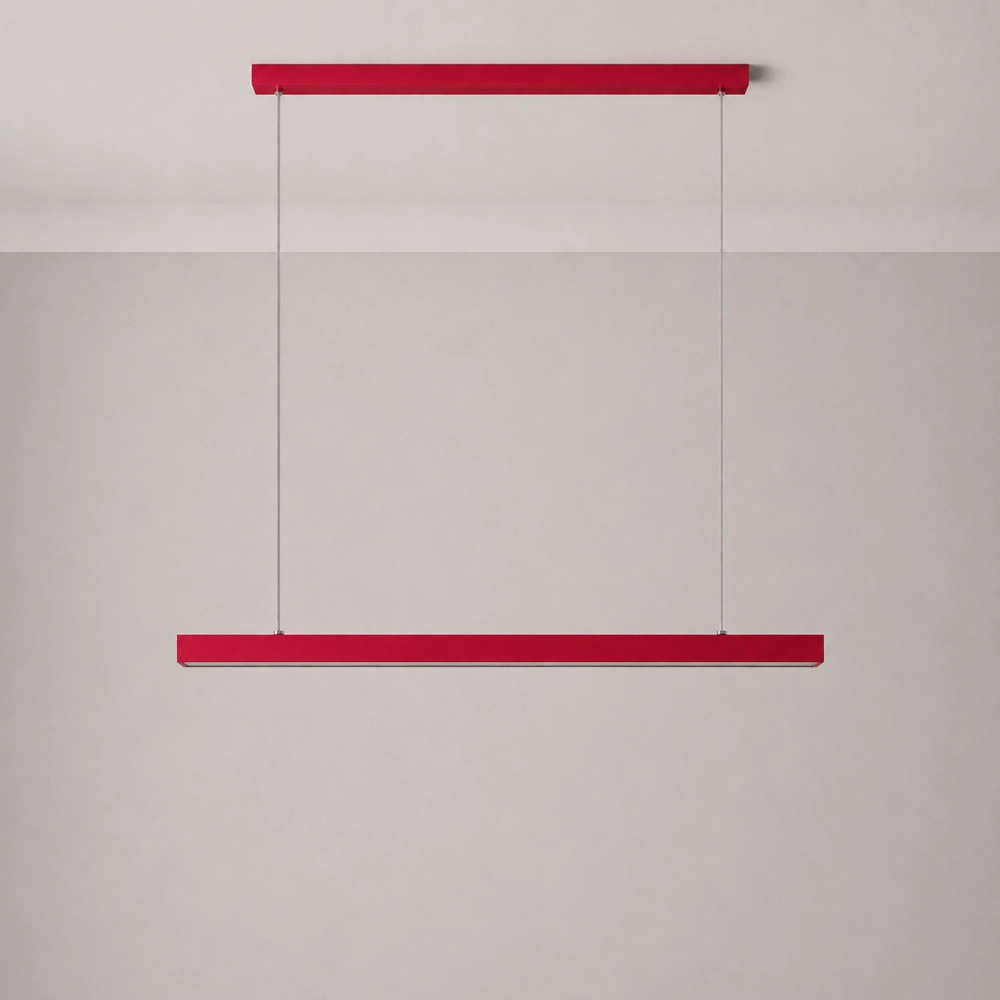
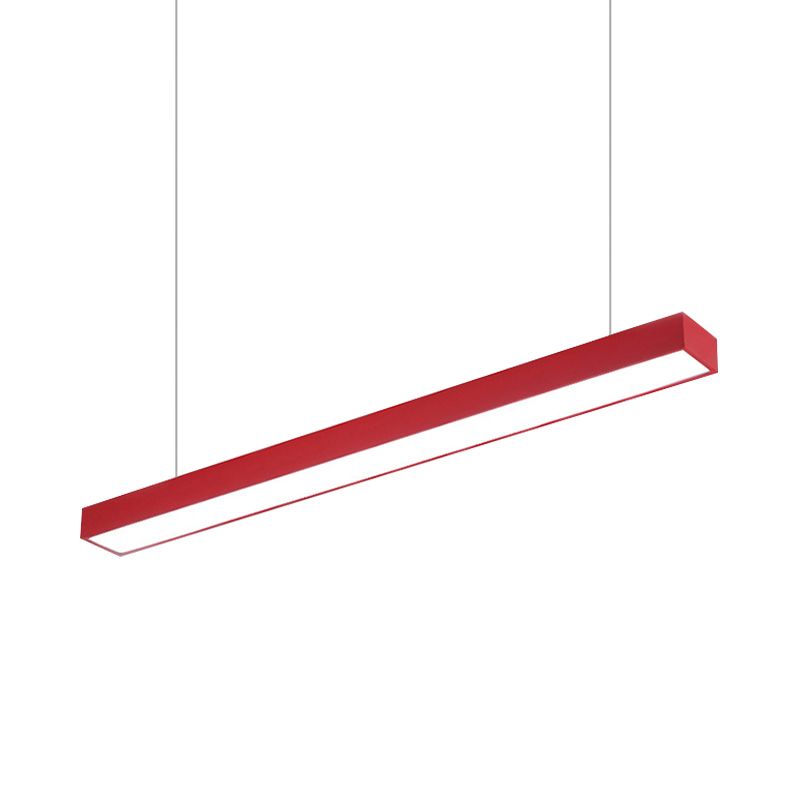
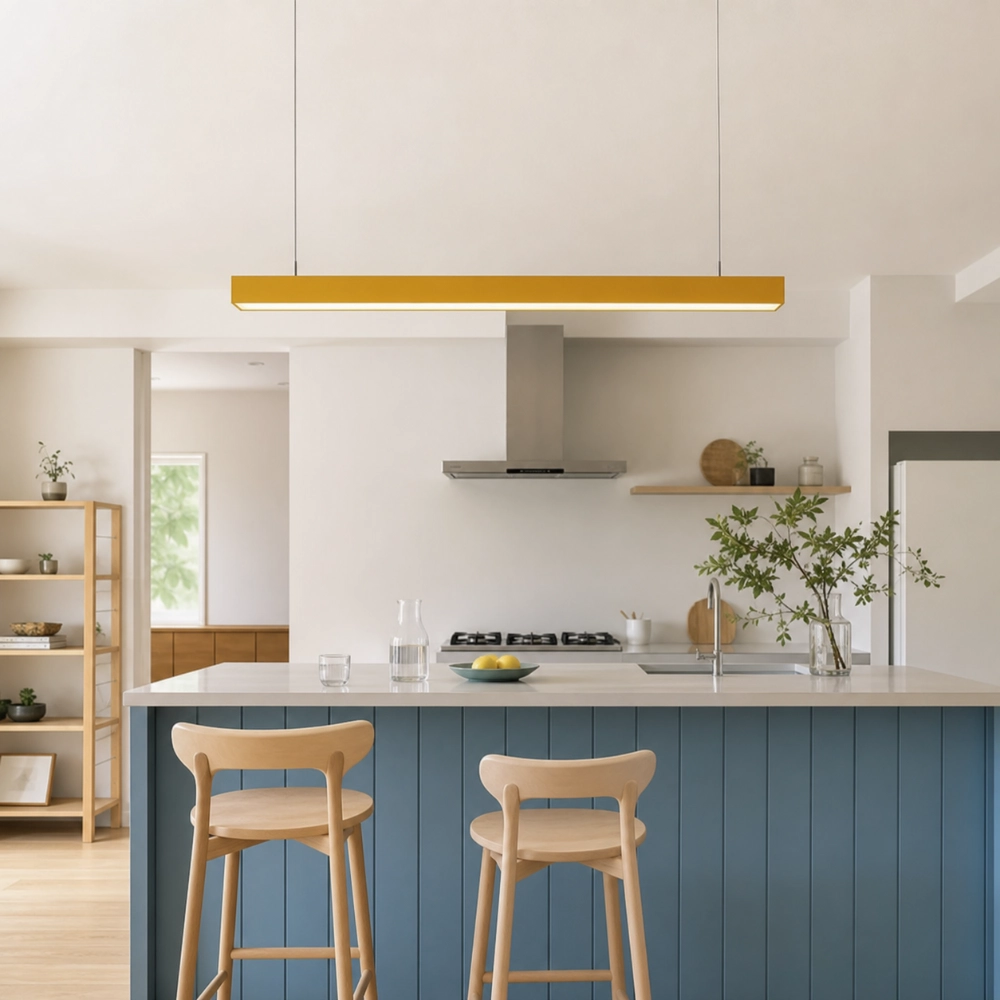
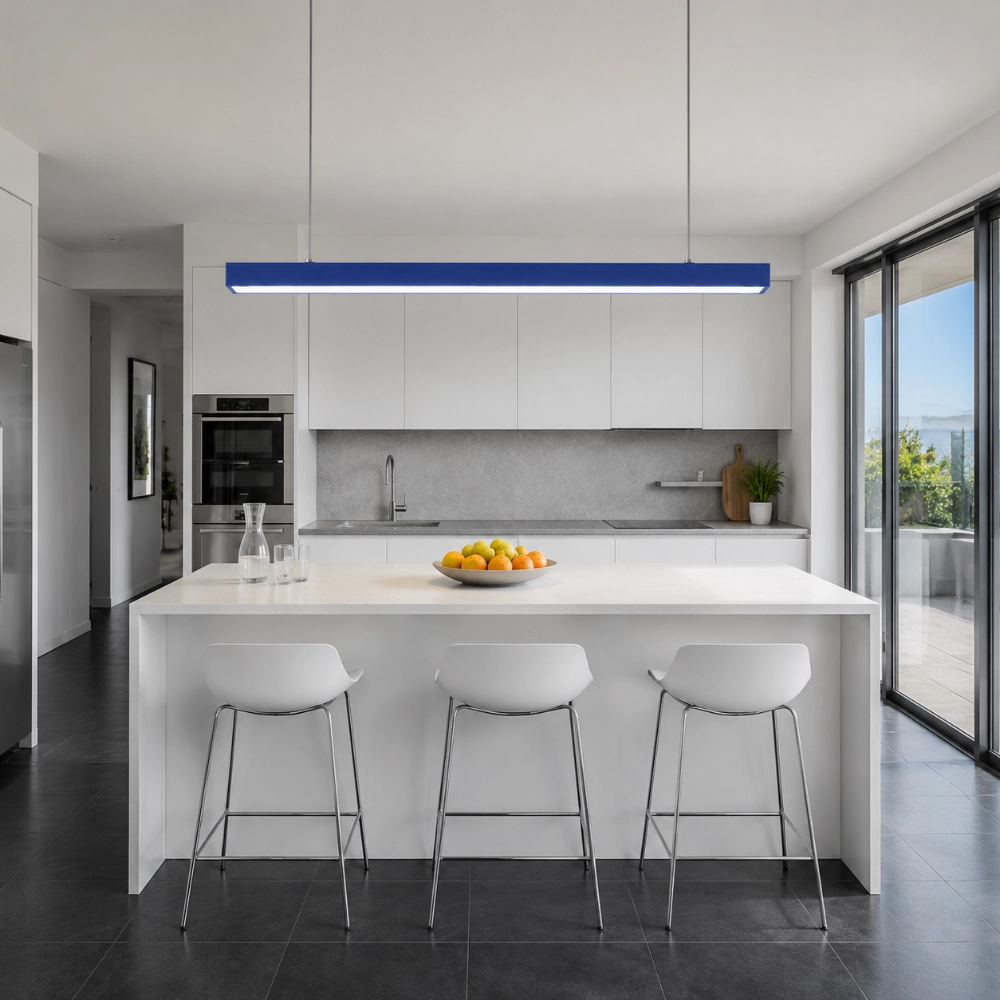
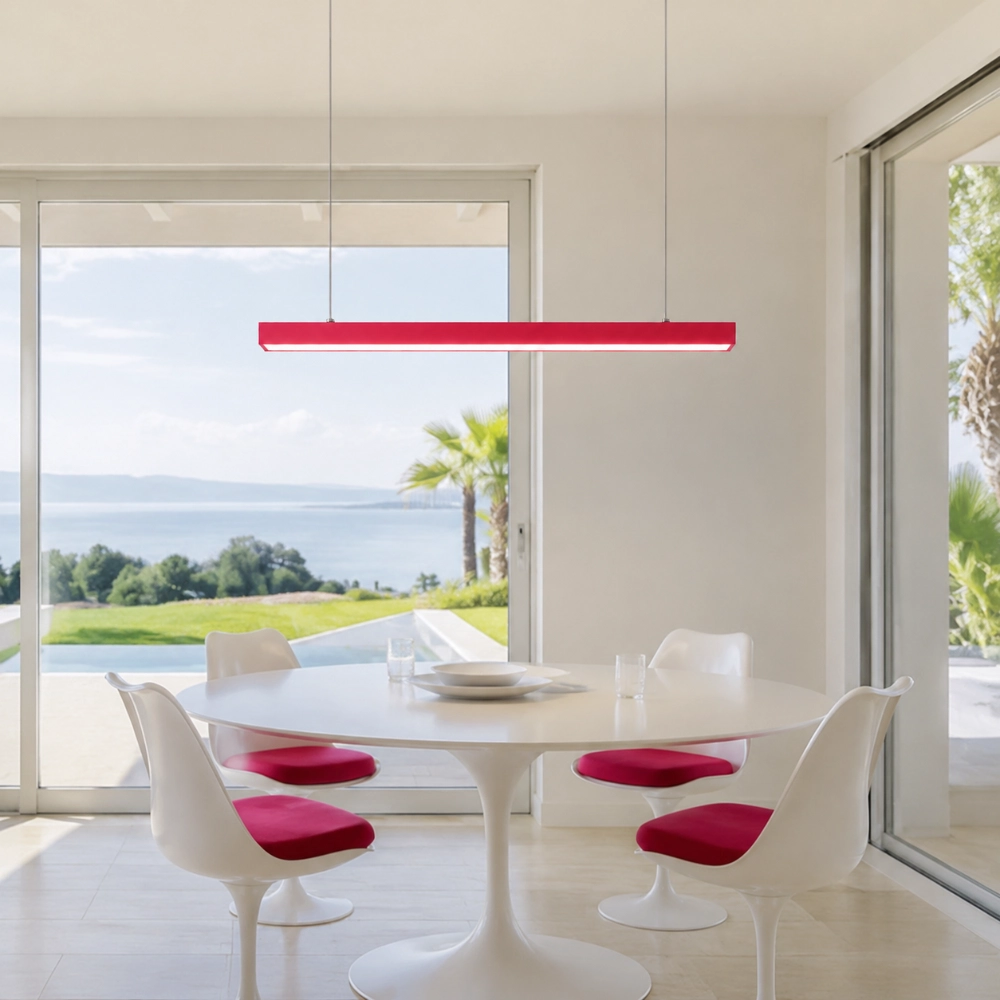
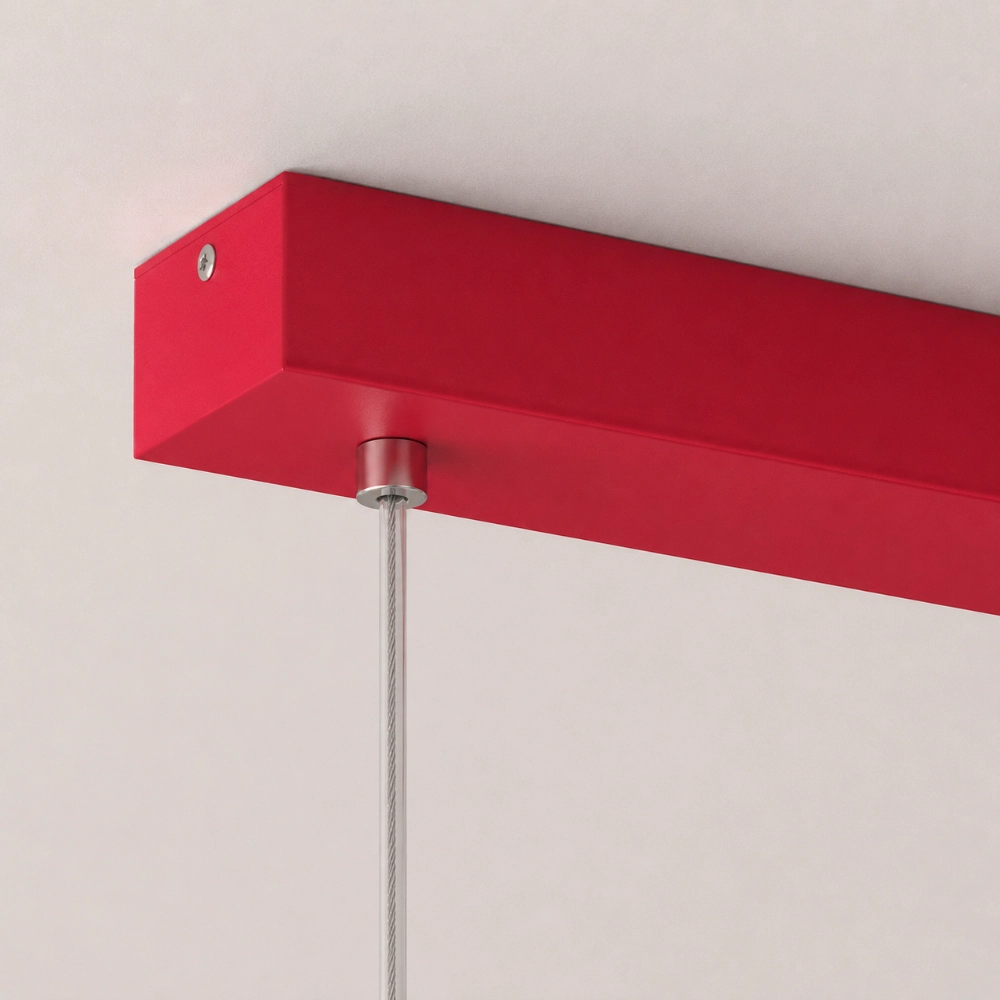
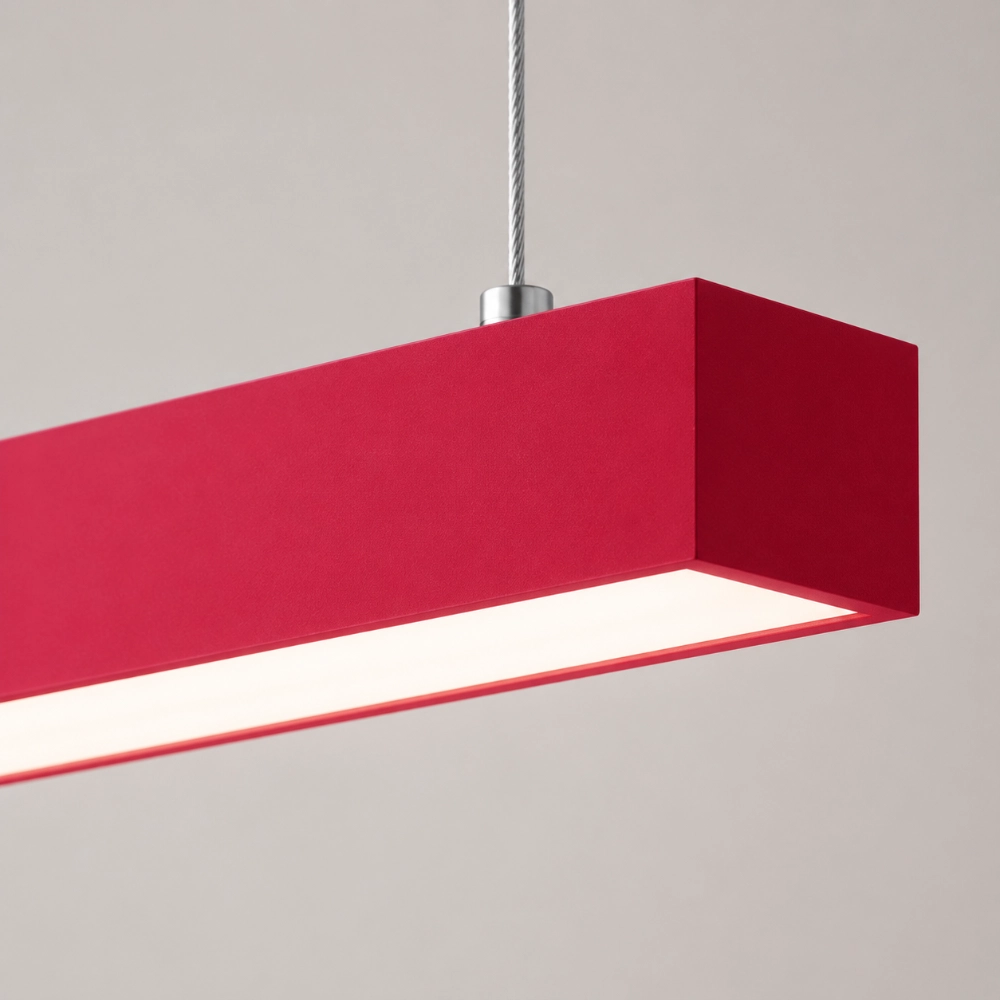
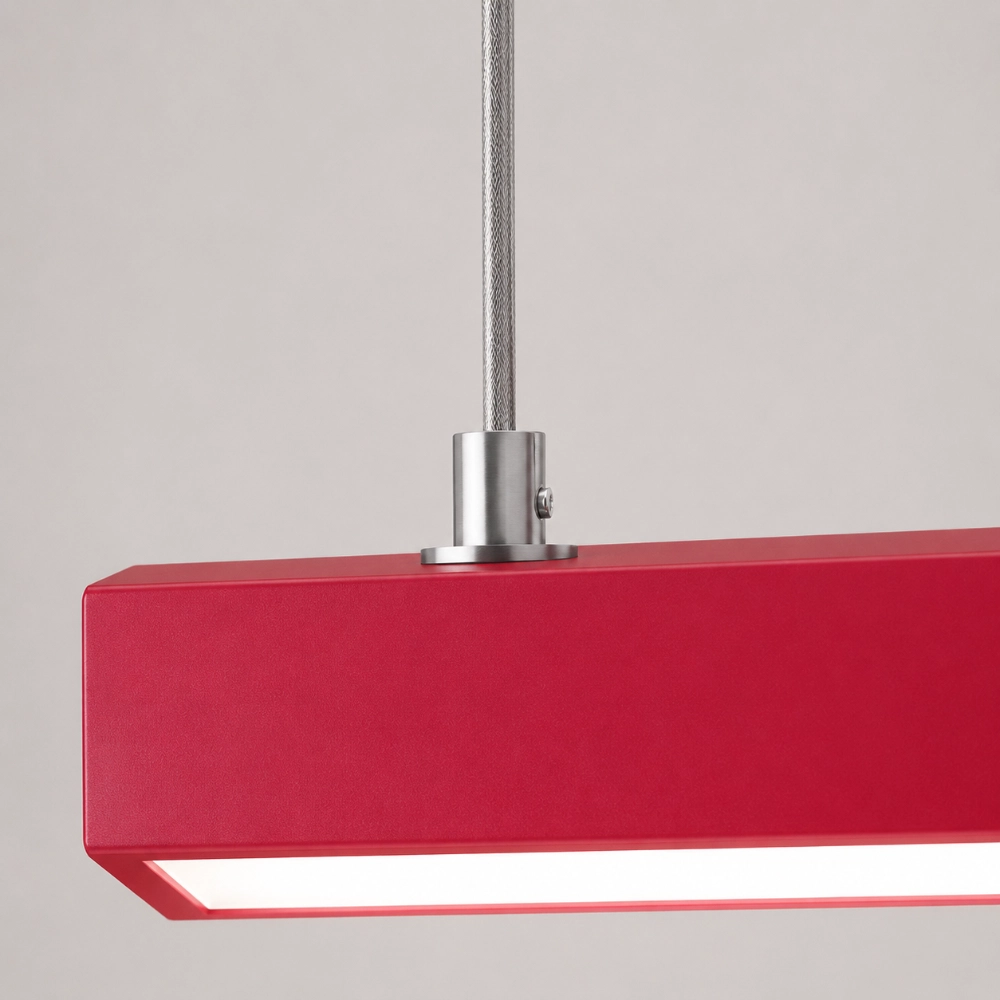
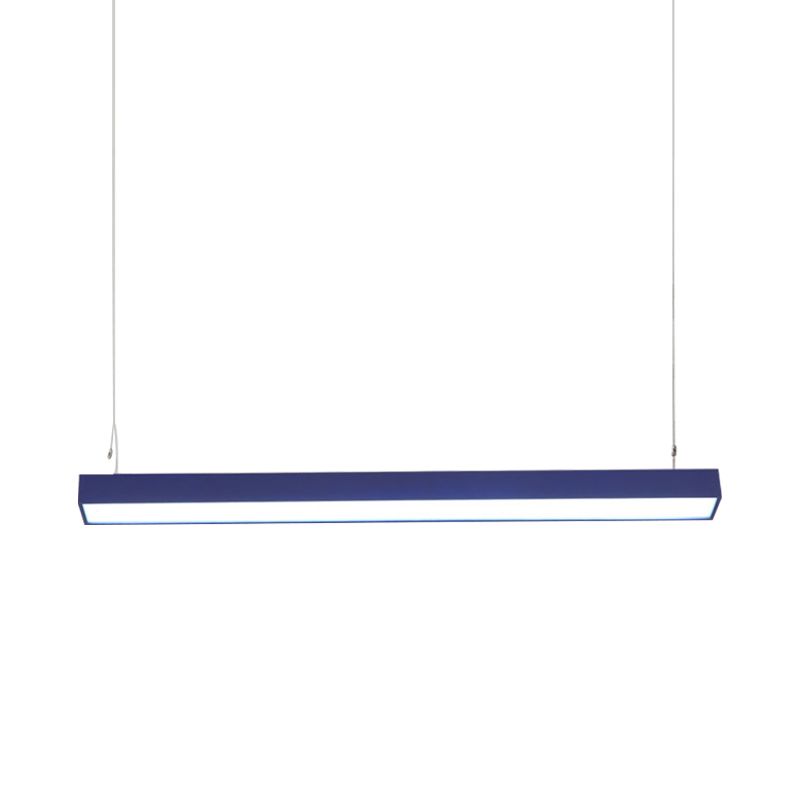
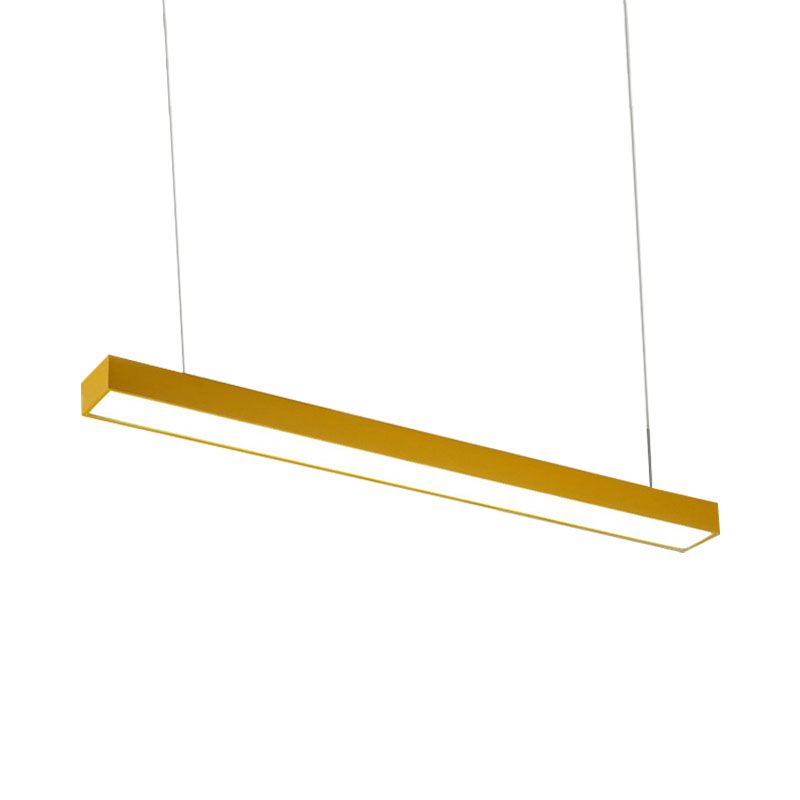
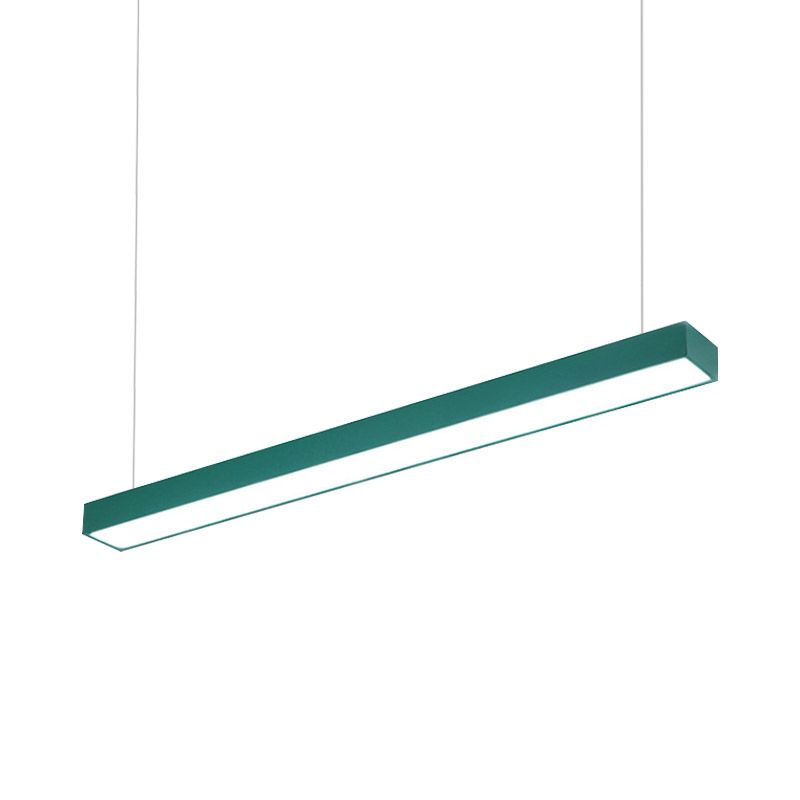
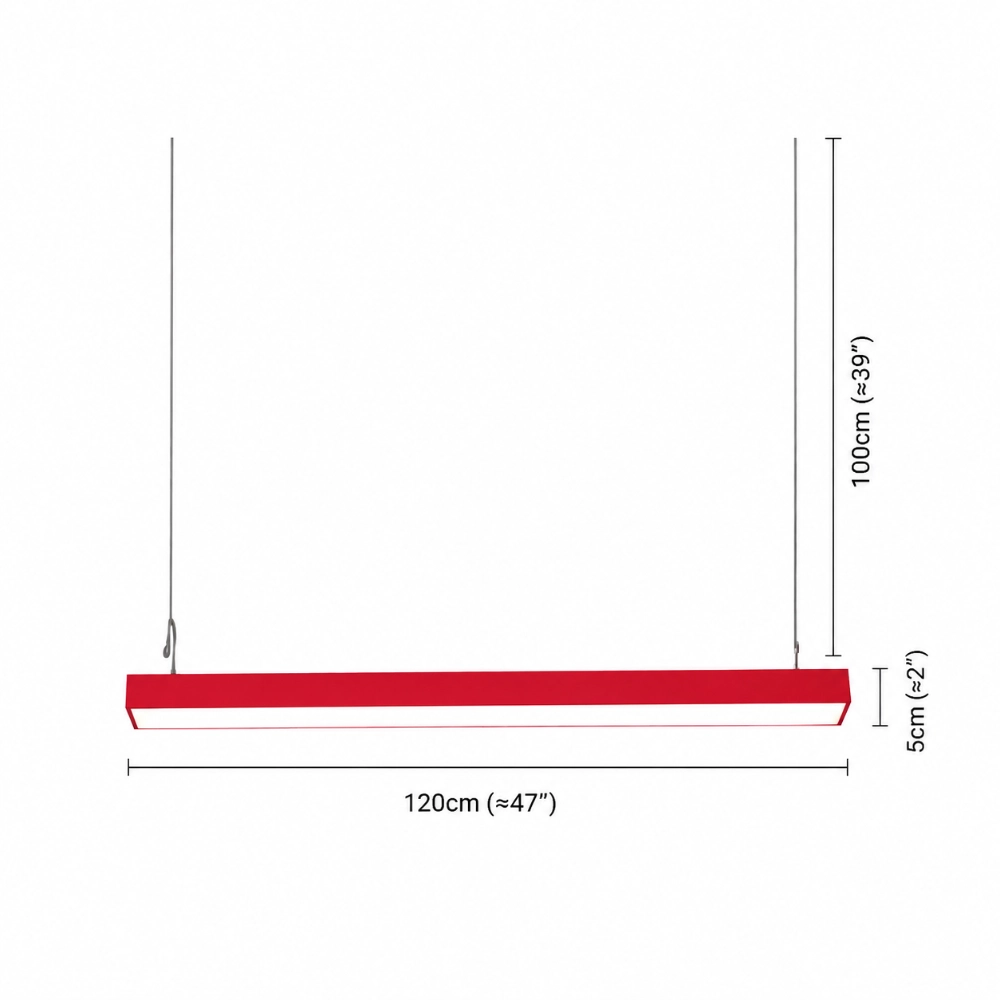
A 47-inch rectangular body is long enough to behave like a serving line. Edge keeps the geometry simple: metal, matching rectangular canopy, two thin cords, underside LED, anti-corrosion finish, adjustable cord. It is sold for offices and kitchen islands, which fits a surface that has to survive homework, pastry, and people who will not sit down. Look at the Edge rectangular pendant with a real tray on the counter, not with an empty styling shot.
Red is blunt and good with tomato and winter citrus. Yellow is kind to butter and pastry. Green makes herbs look deliberate. Blue keeps a pale kitchen from flattening into one tone. The color is for the room. The underside is for the food.
Keep Extra Objects Off the Island Ceiling
If a nearby corner needs a more playful object, keep it off the serving line. The Elara tiered metal pendant belongs over a smaller table or a side scene, not competing with a cheese board. If you need a quiet ceiling in an adjacent bay, the Prismya pebble ceiling light is a different type altogether. The island can stay a straight bar. The rest of the house can have opinions.
Mixing types is useful. Mixing them over the same tray is how you get glare, clutter, and a photograph that looks busier than the food.
Leave the Surface Ready for the Next Tray
Before you cut a cord or lock a height, put out the actual objects: a cookie sheet, a long board, a stack of plates, two empty glasses. Look for the dark hinge in the middle. If you can see it, the fixture is too short or too dotted. If the whole run is readable, you can host without performing.
Color can do this without a crate of garlands. One durable finish is enough of a holiday cue. That version of the argument is here: Colorful Kitchen Island Lighting for Holiday Hosting Without Seasonal Clutter.
Cookie trays, cheese boards, and accidental afterparties are the same lighting problem in three costumes. Cover the food in one line. Let the dining table stay set. The night will decide where it wants to live, and it will almost always choose the island.
How do you light a kitchen island used as a buffet?
Use one continuous linear field over the serving run so trays and boards do not fall into dark gaps.
Why do cheese boards look dull under some pendants?
Broken pools of light flatten pale food. A single bar keeps the board in one even wash.
Do I still need the dining table lit?
Yes, later. The first and last hours of a gathering usually happen where the food is put down, which is the island.