
Die Kuratorenauswahl für Alltagszimmer
Verzichten Sie auf zusätzliche Dekoration: Lassen Sie einen einzigen Lichtstrahl den Raum gestalten.
Ein Zuhause wirkt stimmig, wenn das Auge weiß, wohin es schauen, was es als Nächstes wahrnehmen und wo es verweilen soll. Dieser Effekt entsteht durch Hierarchie und Raumaufteilung, nicht durch den Kauf weiterer Gegenstände. Eine präzise platzierte Lichtlinie kann helfen, die vorhandenen Besitztümer zu ordnen, aber nur, wenn ihre Struktur zur Architektur passt und ihre Helligkeit die ausgestellten Objekte respektiert.
Kuratiert ist eine Hierarchie, keine Einkaufsliste
Der schnellste Weg zu einem galerieartigen Raum führt über Reduktion. Wählen Sie einen Hauptblickpunkt, eine unterstützende Gruppe von Elementen und einen ruhigen Hintergrund. Der Hauptblickpunkt könnte ein Gemälde und ein Sofa sein, ein Esstisch vom Eingang aus oder der Raum über einer Treppe. Die unterstützenden Elemente sollten diesen Blickpunkt verstärken; alles andere kann optisch ruhig bleiben. Die Beleuchtung verdeutlicht die Ordnung, anstatt selbst zum Blickfang zu werden.
Übernehmen Sie die drei Tricks des Kurators: Auswählen, Leertaste, Sequenz
Es handelt sich hierbei eher um eine redaktionelle Methode als um eine wissenschaftliche Formel. Ihr Wert liegt im praktischen Bereich: Sie zwingt jedes Objekt und jedes Licht dazu, sich seinen Platz in der visuellen Ordnung zu verdienen.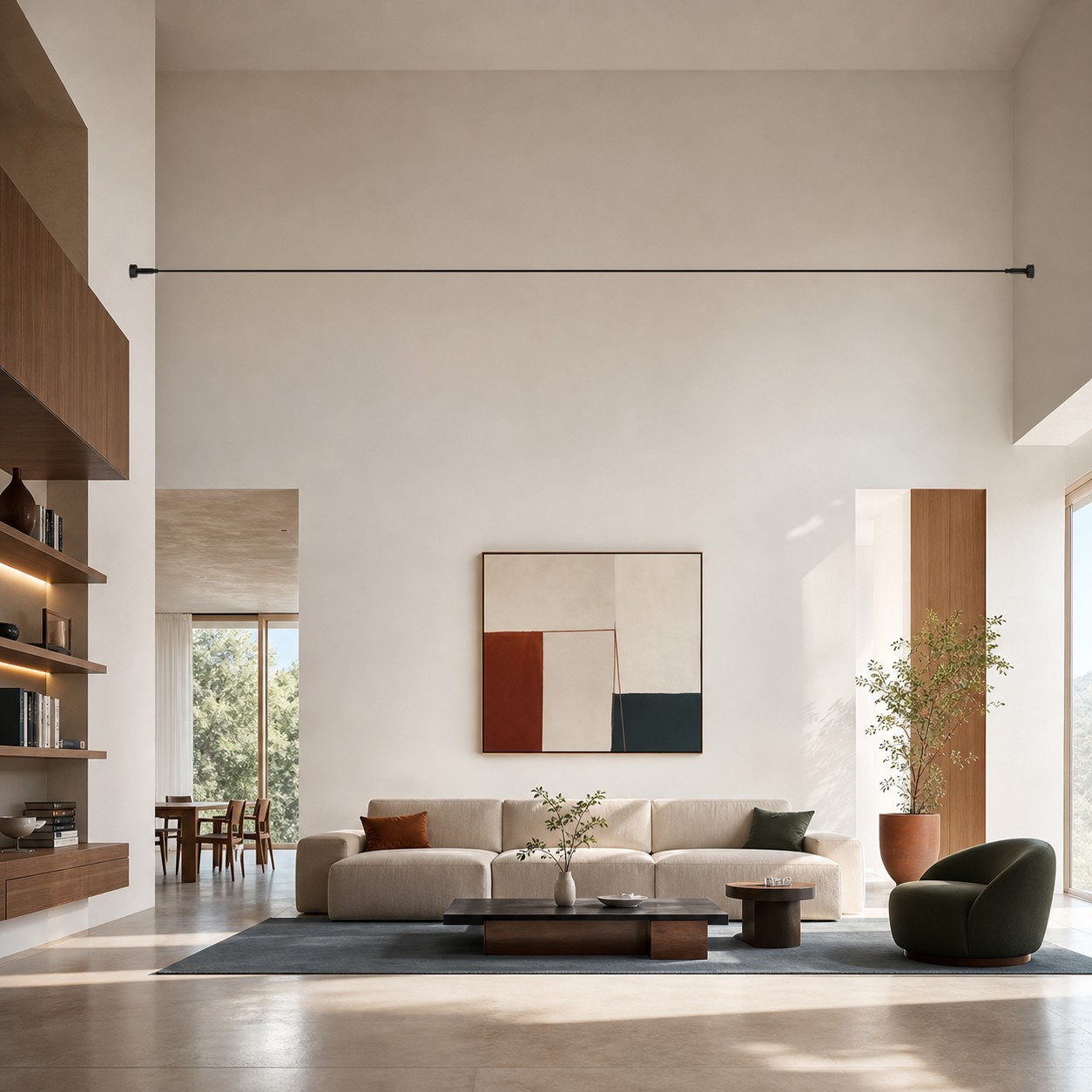
Zeichne eine Galerieachse durch den offenen Raum
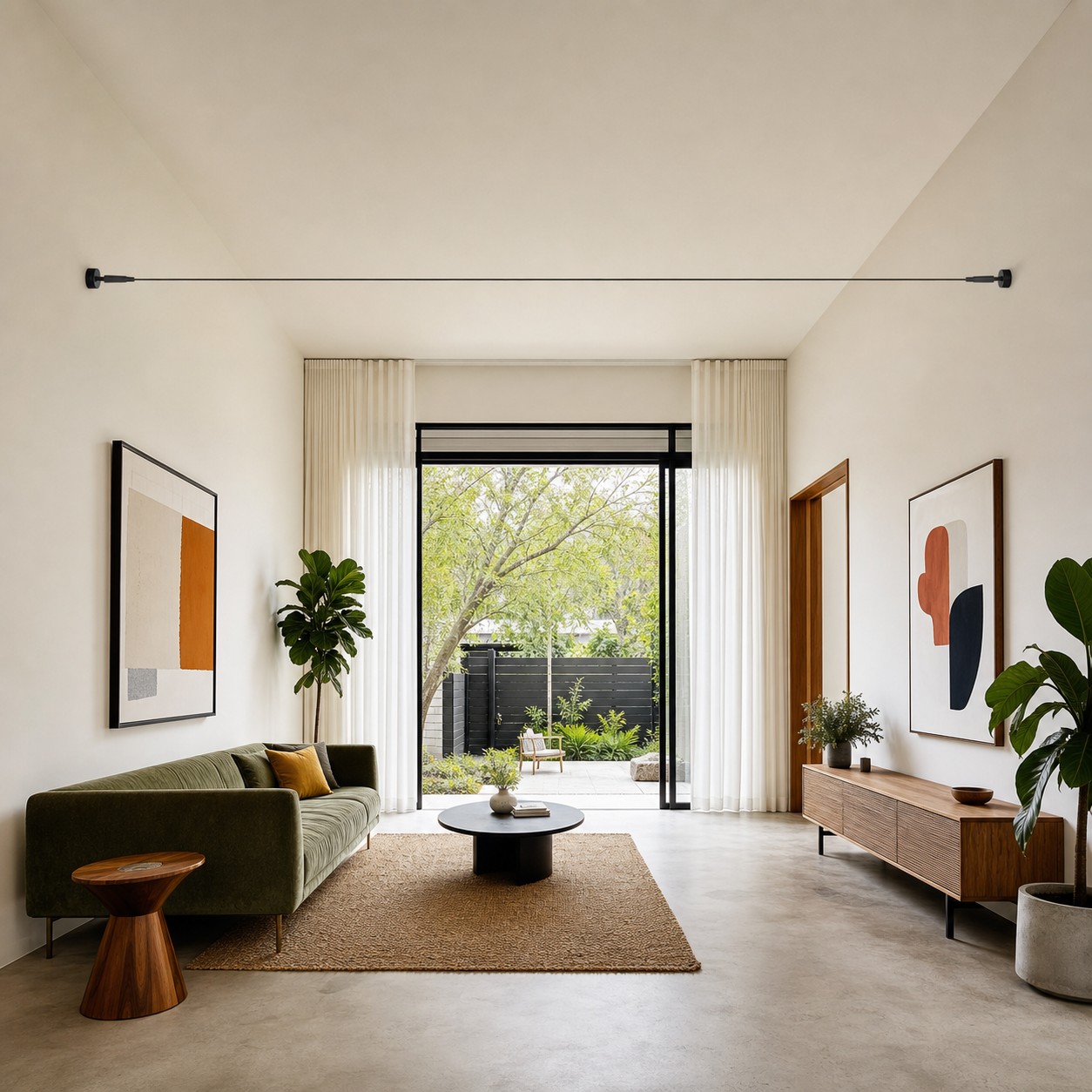
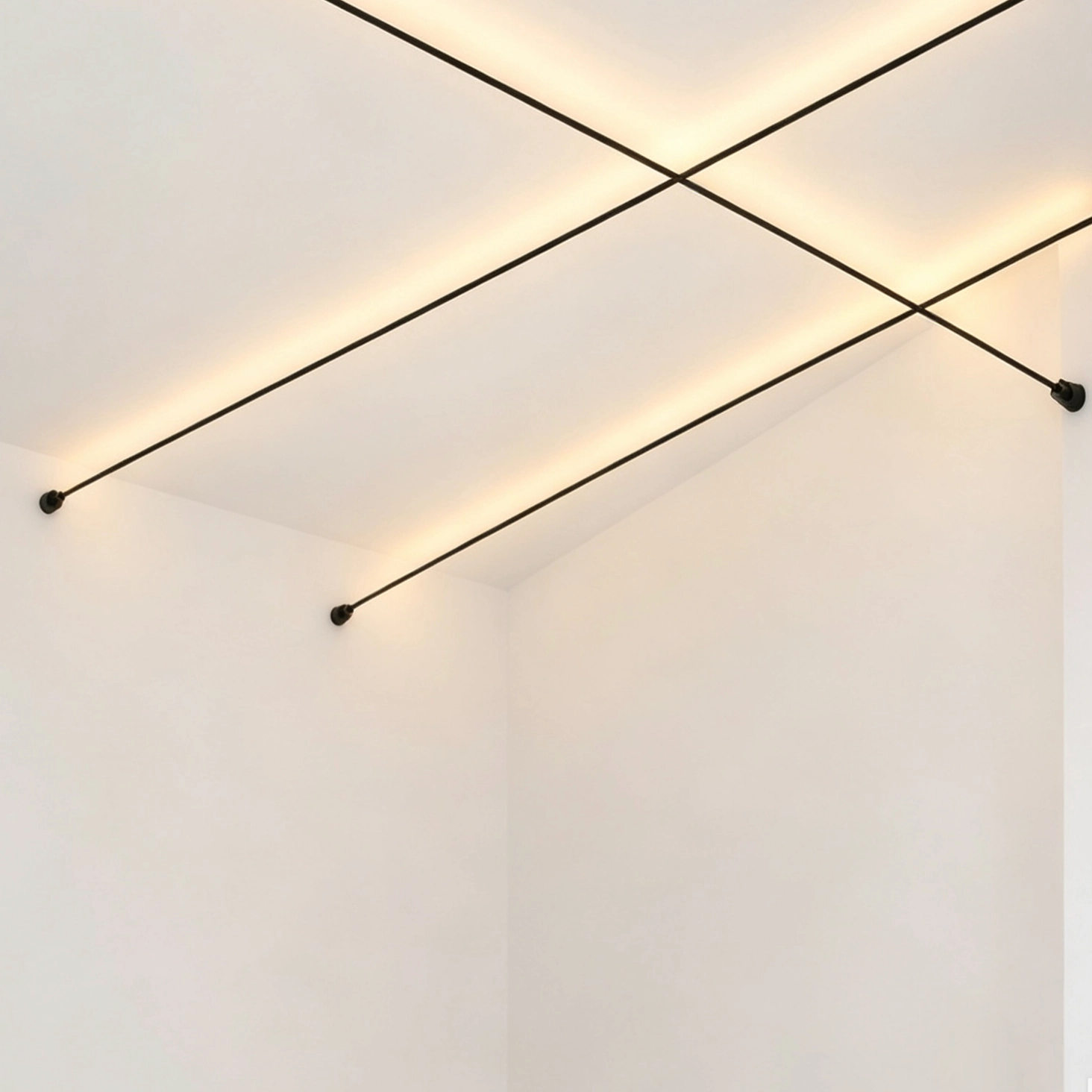
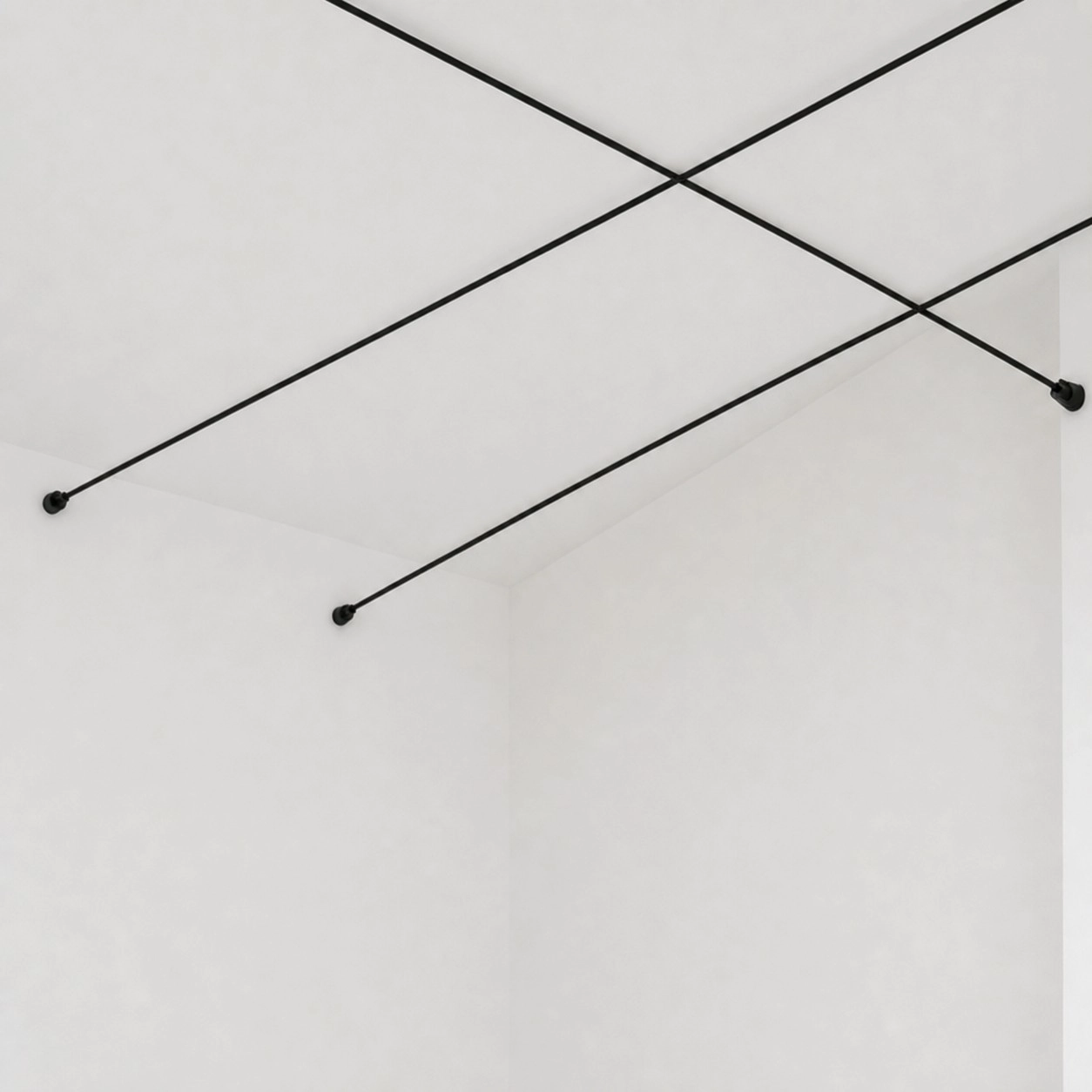
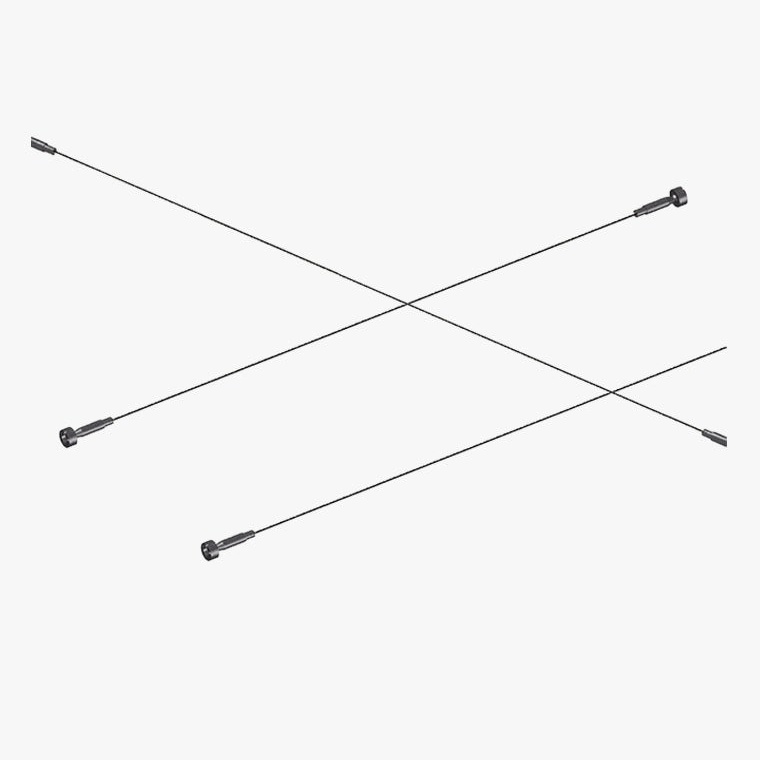
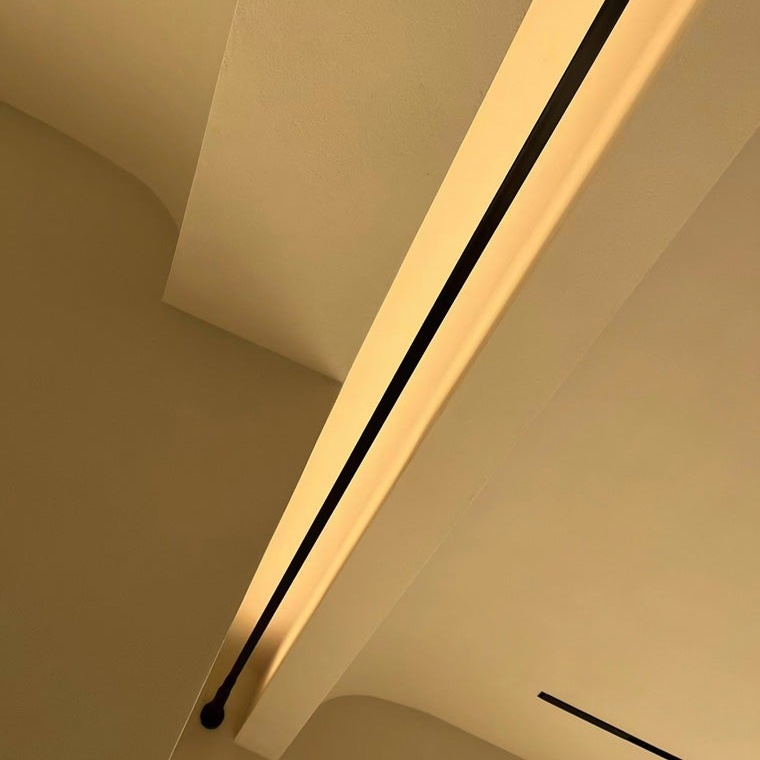
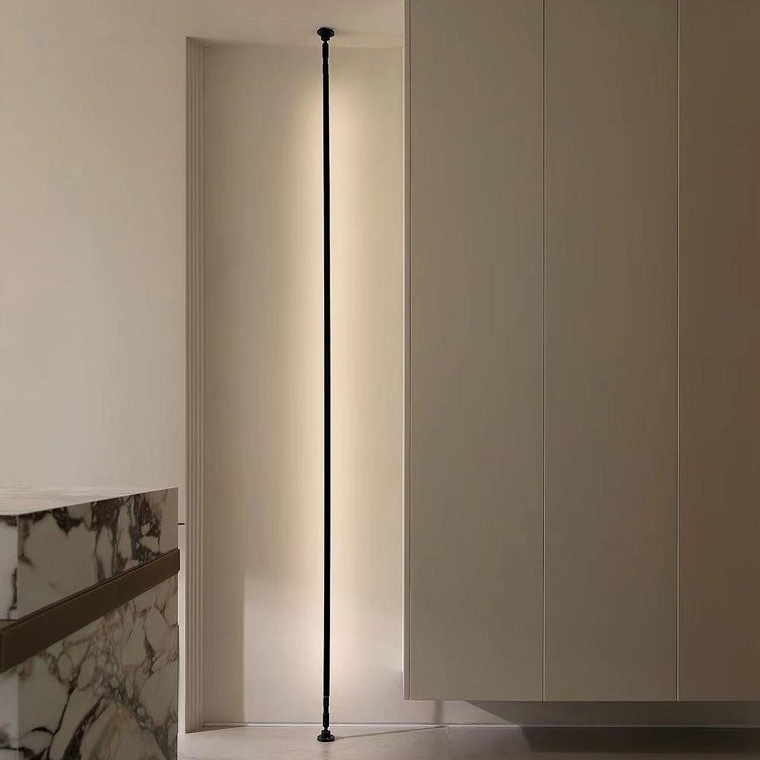
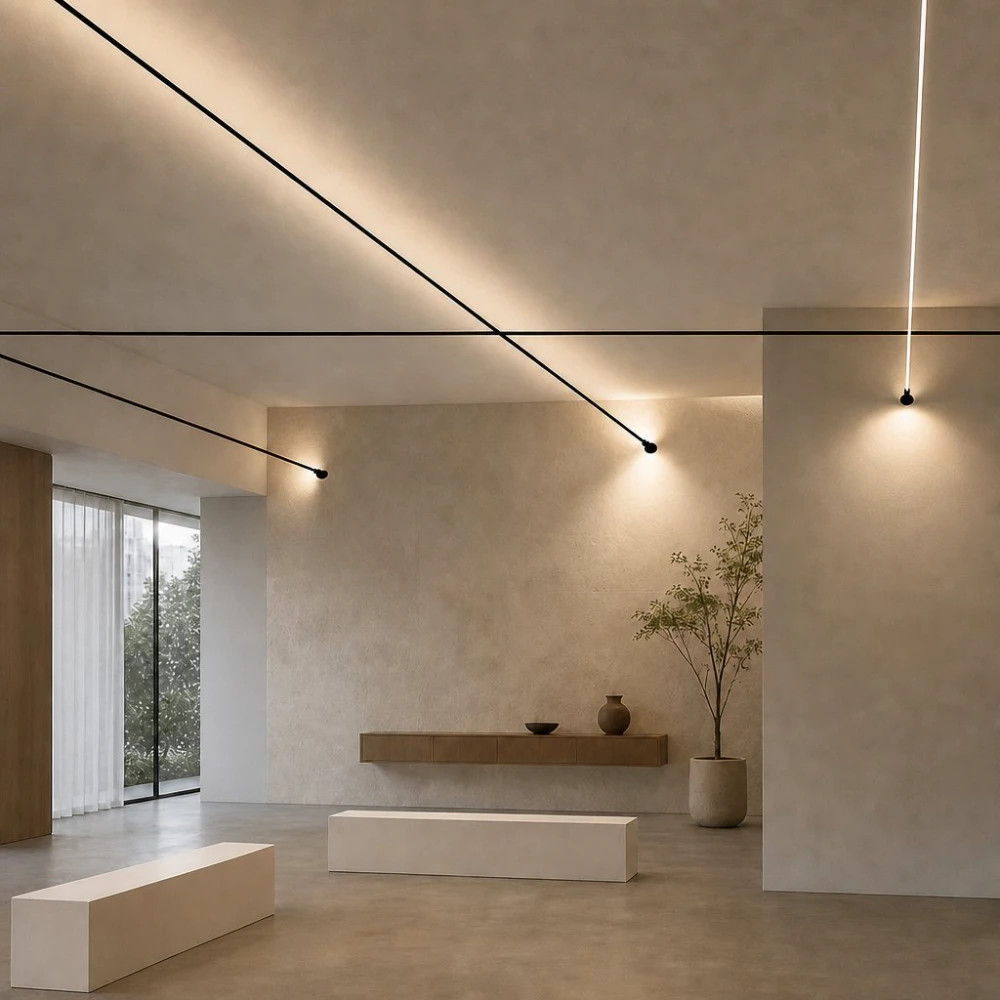
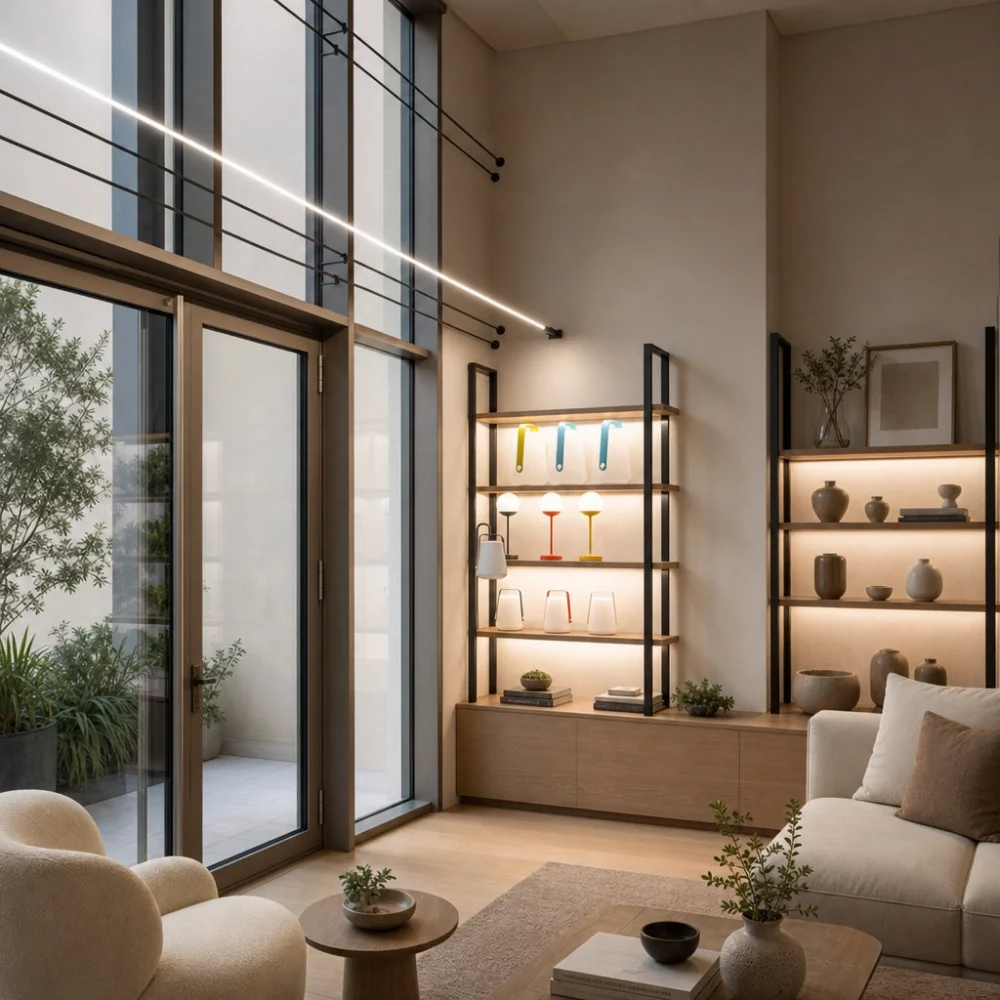
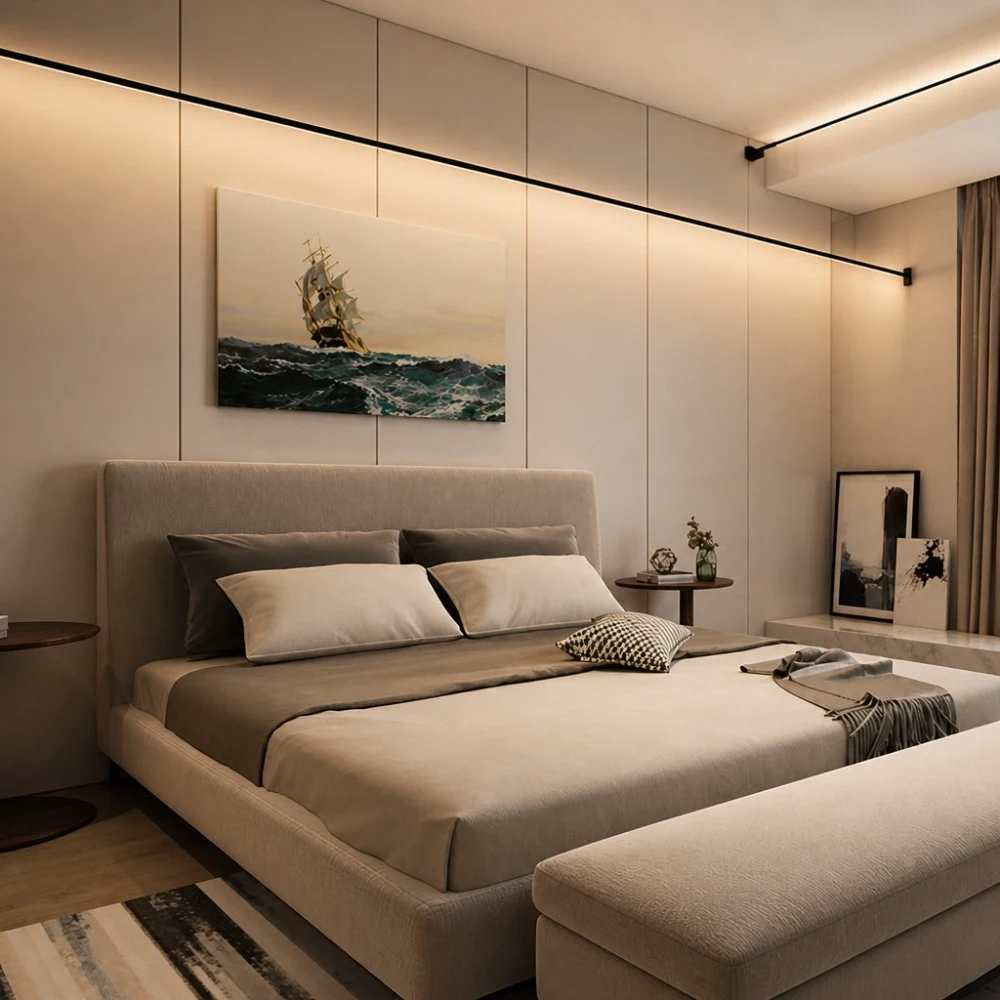
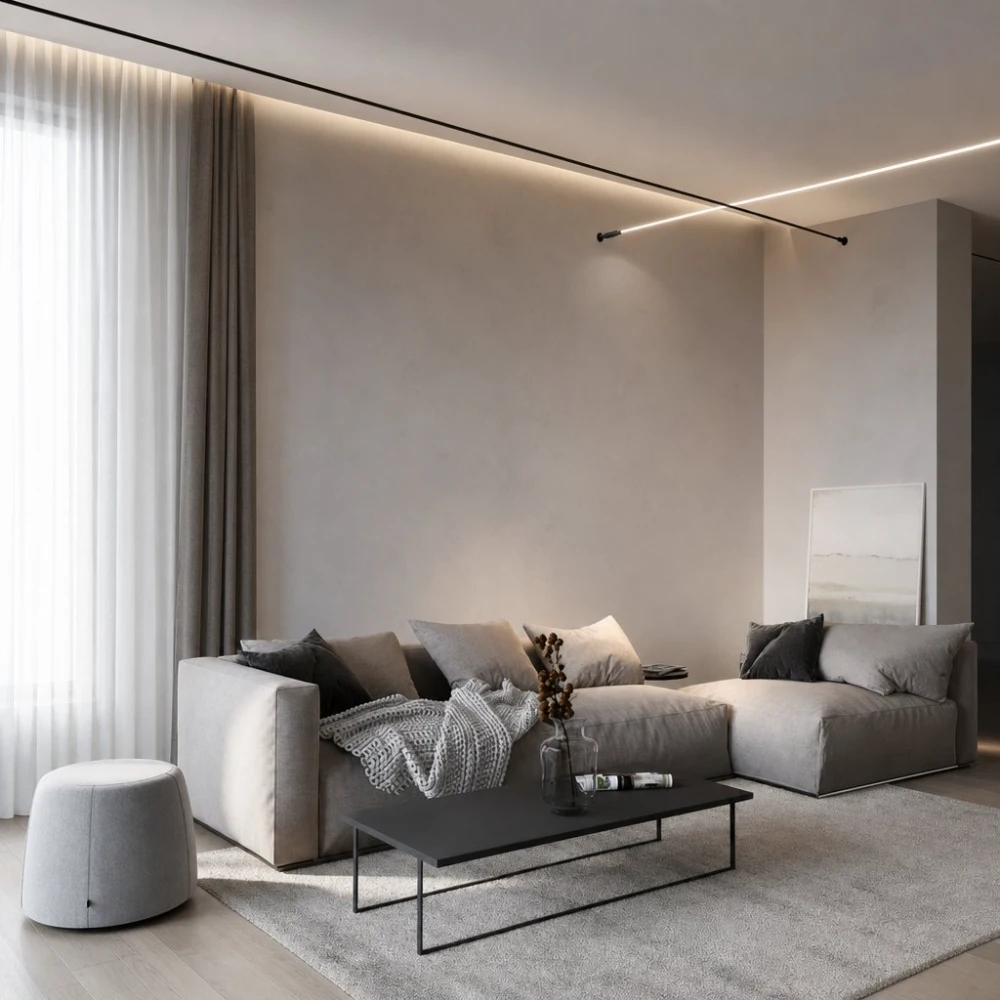
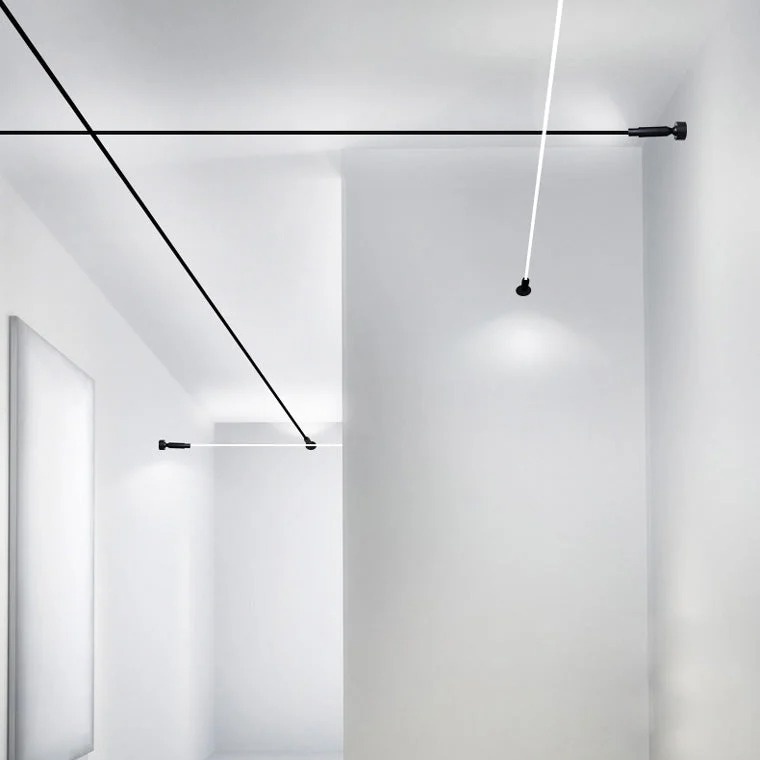
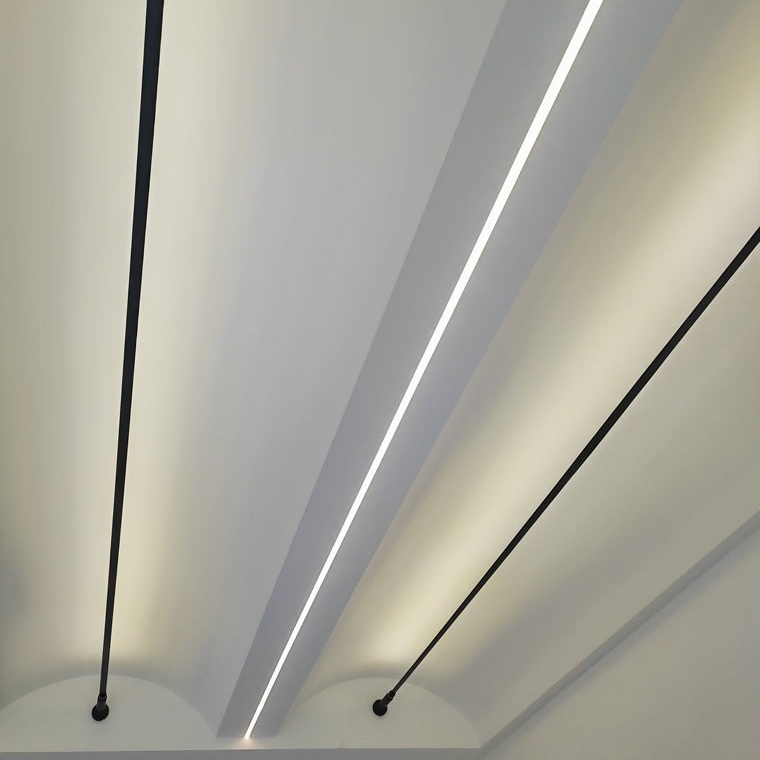
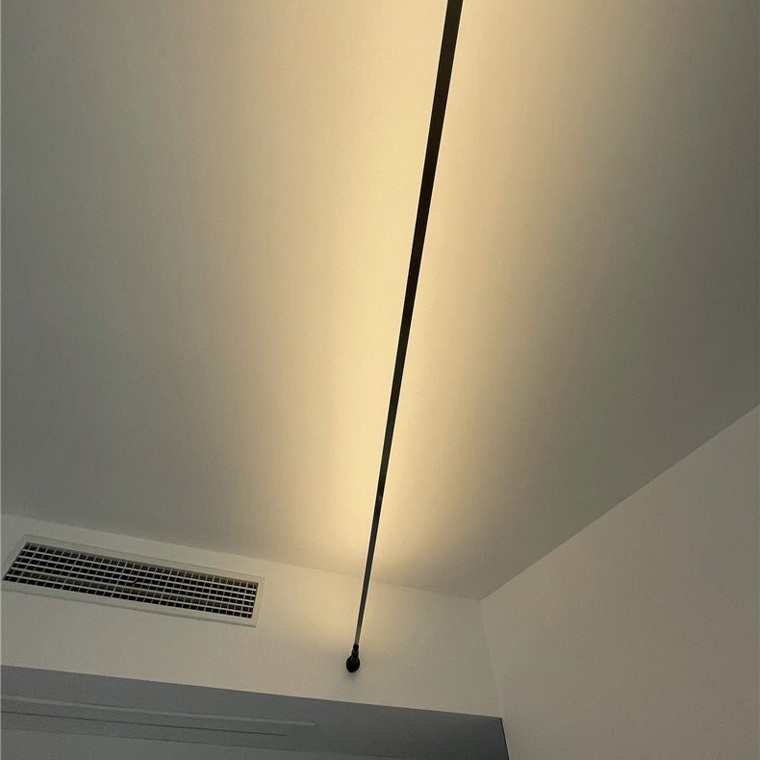
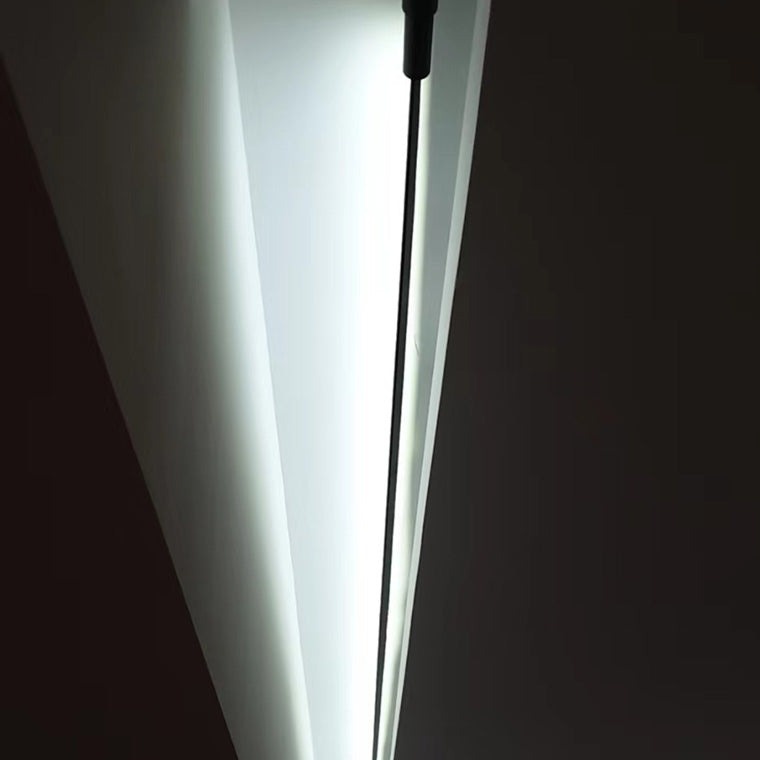
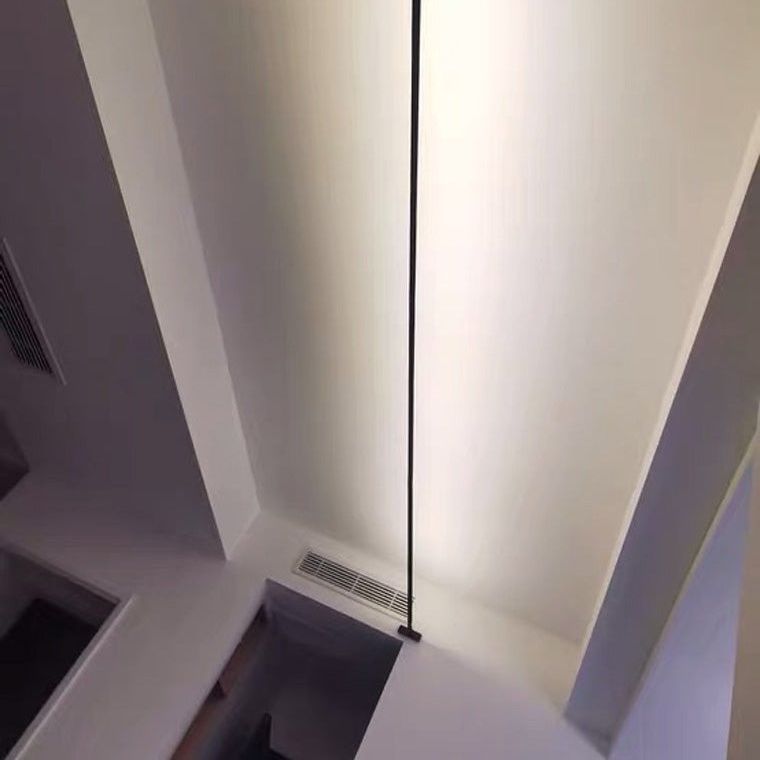
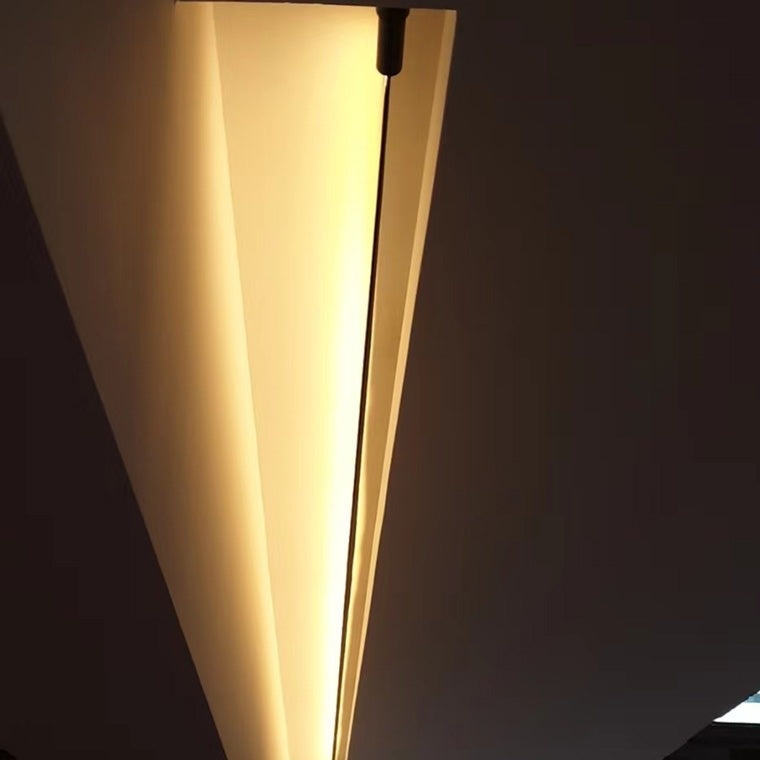
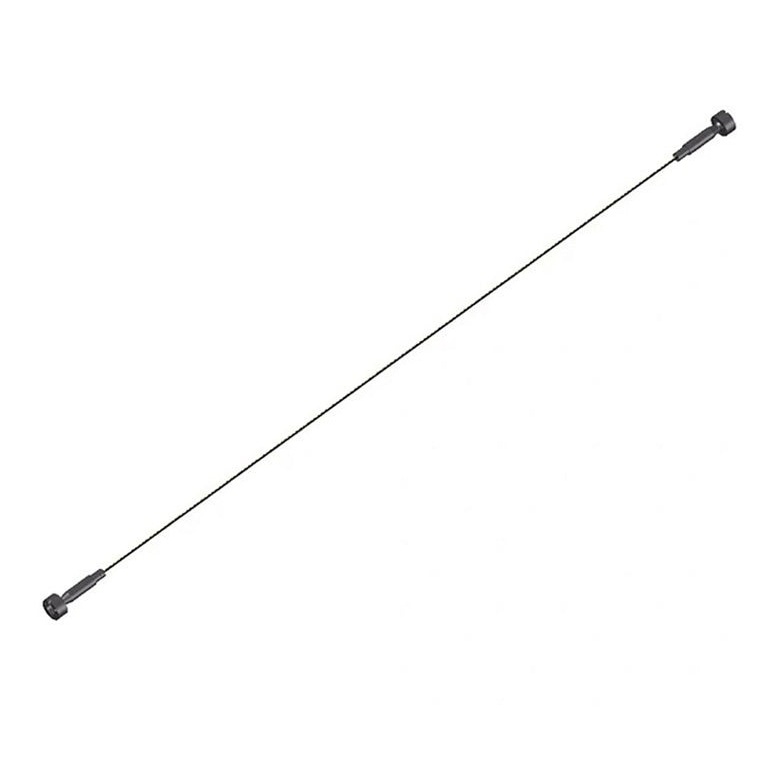
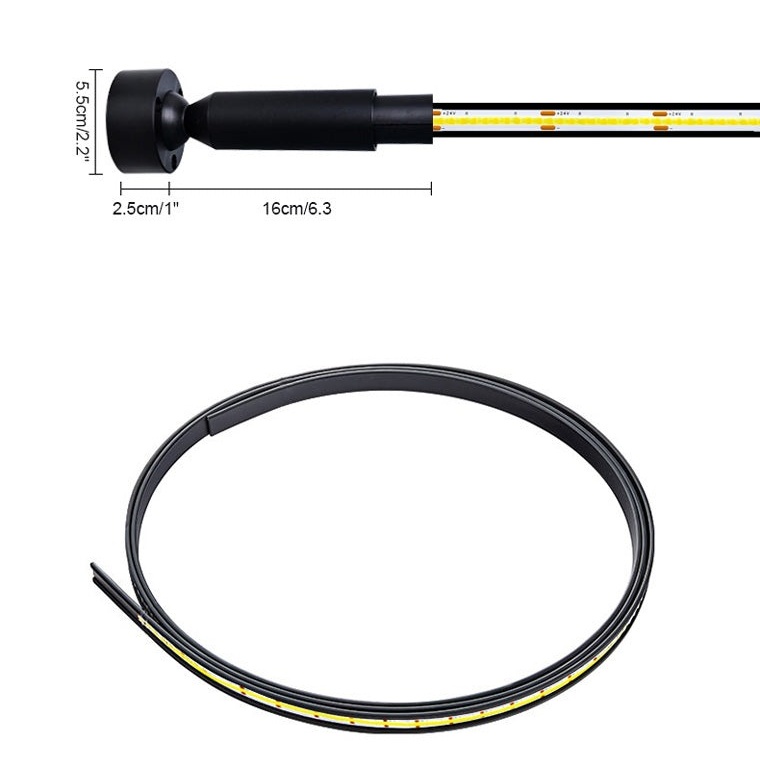
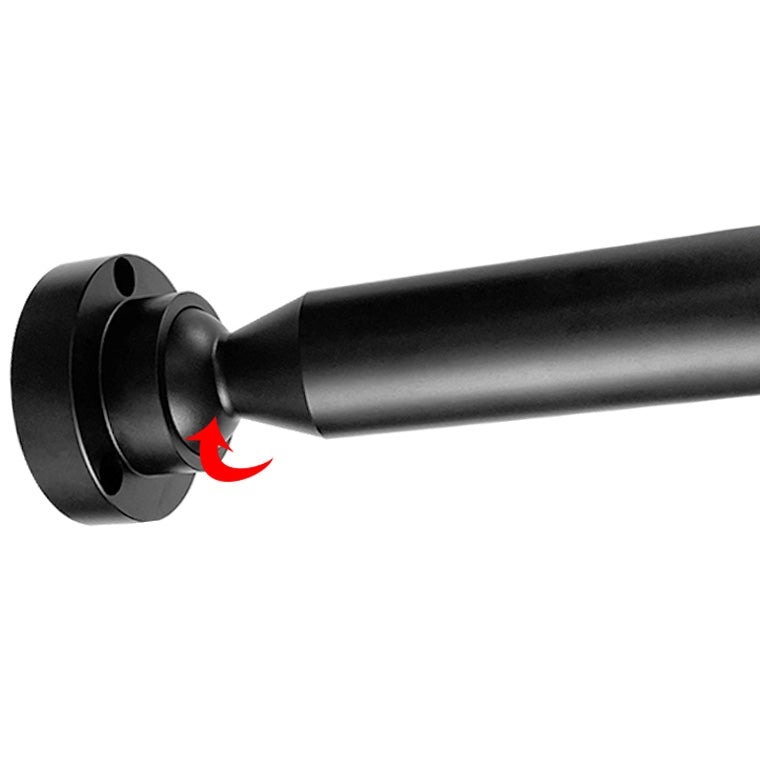
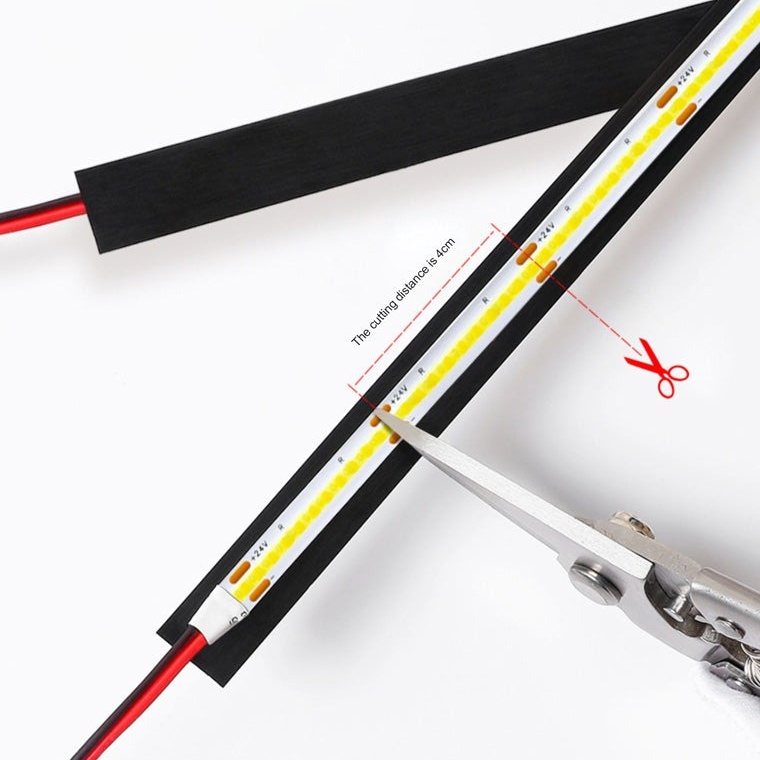
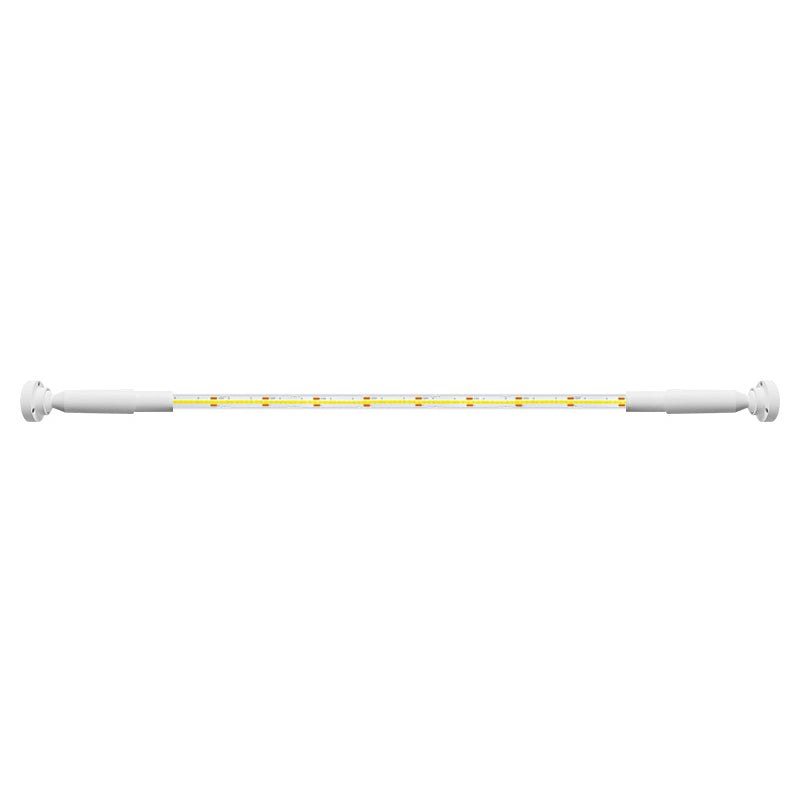
Die Thalyn-Leuchte erzeugt eine lange optische Achse, da ihr Leuchtkörper im offenen Raum absolut gerade verläuft und lediglich an beiden Enden durch Wandhalterungen fixiert ist. Sie ist kein an der Wand befestigter Streifen und kann weder gebogen, gedreht, um Ecken geführt noch individuell geformt werden. Genau diese Beschränkung verleiht der Linie ihre klare Linienführung.
Bevor Sie die Installation als kuratorische Maßnahme betrachten, legen Sie zwei geeignete Wandbefestigungspunkte und einen freien Weg zwischen ihnen fest. Spannen Sie eine abnehmbare Schnur entlang der geplanten Strecke und überprüfen Sie diese von jedem Eingang und Sitzplatz aus. Falls die Schnur Kunstwerke, Vorhänge, eine Türöffnung oder den täglichen Verkehrsfluss ungünstig schneidet, verlegen Sie beide Befestigungspunkte oder wählen Sie eine andere Lösung.
Eine ausführlichere Erklärung dieser Konstruktion finden Sie unter Was ist ein Skyline Linear Chandelier und wie unterscheidet er sich von einer herkömmlichen linearen Leuchte? Sobald die Struktur Sinn ergibt, Prüfen Sie die Thalyn-Optionen für geradlinige Spannweiten. im Vergleich zum tatsächlichen Raum.
Drei Räume, drei verschiedene Redaktionsjobs
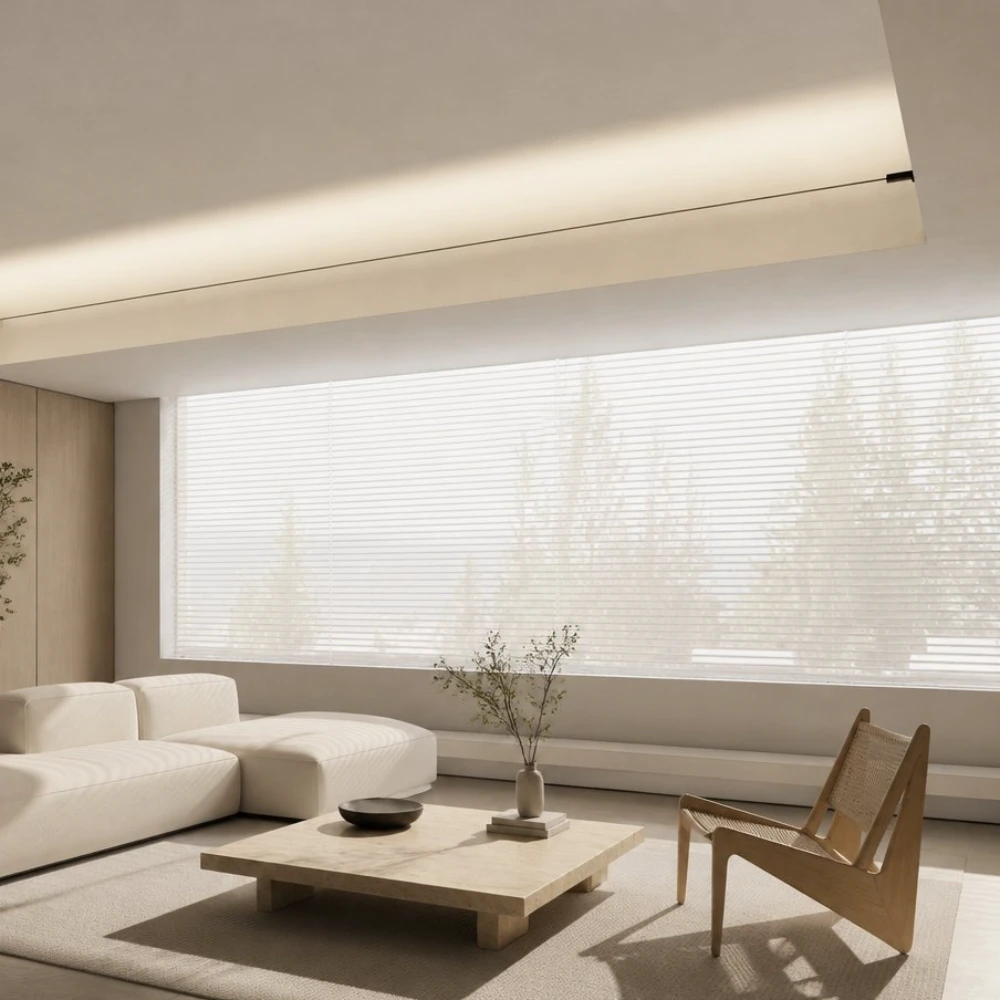
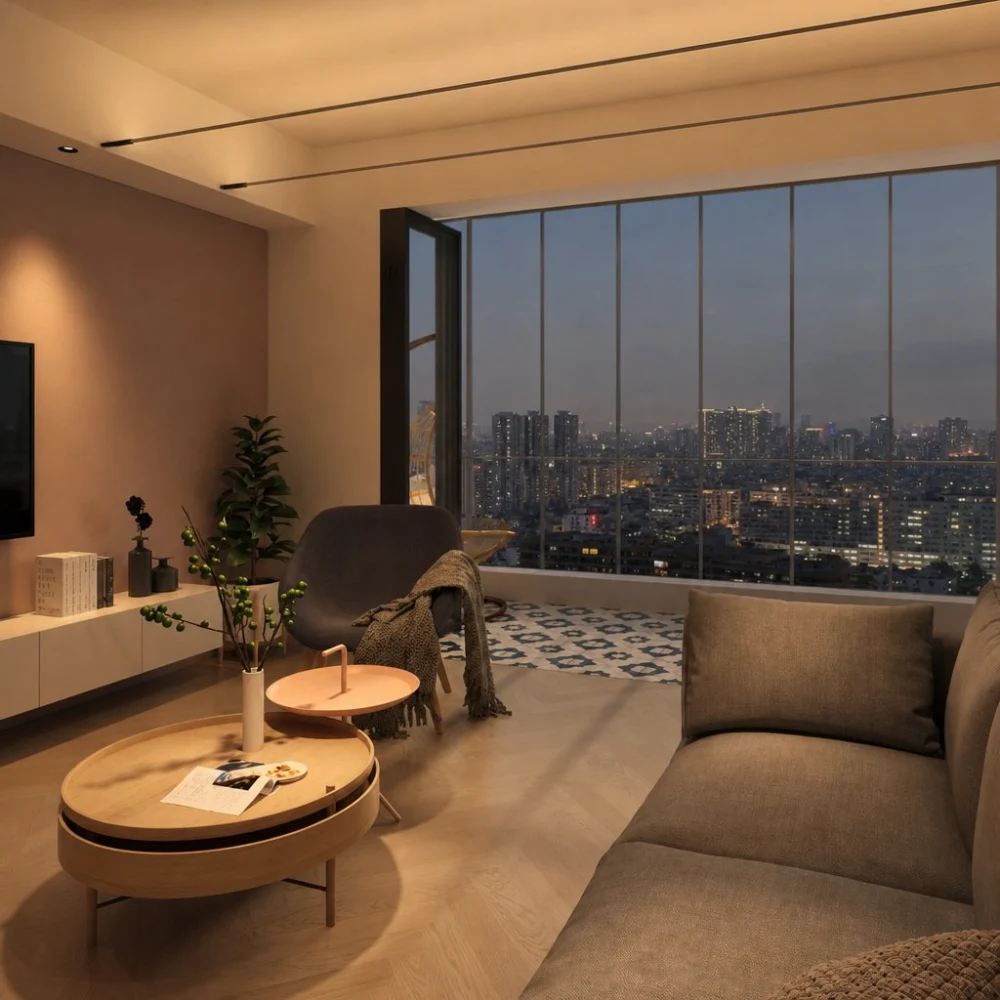
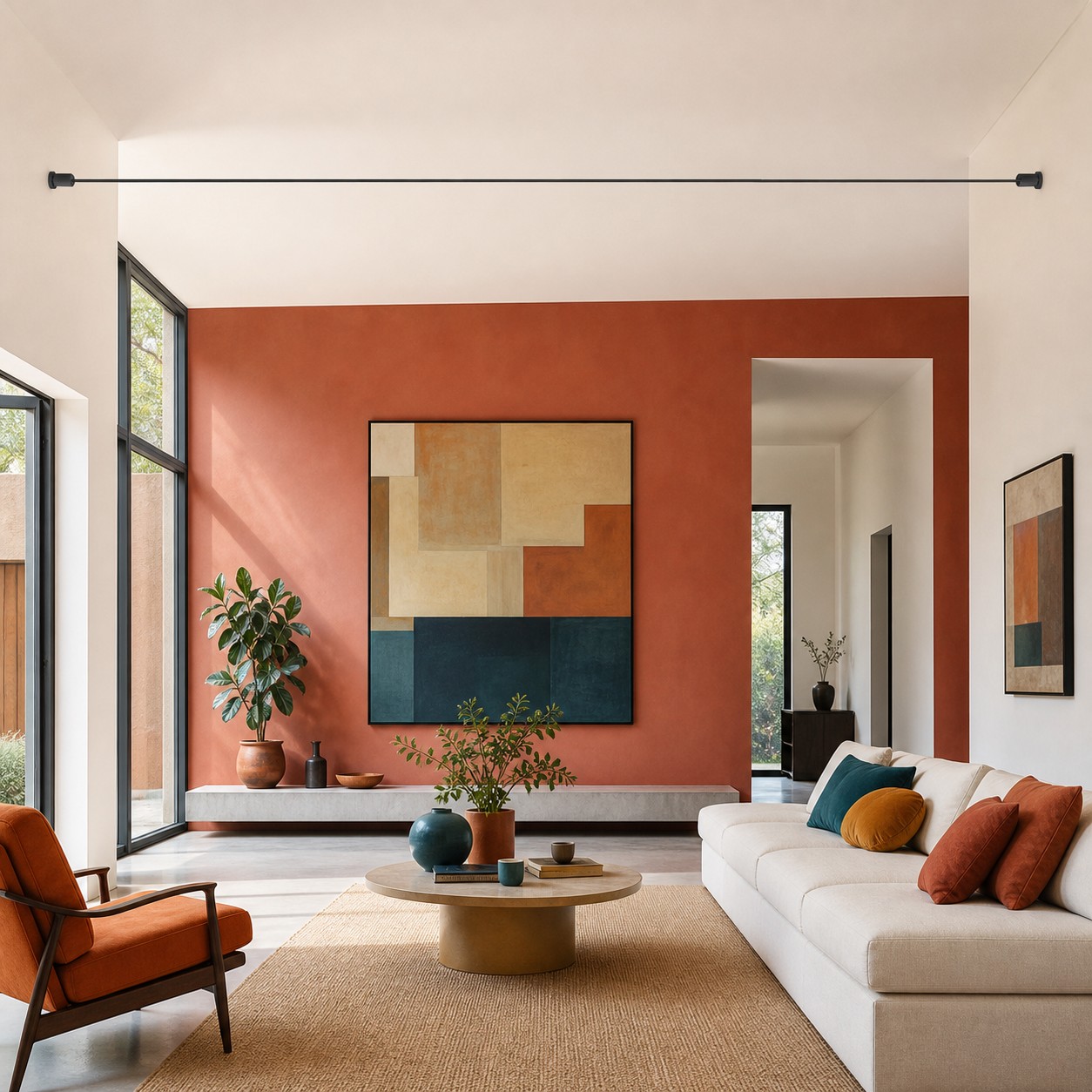
- Wohnzimmer: Die Hauptkomposition festlegen. Richten Sie die geraden Linien eher an der Hauptbeziehung zwischen Sofa und Kunstwerk aus als an jedem einzelnen Objekt im Raum. Beistelltische und kleine Accessoires sollten eher dezent gehalten werden.
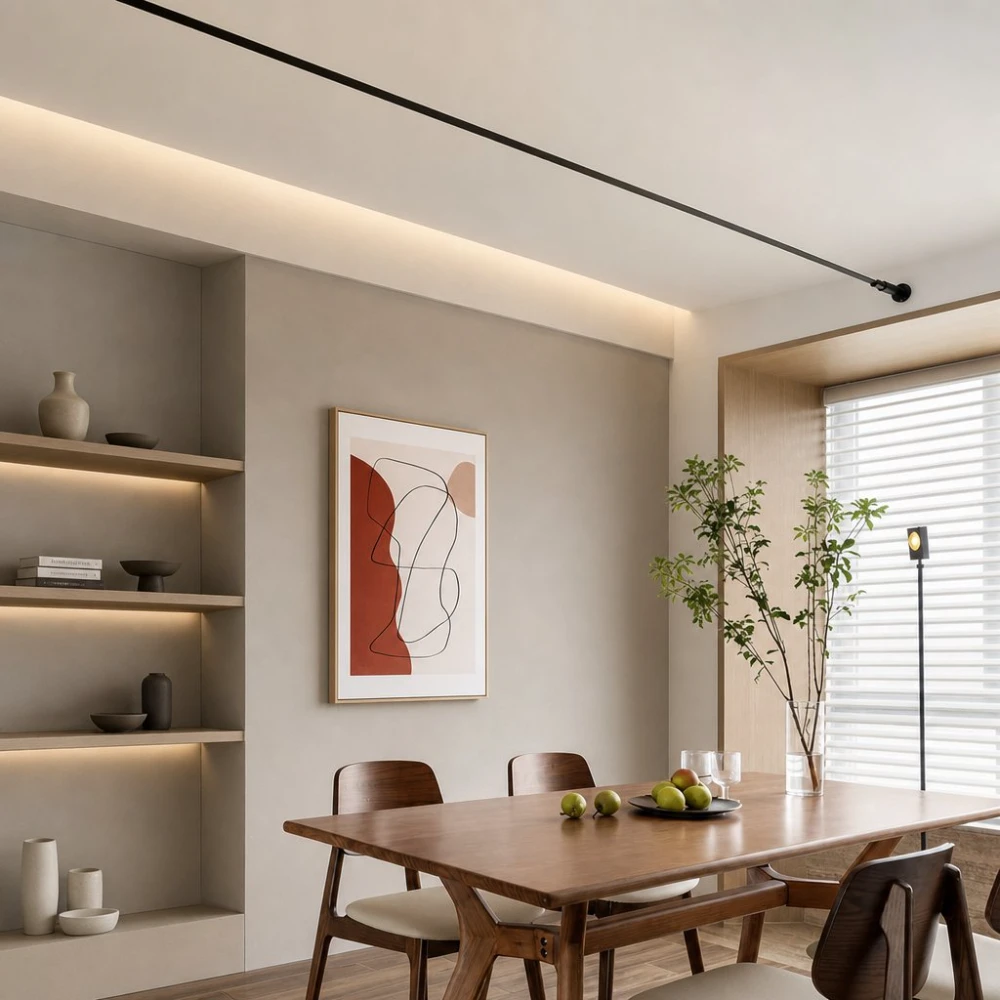
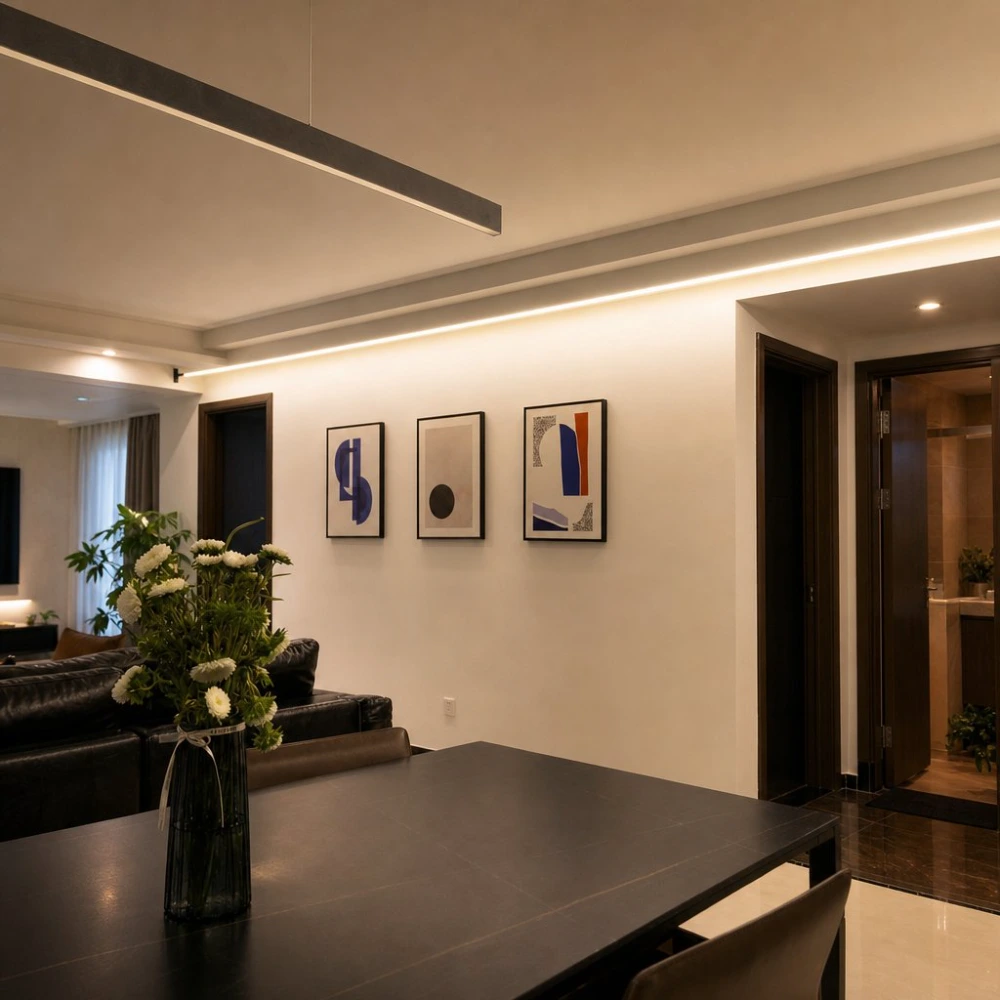
- Offener Wohn- und Essbereich: Verbinden statt trennen. Verwenden Sie die Linie, um zwei in einer Längsansicht sichtbare Möbelbereiche miteinander zu verbinden. Sie sollte den offenen Raum klar durchqueren, ohne den Eindruck einer von der Decke hängenden Bar über einem Tisch zu erwecken.
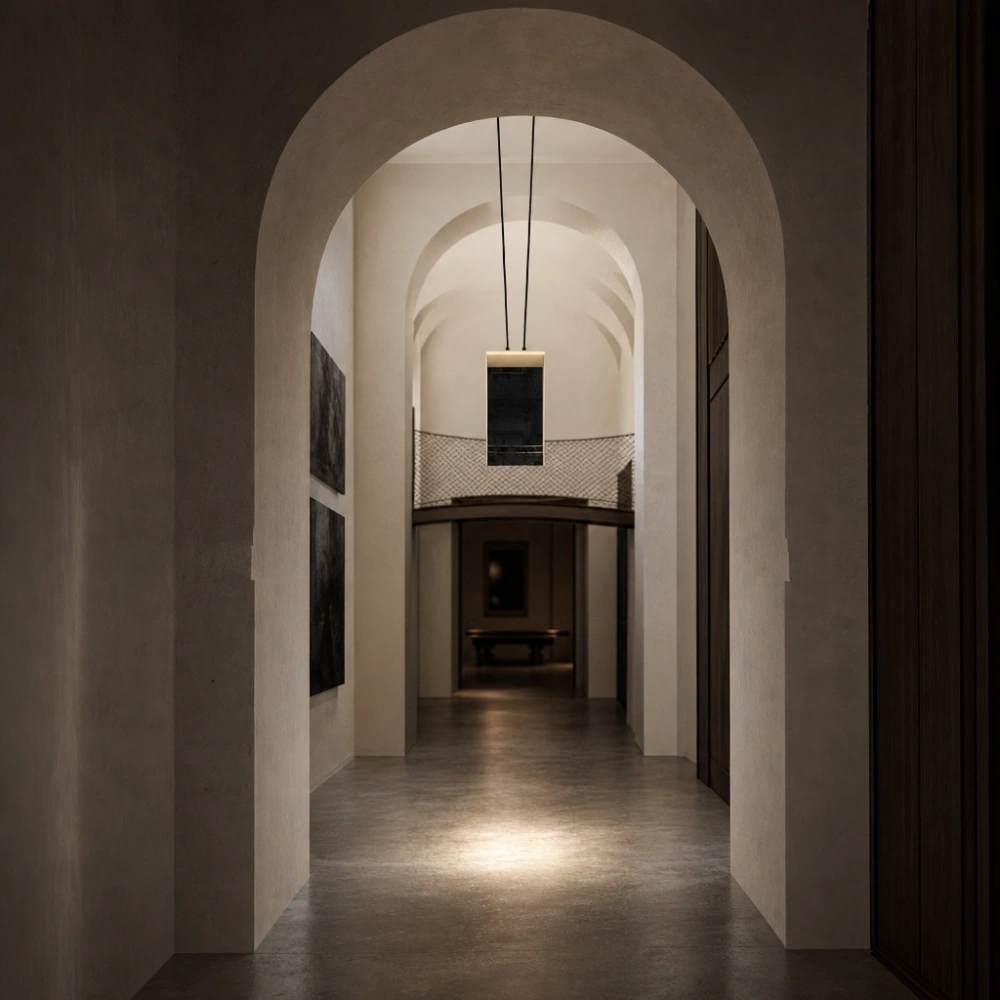
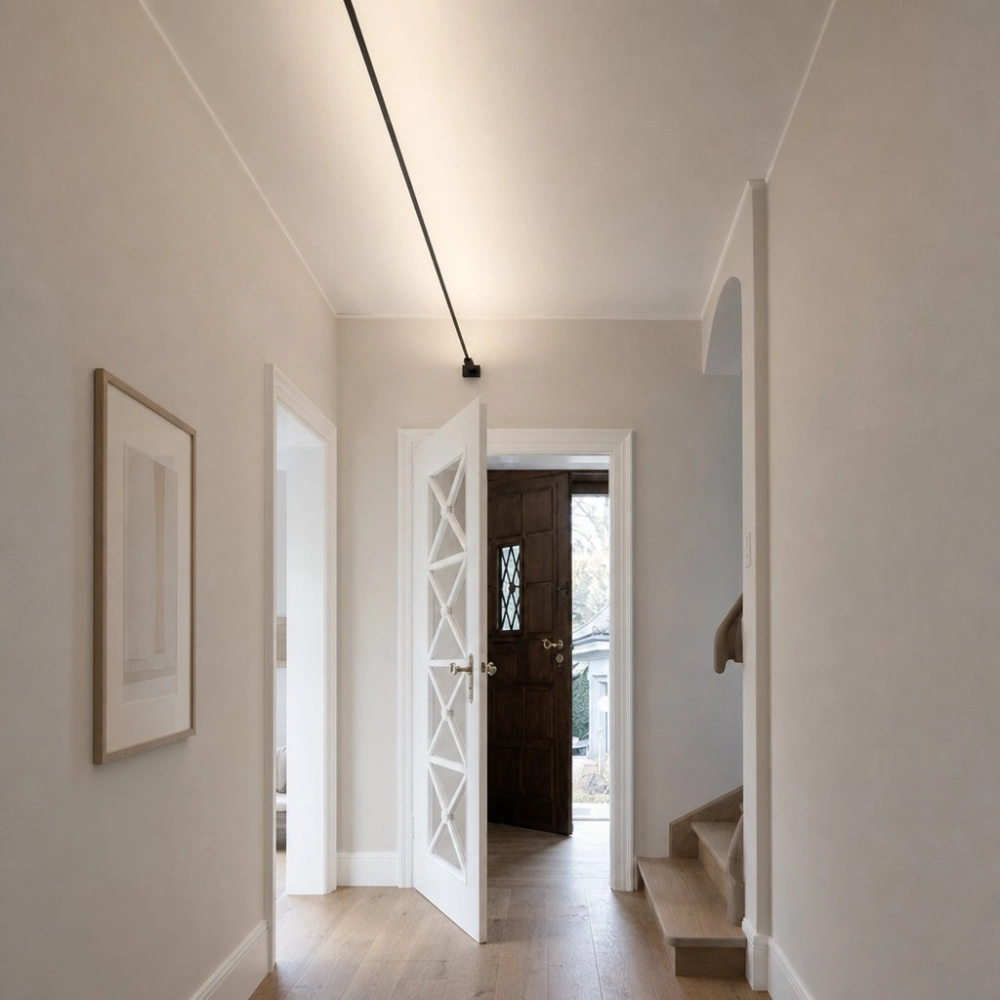
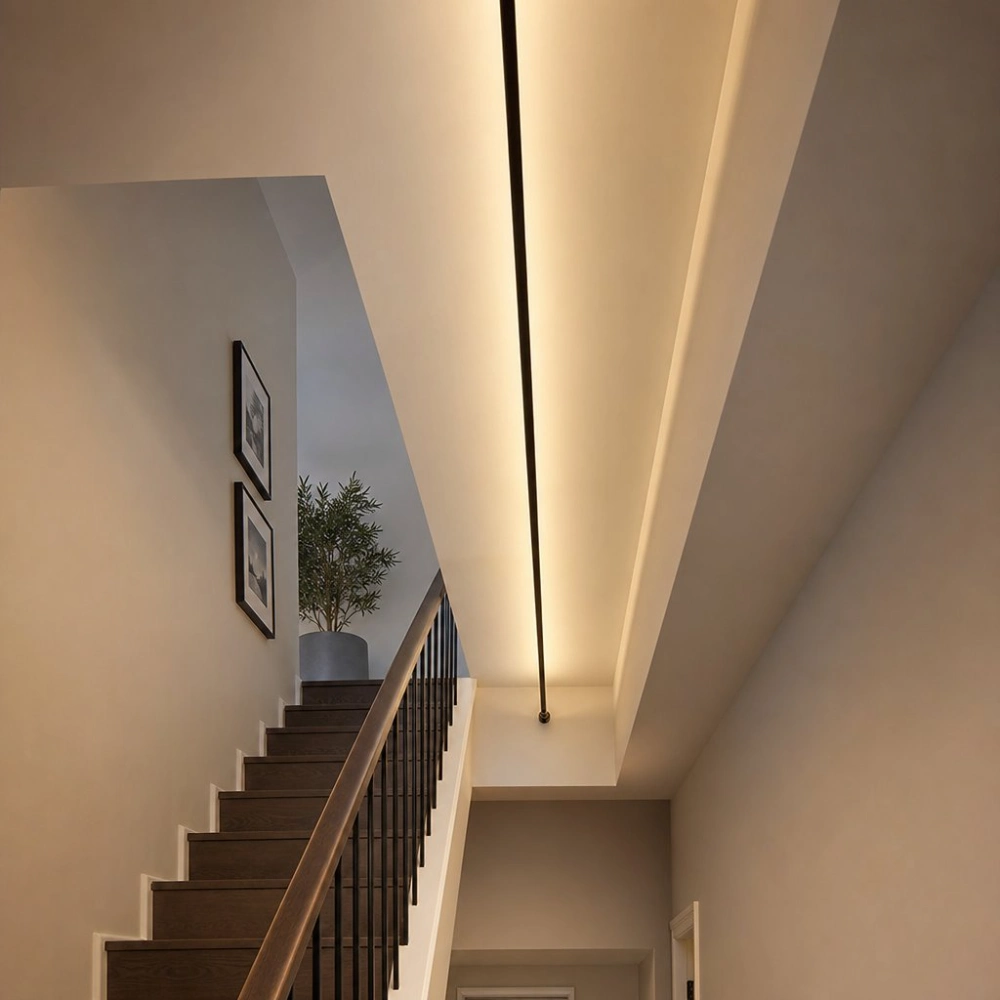
- Eingangsbereich oder Treppenhaus: Schaffen Sie einen einprägsamen ersten Eindruck. Eine ruhige horizontale Linie kann einem hohen oder optisch weitläufigen Baukörper einen stabilen Bezugspunkt geben. Überprüfen Sie die Linie von unten und von oben, bevor Sie sich festlegen.
Das sind unterschiedliche redaktionelle Aufgaben, keine austauschbaren Styling-Tricks. Wählen Sie eine Aufgabe und wiederholen Sie deren Logik bei der Anordnung der Möbel, der Platzierung der Kunstwerke und dem Materialkontrast.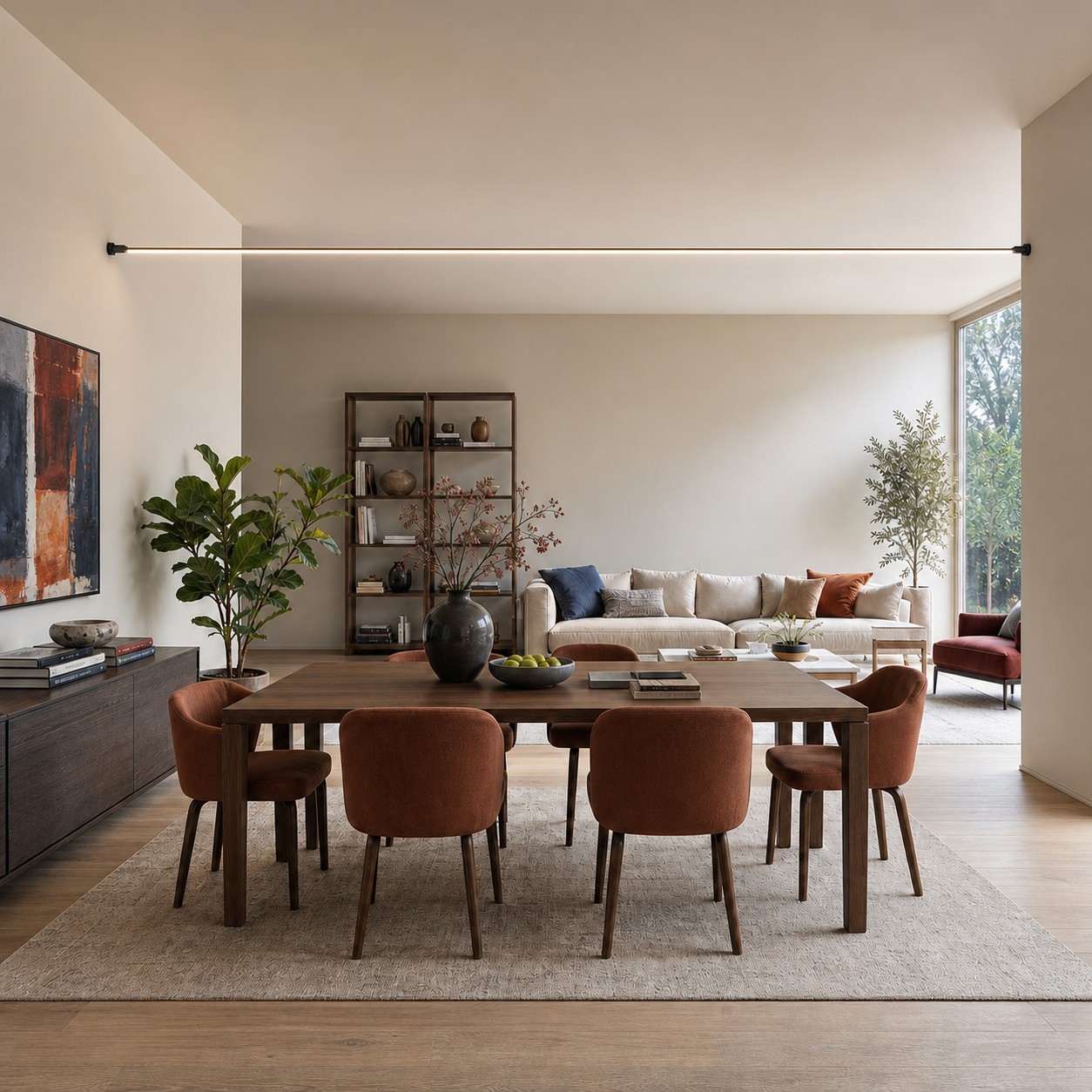
Kunst soll gesehen werden, ohne die Geschichte ins Rampenlicht zu rücken.
Der Kanadisches Naturschutzinstitut Der Artikel beschreibt ein reales Dilemma bei der Präsentation von Sammlungsstücken: Licht ist notwendig, um sie zu sehen, schädigt aber gleichzeitig einige Objekte. Er erklärt auch, dass die Gesamtbelichtungszeit von Lichtintensität und -dauer abhängt. Da ein Zuhause kein Museum ist, werden die Beleuchtungsrichtlinien von Museen nicht einfach auf Wohnräume übertragen. Das Prinzip bleibt jedoch bestehen: Mehr Licht über einen längeren Zeitraum ist nicht automatisch besser für empfindliche Kunstwerke, Textilien, Fotografien oder Papierarbeiten.
Nutzen Sie die Leuchte mit geradem Spannfeld, um den Raum zu strukturieren, nicht um alle Kunstwerke gleichmäßig auszuleuchten. Empfindliche Stücke benötigen möglicherweise eine separate, regulierbare Beleuchtung, kürzere Belichtungszeiten oder einen Standort fernab von starkem Tageslicht. Wenn es um den Erhalt des Materials geht, sollten Sie einen qualifizierten Restaurator zu den spezifischen Gegebenheiten des Materials befragen, anstatt sich auf eine allgemeine Helligkeitsempfehlung zu verlassen.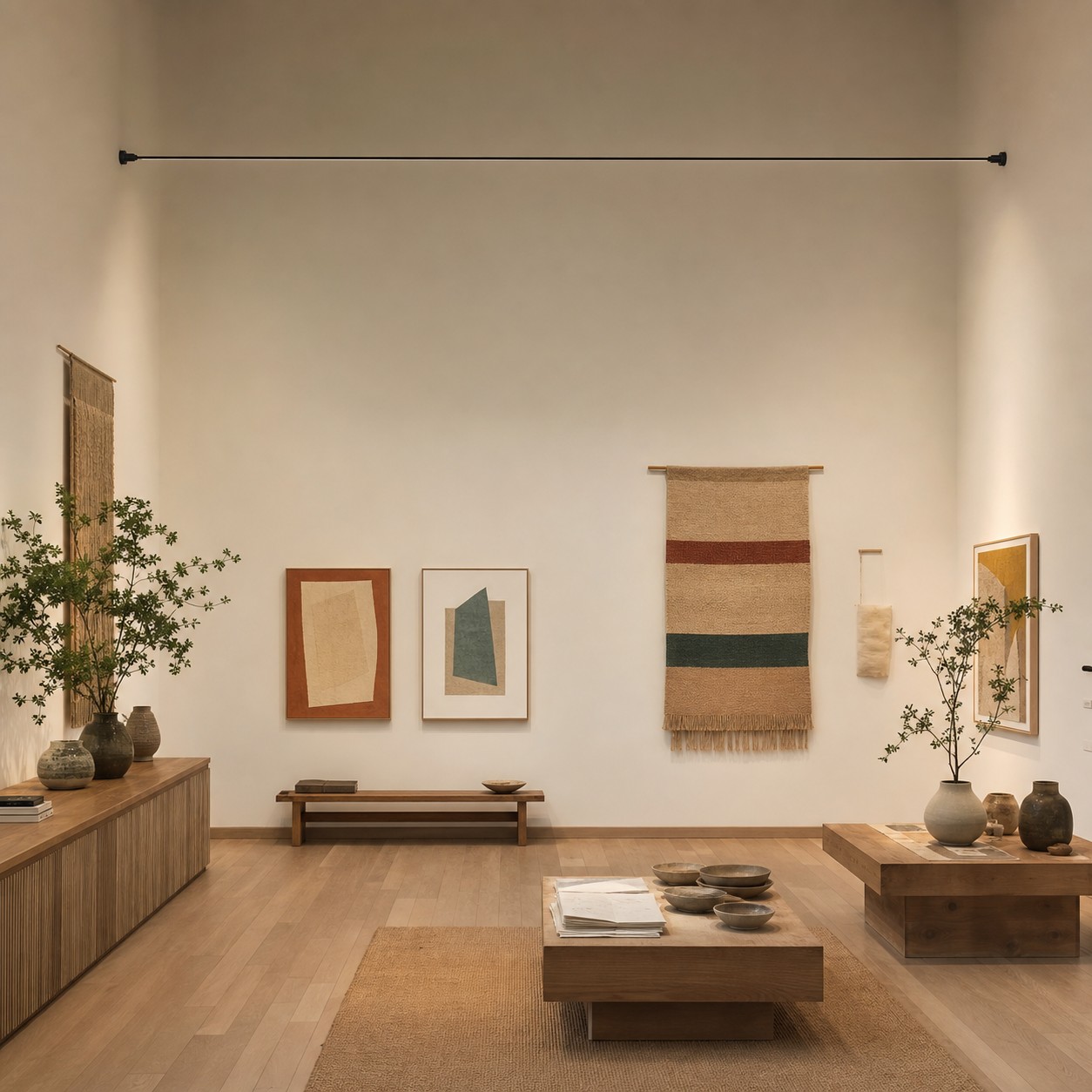
CRI 90 ist ein Hinweis, keine Erlaubnis.
Auf der offiziellen Thalyn-Seite wird ein CRI-Wert von 90 angegeben. Die Illuminating Engineering Society definiert CRI. Der Farbwiedergabeindex (CRI) misst die Farbverschiebung von Objekten unter einer Lichtquelle im Vergleich zu einer Referenzlichtquelle mit vergleichbarer Farbtemperatur. Daher ist er relevant, wenn es auf die dargestellten Materialien ankommt. Er gibt jedoch keine Auskunft über Platzierung, Blendung, Helligkeit, Belichtungszeit oder ob die Leuchte zum Raum passt.
Auf der Produktseite werden außerdem Warmweiß (3000 K), Kaltweiß (6000 K) und eine separate, ferngesteuert dimmbare Version mit drei Farbtemperaturen und 0–100 % Dimmbereich aufgeführt. Wählen Sie eine der aufgeführten Optionen erst nach Prüfung der Lichtverhältnisse im Raum und der Montagelinie.
Prüfen Sie die aktuellen Licht- und Oberflächenoptionen von Thalyn.
Gestalte die Stille um die Linie herum
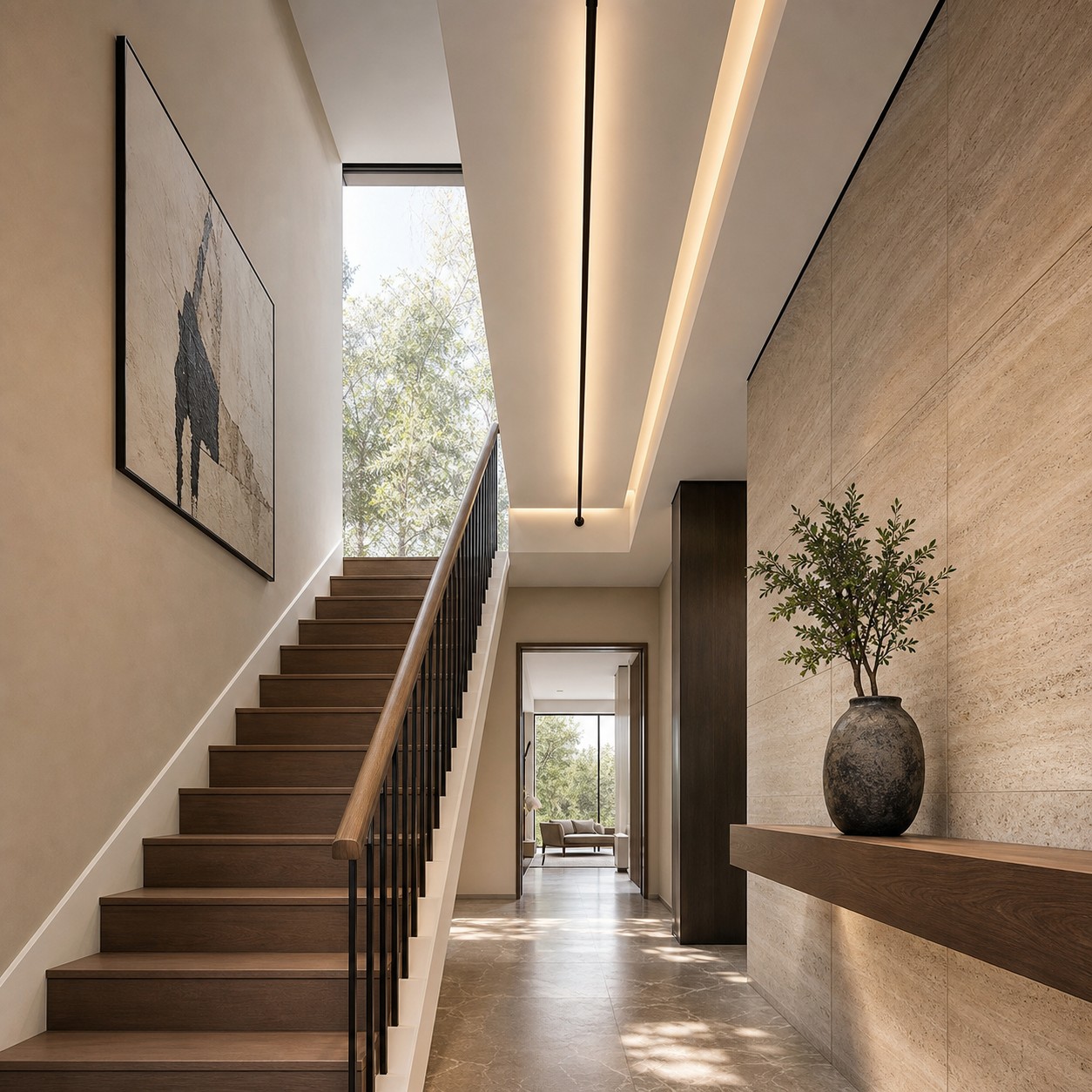
Eine grafische Leuchte benötigt visuelle Ruhe, um präzise zu wirken. Wiederholen Sie die schwarze oder weiße Oberfläche ein- oder zweimal in einem Rahmen, einem Beschlagdetail oder einer Möbelkante; verwenden Sie sie nicht auf jedem Objekt. Natürliches Holz, dezente Textilien, Stein oder ein einzelnes, farbintensives Kunstwerk sorgen für einen Materialkontrast. Gestalten Sie den Bereich unmittelbar hinter und unterhalb der Leuchte so, dass die Linie als bewusste Begrenzung und nicht als Teil eines unübersichtlichen Gewirrs wahrgenommen wird.
Dasselbe gilt für Kunstwerke. Eine bis zum Rand mit Bildern vollgestellte Salonwand kann zwar faszinierend sein, erzeugt aber ein anderes Erlebnis als eine galerieartige Komposition mit großzügigen Abständen. Entscheiden Sie sich für eine bestimmte Wirkung, bevor Sie die Beleuchtung ins Spiel bringen.
Wann sollte die Schlange den Raum allein lassen?
Verzichten Sie auf die gerade Strecke, wenn der Raum keine geeigneten Endpunkte an den Wänden aufweist, wenn die Route um architektonische Elemente herumgeführt werden muss oder wenn Türen und Vorhänge die geplante Linie unterbrechen. Sie ist auch dann ungeeignet, wenn gemusterter Stein, dichte Regale, ausdrucksstarke Kunstwerke und skulpturale Möbel bereits die Aufmerksamkeit auf sich ziehen.
Wenn die ungeklärte Frage lautet, ob eine lange Wand einen Kronleuchter, wiederholte Wandleuchten oder beleuchtete Kunst benötigt, Linearer Kronleuchter, Wandleuchte oder beleuchtete Wandkunst: Was eignet sich am besten für eine lange Wand? Dies betrifft die Auswahl einzelner Einrichtungsgegenstände. Ein sorgfältig gestalteter Raum beginnt damit, die richtige Funktion jedes Produkts zu bestimmen, anstatt ein und dasselbe Produkt in jede Komposition zu zwingen.
Die Fünf-Minuten-Checkliste für ein kuratiertes Zuhause
- Nennen Sie die primäre Ansicht in einem Satz.
- Entfernen oder versetzen Sie ein Objekt, das mit diesem Objekt konkurriert.
- Markieren Sie die beiden vorgeschlagenen Wandendpunkte mit ablösbarem Klebeband.
- Spannen Sie eine gerade Schnur zwischen ihnen und überprüfen Sie jede Sichtlinie.
- Entscheiden Sie, welches Kunstwerk oder Material eine separate, kontrollierte Beleuchtung benötigt.
- Vergewissern Sie sich, dass die Linie gerade bleibt und frei von Bewegungen ist.
Kurze Fragen, bevor Sie den Raum bearbeiten
Benötigt ein stilvoll eingerichtetes Zuhause teure Kunst?
Nein. Auswahl, Anordnung und visuelle Ordnung sind wichtiger als der Preis.
Garantiert ein CRI-Wert von 90 eine ideale Beleuchtung für Kunstwerke?
Nein. Der Farbwiedergabeindex (CRI) ist nur ein Maß für die Farbwiedergabe; Platzierung, Helligkeit, Belichtung und Materialempfindlichkeit spielen weiterhin eine Rolle.
Sollte jedes Kunstwerk die gleiche Lichtmenge erhalten?
Nein. Unterschiedliche Materialien und Darstellungsziele erfordern unterschiedliche Entscheidungen.