
Die Kunst der Linie
ICHIn der Welt des modernen Interior Designs ist die gerade Linie mehr als nur eine geometrische Form – sie ist ein Mittel, um Ordnung, Richtung und architektonische Harmonie zu schaffen. Traditionelle runde Kronleuchter haben zwar nach wie vor ihren Platz, doch die „lineare Revolution“ hat die Art und Weise, wie wir unsere wichtigsten Räume beleuchten, grundlegend verändert. Ob weitläufige Kücheninsel oder langer Esstisch: Lineare Beleuchtung vermittelt ein Gefühl von Symmetrie und Zweckmäßigkeit, das runde Leuchten schlichtweg nicht erreichen können.
Lichtgestaltung bedeutet mehr als nur Sichtbarkeit. Es geht darum, in einem offenen Grundriss Grenzen zu definieren und den Blick auf bestimmte Blickpunkte zu lenken. Mit einer linearen Leuchte setzen Sie ein Zeichen für Ausgewogenheit. Sie entscheiden sich dafür, Ihre Beleuchtung harmonisch in die Architektur Ihres Zuhauses einzufügen.
Die strukturelle Kraft horizontaler Beleuchtung
Der Trend zu offenen Wohnkonzepten hat eine besondere Herausforderung geschaffen: Wie definiert man einen Raum ohne Wände? Die Antwort liegt im „Deckenhorizont“. Durch das Aufhängen einer langen, horizontalen Leuchte entsteht eine unsichtbare Grenze, die den Raum effektiv zoniert. Beispielsweise spendet eine lineare Pendelleuchte über einer Kücheninsel nicht nur Licht zum Kochen, sondern markiert auch optisch den Übergang vom Arbeitsbereich zum Wohnbereich.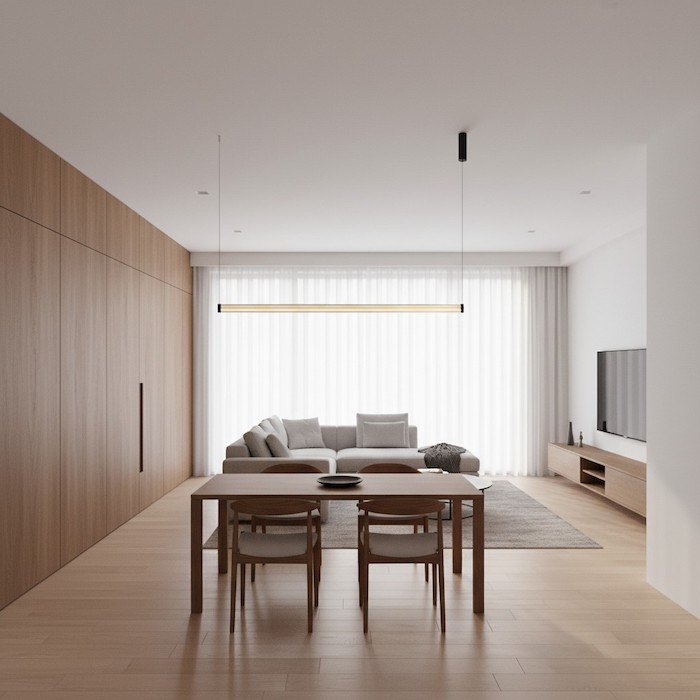
Dieses Gefühl architektonischer Harmonie ist in modernen Wohnungen unerlässlich. Wenn die Beleuchtung dem Verlauf der Möbel folgt – sei es einer Arbeitsplatte oder einer Essfläche –, wirkt der Raum harmonisch. Dadurch wird die visuelle Spannung vermieden, die entsteht, wenn mehrere unterschiedliche Formen in einem Raum um Aufmerksamkeit konkurrieren.
Weiterführende Literatur: Lineare Leuchten vs. traditionelle Leuchten: Die wichtigsten Unterschiede
Kücheninseln: Der natürliche Platz für lineares Design
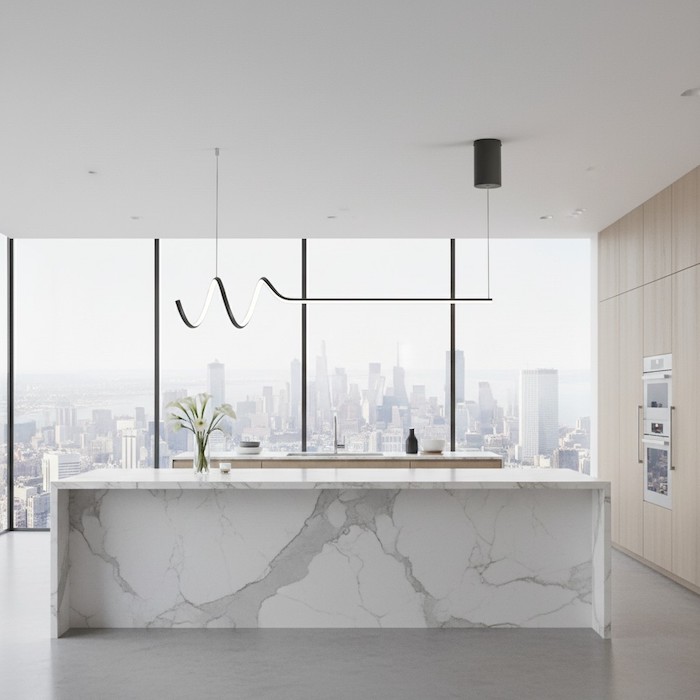
Die Kücheninsel ist das Herzstück des modernen Zuhauses und dient als Arbeitsfläche, Essbereich und Treffpunkt. Aufgrund ihrer länglichen Form ist eine lineare Pendelleuchte die logischste und effizienteste Wahl. Im Gegensatz zu einer Reihe kleiner Einzelleuchten, die das Gesamtbild mitunter überladen wirken lassen, sorgt eine einzelne lineare Leuchte für eine klare und gleichmäßige Ausleuchtung.
Eines der raffiniertesten Beispiele hierfür ist die Loreto Linear PendelleuchteIhr minimalistisches Design fügt sich harmonisch in die langen, flachen Oberflächen moderner Küchen ein, ohne die Sicht zu beeinträchtigen. Sie spendet ein gleichmäßiges, ungestörtes Licht, das sich perfekt für alles eignet – von der morgendlichen Essenszubereitung bis hin zu nächtlichen Gesprächen.
Dynamik im Speisesaal: Jenseits des Kreises
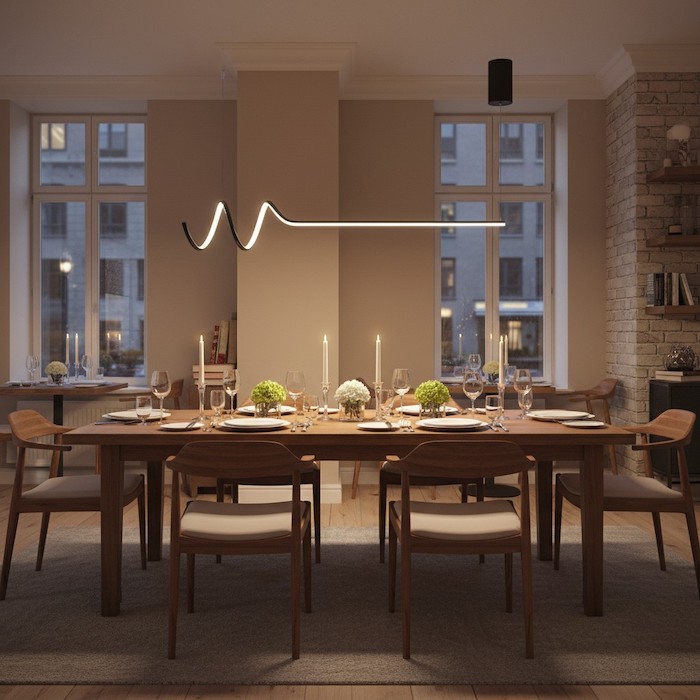
Traditionell dominierten runde Kronleuchter Esszimmer. Da Esstische jedoch länger und rechteckiger geworden sind, musste sich auch die Beleuchtung anpassen. Eine runde Leuchte über einem langen Tisch lässt die Tischenden oft im Schatten liegen und erzeugt so ein ungleichmäßiges Ambiente für die Gäste.
Lineare Beleuchtung sorgt dafür, dass jeder Gast die gleiche Lichtqualität genießt. Doch „linear“ muss nicht gleichbedeutend mit „langweilig“ sein. Modernes Design ermöglicht kreative Interpretationen der geraden Linie. Nehmen wir zum Beispiel die Spiral Linear AnhängerEs nutzt die architektonischen Vorteile einer linearen Form und verleiht ihr gleichzeitig Rhythmus und Dynamik. Es eignet sich perfekt für Räume, die sowohl Ordnung als auch einen kreativen Impuls benötigen.
Sind Sie bereit, Ihr kulinarisches Erlebnis neu zu definieren?
Entdecken Sie die Spiral Linear Kollektion
Künstlerischer Linearismus: Licht als Skulptur
In manchen Räumen muss eine Leuchte mehr leisten als nur Licht zu spenden – sie muss ein Kunstwerk sein. In einem Raum mit harten Kanten und glatten Oberflächen kann ein geradliniger Kronleuchter mit einem künstlerischen Motiv die Atmosphäre auflockern. Dies wird oft als „sanfter Modernismus“ bezeichnet.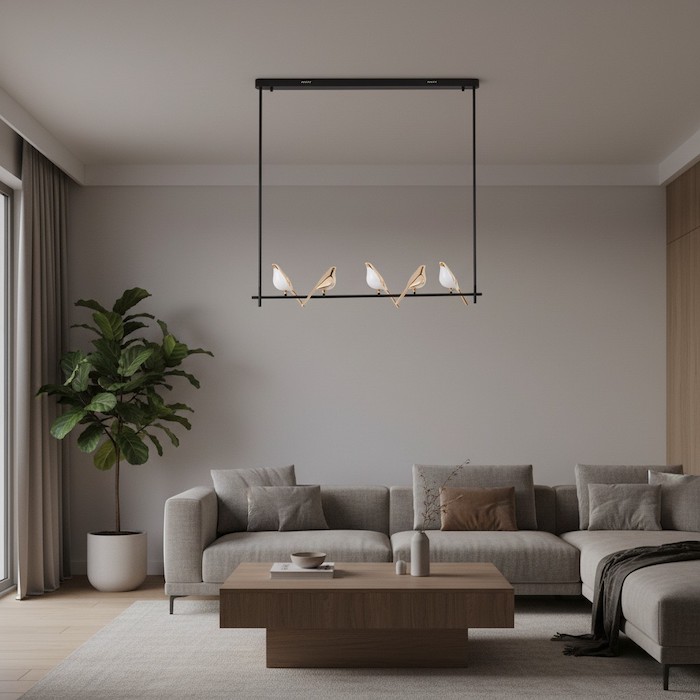
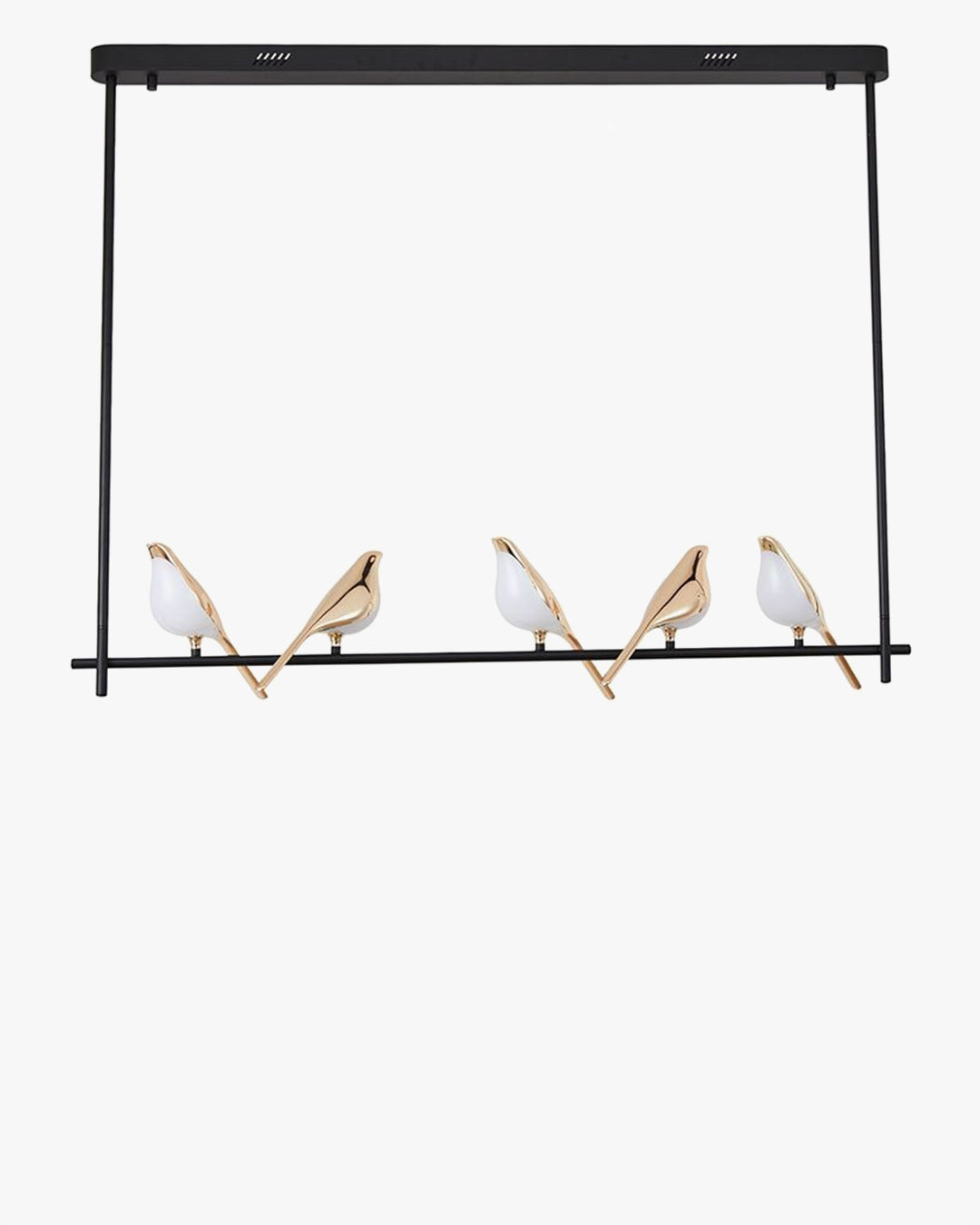
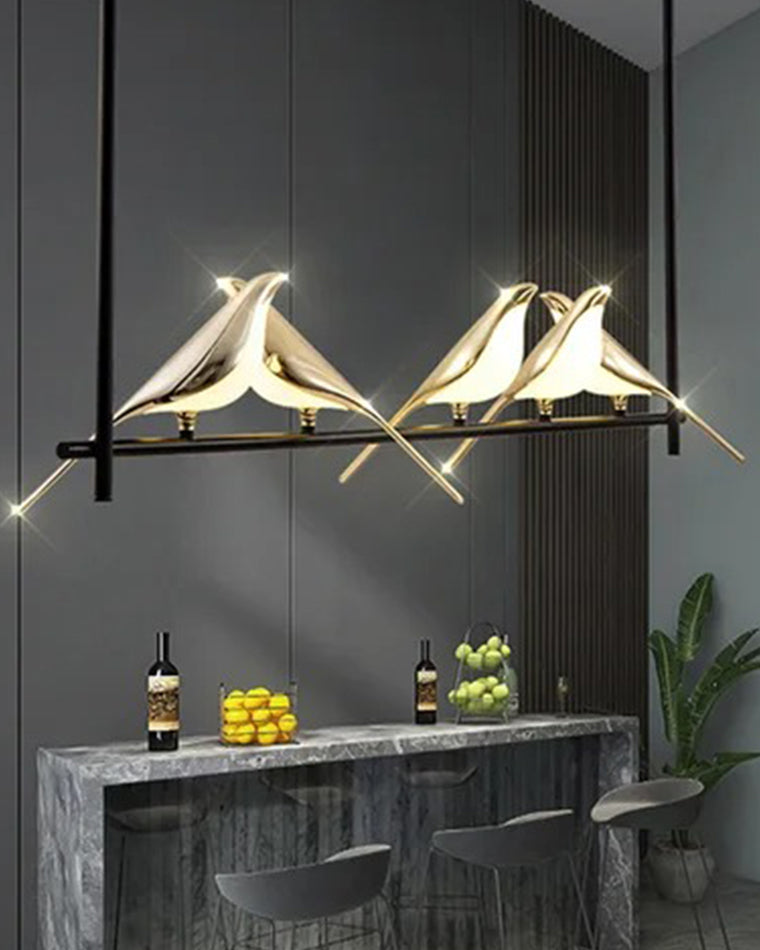
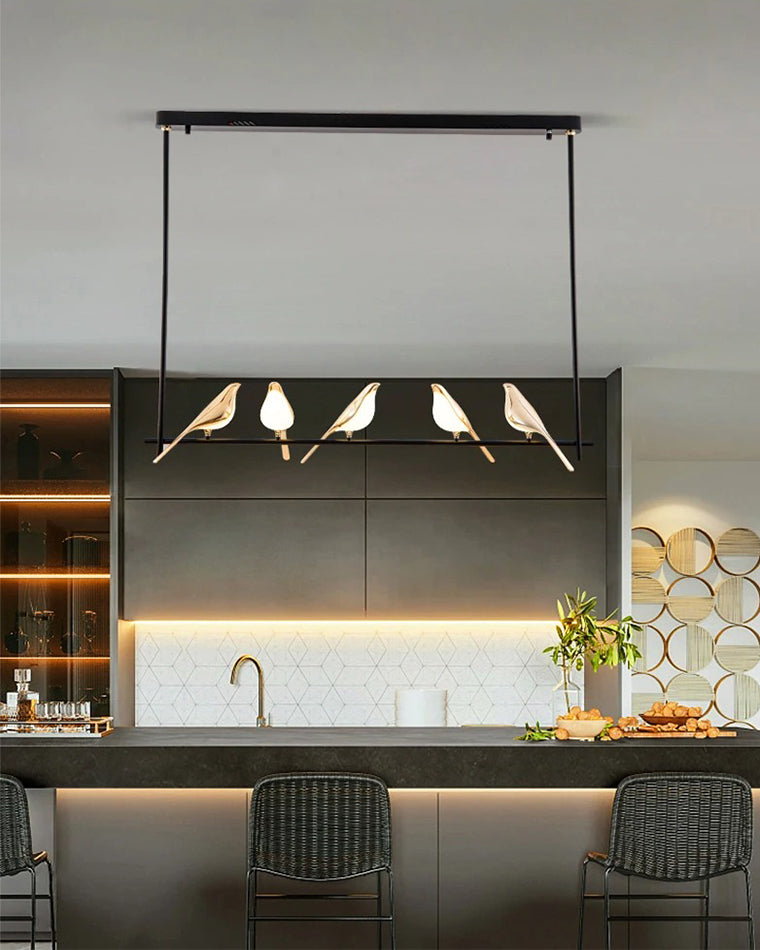
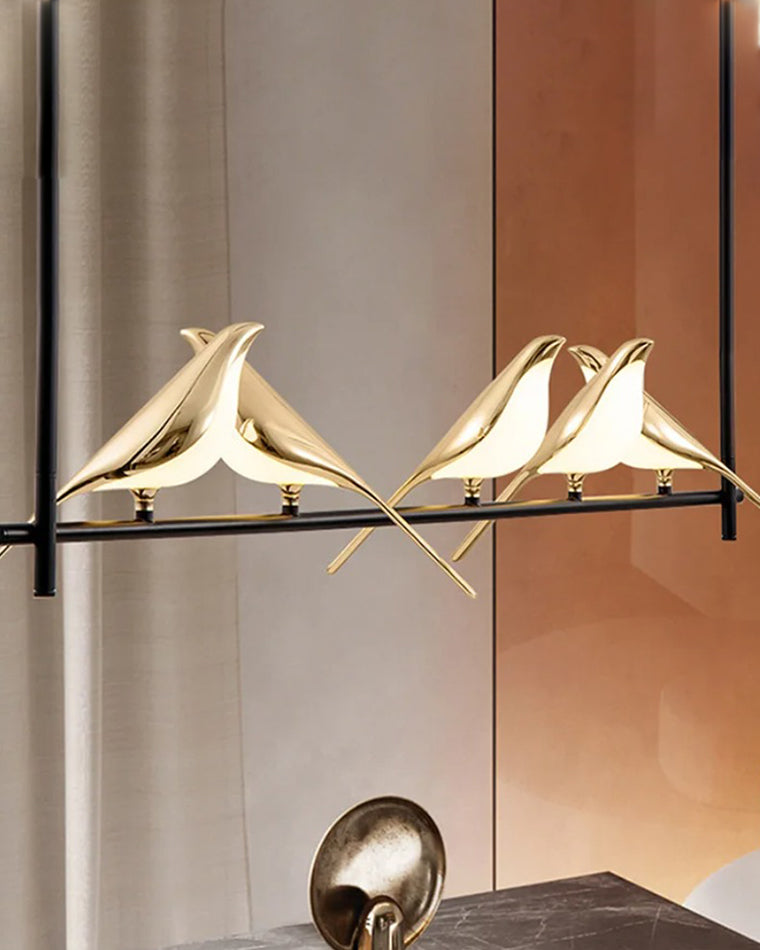
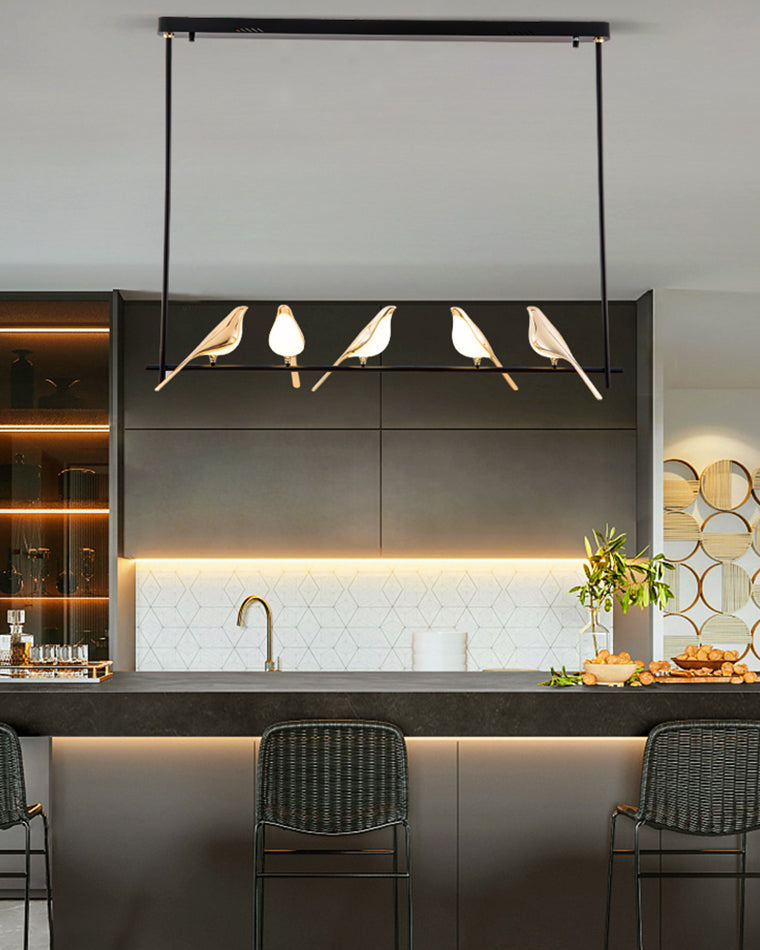
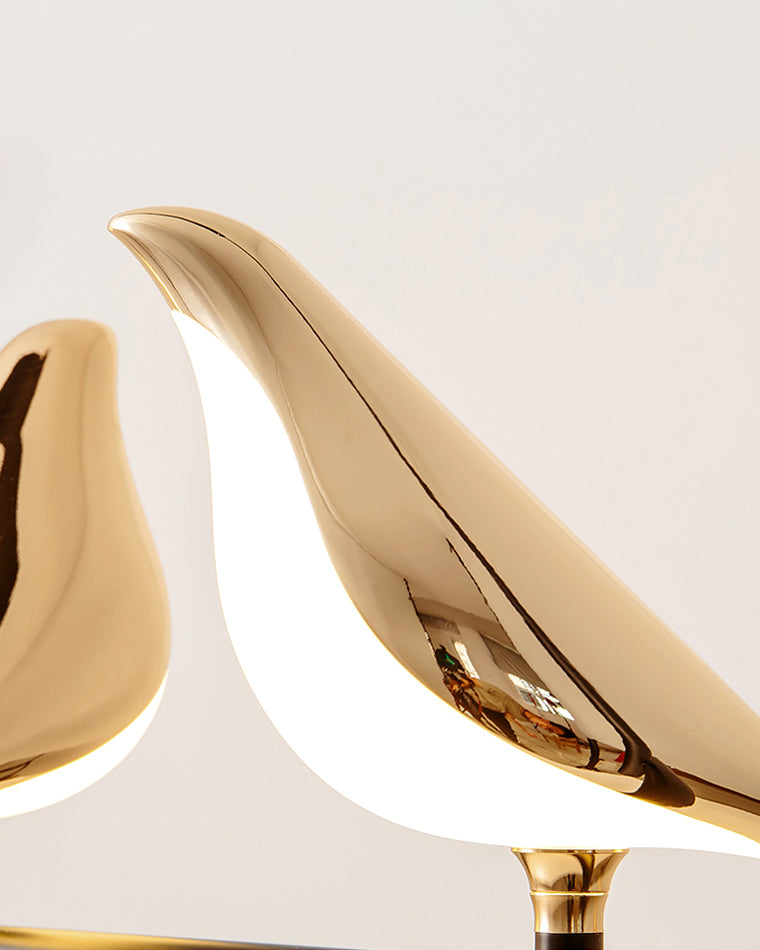
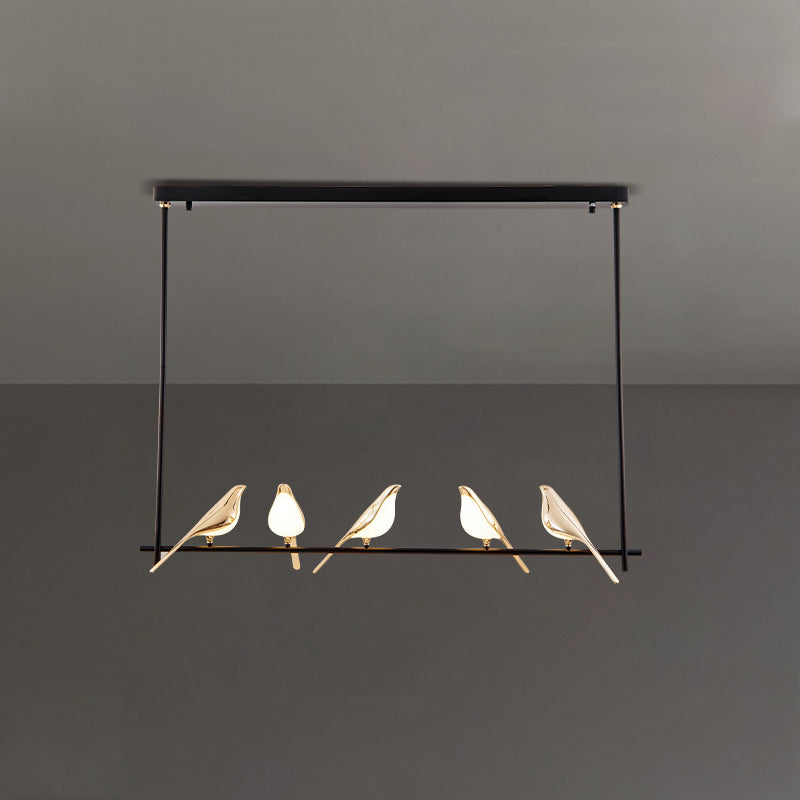
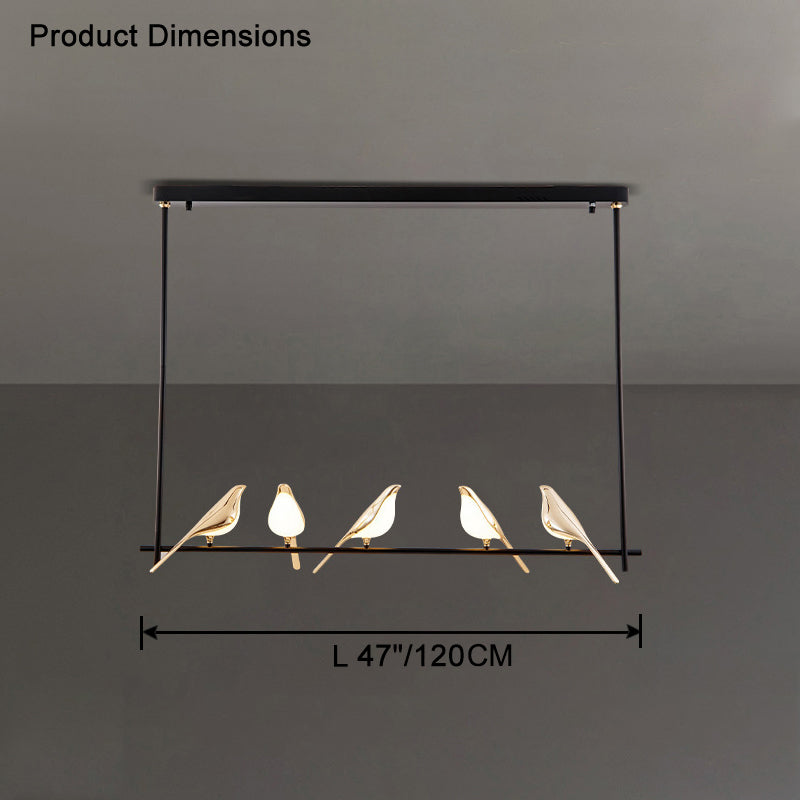
Der Goldener Vogel-Kronleuchter ist ein Paradebeispiel für diesen Ansatz. Es bewahrt die für ein harmonisches Raumgefühl notwendige horizontale Struktur, führt aber gleichzeitig ein verspieltes, von der Natur inspiriertes Element ein, das die klinische Anmutung mancher moderner Interieurs aufbricht. Es beweist, dass lineare Beleuchtung genauso ausdrucksstark und stimmungsvoll sein kann wie jede traditionelle Leuchte – vorausgesetzt, das Design ist durchdacht.
Weiterführende Literatur: Eine minimalistische und elegante Beleuchtungslösung für moderne Wohnungen
Wichtige Konstruktionsregeln für lineare Vorrichtungen
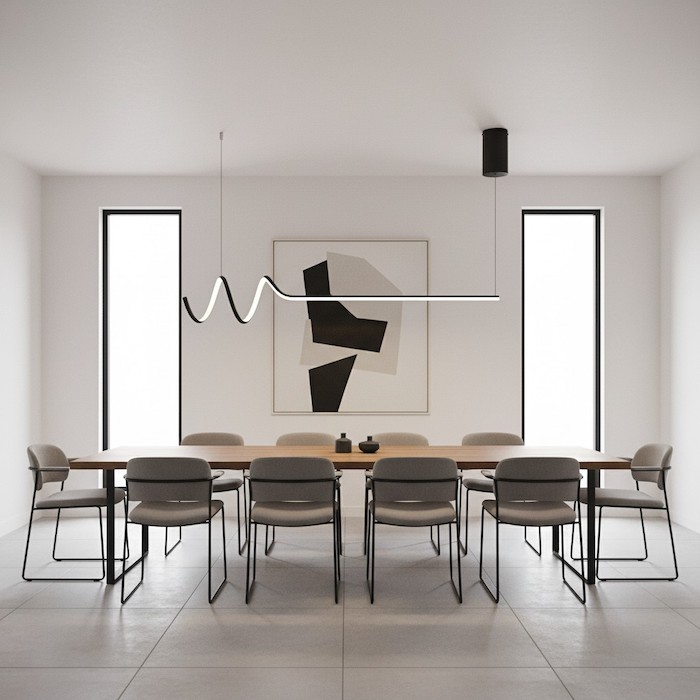
Um das Beste aus Ihrer linearen Beleuchtung herauszuholen, sollten Sie einige Gestaltungsregeln beachten. Diese haben nichts mit technischen Spezifikationen zu tun, sondern alles mit visueller Ausgewogenheit:
Freie Sichtlinien: In Küchen sollte die Lampe hoch genug hängen, damit man über die Kücheninsel hinweg zu seinen Gästen sehen kann, aber niedrig genug, dass die Leuchte mit der Oberfläche verbunden wirkt (normalerweise 30-36 Zoll über der Arbeitsplatte).
Parallele Präzision: Eine lineare Leuchte muss exakt parallel zu den darunter stehenden Möbeln ausgerichtet sein. Schon eine leichte Neigung kann die Harmonie in einem modernen Raum stören.
Kontinuität im ganzen Haus schaffen
Der Reiz linearer Gestaltung liegt darin, dass sie sich durch verschiedene Räume ziehen lässt und so ein Gefühl von Kontinuität schafft. Man könnte beispielsweise einen schlichten, minimalistischen Balken in der Küche und ein kunstvolleres, vogelmotiviertes Element im Esszimmer verwenden. Da sie dieselbe grundlegende Formensprache teilen, wirken sie zusammengehörig und tragen dazu bei, dass das gesamte Haus wie eine einheitliche Designgeschichte erscheint.
Dieser Ansatz ist besonders wirkungsvoll in luxuriösen Häusern, in denen die Übergänge zwischen den Räumen fließend sind. Durch die Beibehaltung eines linearen Themas entsteht ein visueller Rhythmus, der die Besucher durch das Haus leitet und eine ruhige, durchdachte und professionelle Atmosphäre schafft.
Verleihen Sie Ihrem Zuhause mit dem perfekten architektonischen Glanz eine besondere Note.
Entdecken Sie die Gold Bird-Serie
Abschluss
Lineare Beleuchtung ist die ideale Wahl für die Moderne. Sie respektiert die Geometrie unserer Wohnräume, sorgt für klare Funktionalität und bietet eine elegante Alternative zu traditionellen Leuchten. Mit dem richtigen Gespür für Proportionen und Silhouetten lassen sich diese Leuchten nutzen, um jeden Raum in ein architektonisches Meisterwerk zu verwandeln.
Weiterführende Literatur: Was ist lineare Beleuchtung und warum ist sie im Trend?