
Hanging Travertine Lighting: Design Secrets for Dining Rooms, Islands, and Reading Nooks
Interior design often comes down to a delicate balance of textures. When an upscale space feels cold or uninviting, it is usually because it relies too heavily on smooth, reflective surfaces like polished marble, glass, and chrome. To break this monotony, modern designers turn to porous, highly tactile materials that introduce an organic warmth into the home. Travertine stone has emerged as the premier choice for creating this high-end, grounded contrast.
However, simply purchasing a beautiful natural stone light fixture is only half the battle. Because stone carries immense visual weight, where and how you suspend it dictates whether it looks like a custom architectural element or an awkward afterthought. To truly elevate your interior, you must understand the spatial rules of scaling, spacing, and hanging heights.
The Dining Room Centerpiece: Creating an Intentional Focal Point
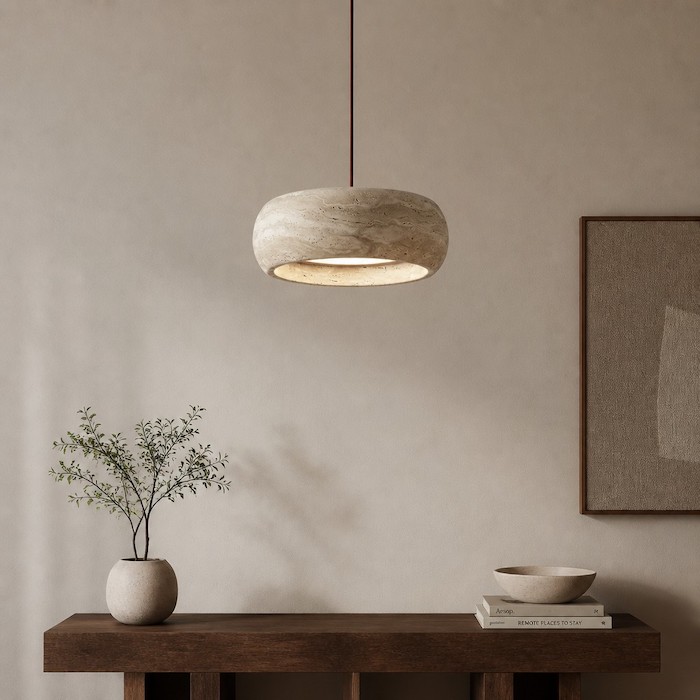
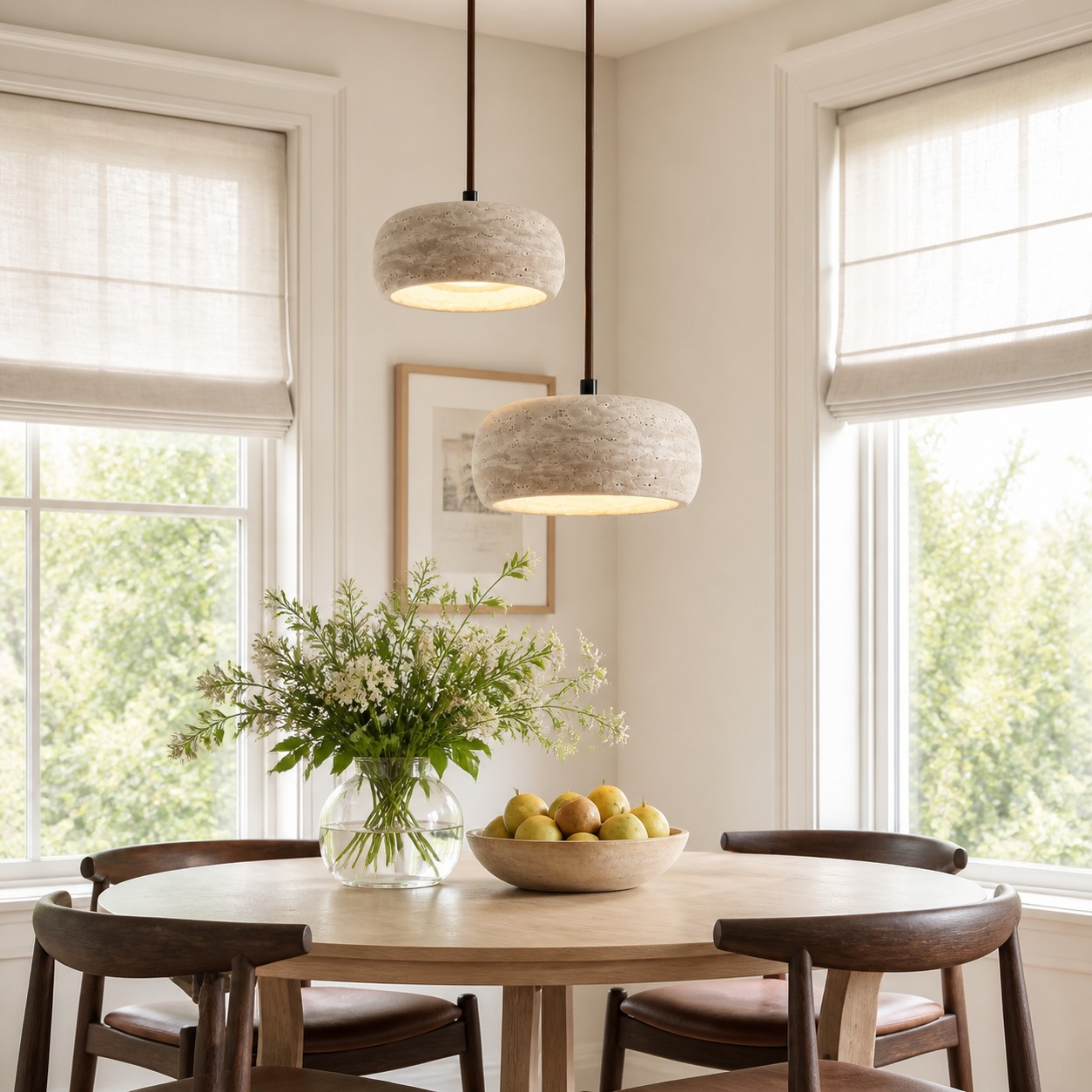
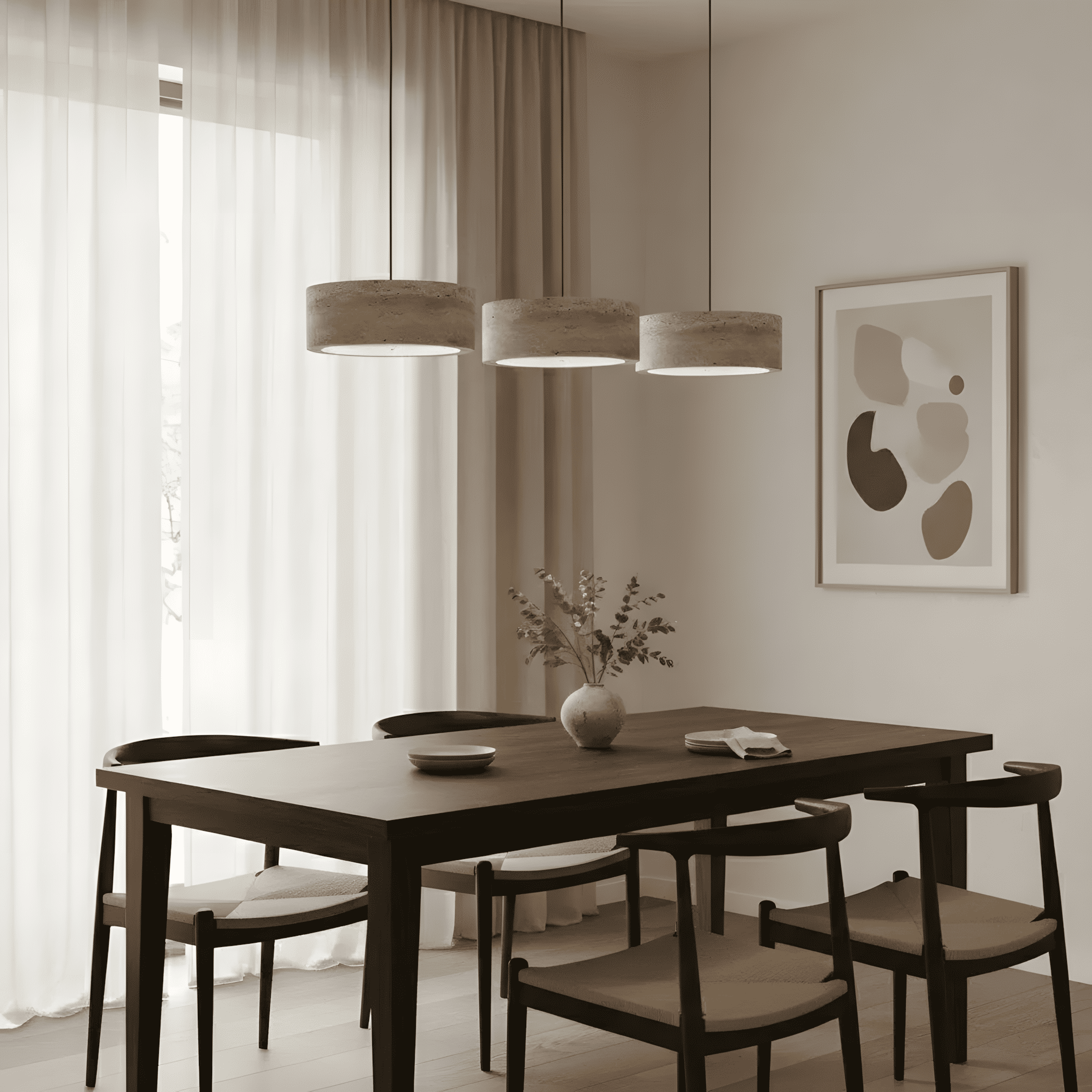
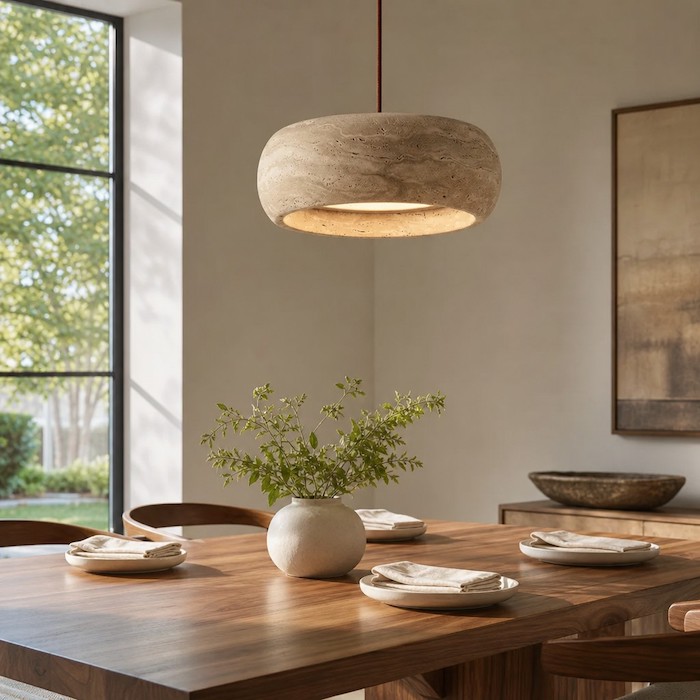
In the dining room, your table is the structural anchor of the space, and your lighting should reinforce that importance. A single, sweeping overhead light is far more effective here than scattered recessed ceiling bulbs. By using a natural stone drum fixture, you create an intimate envelope of light that naturally draws people together during dinner parties or morning coffee.
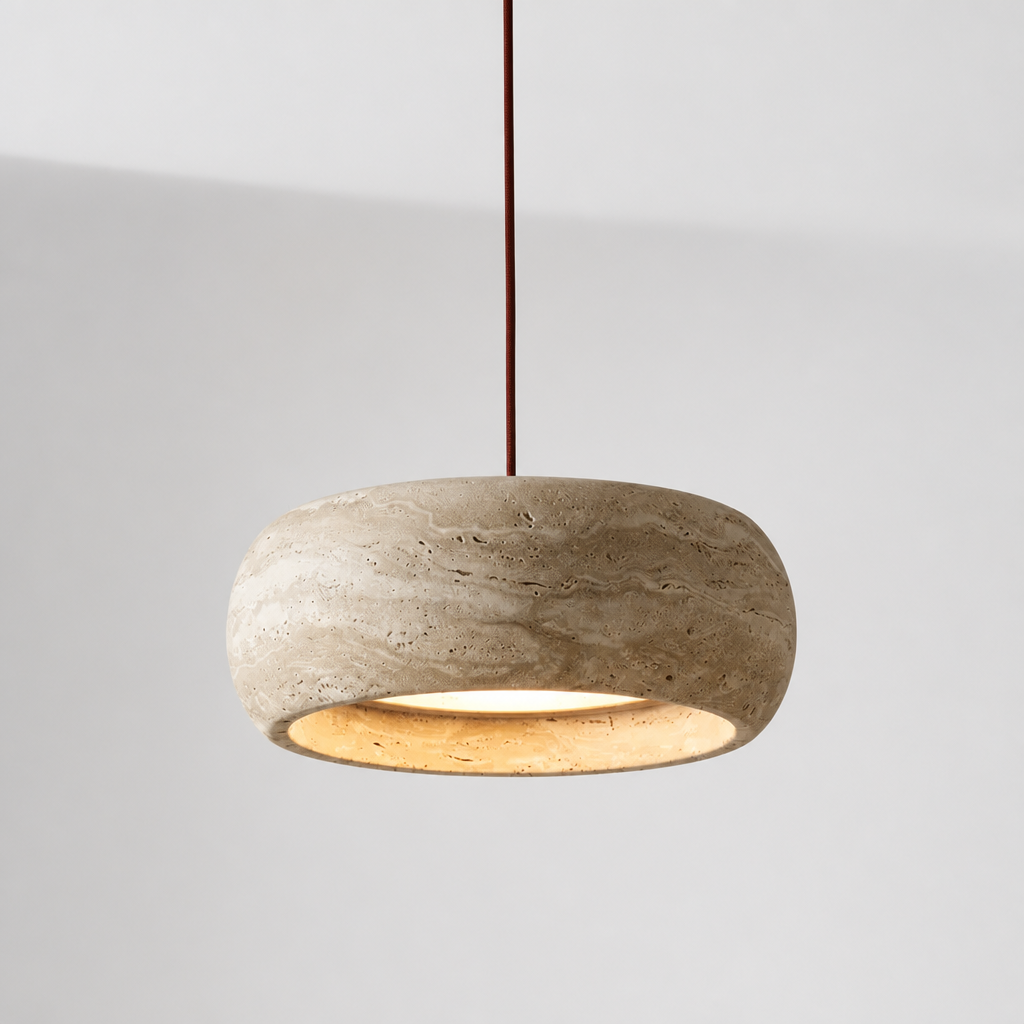
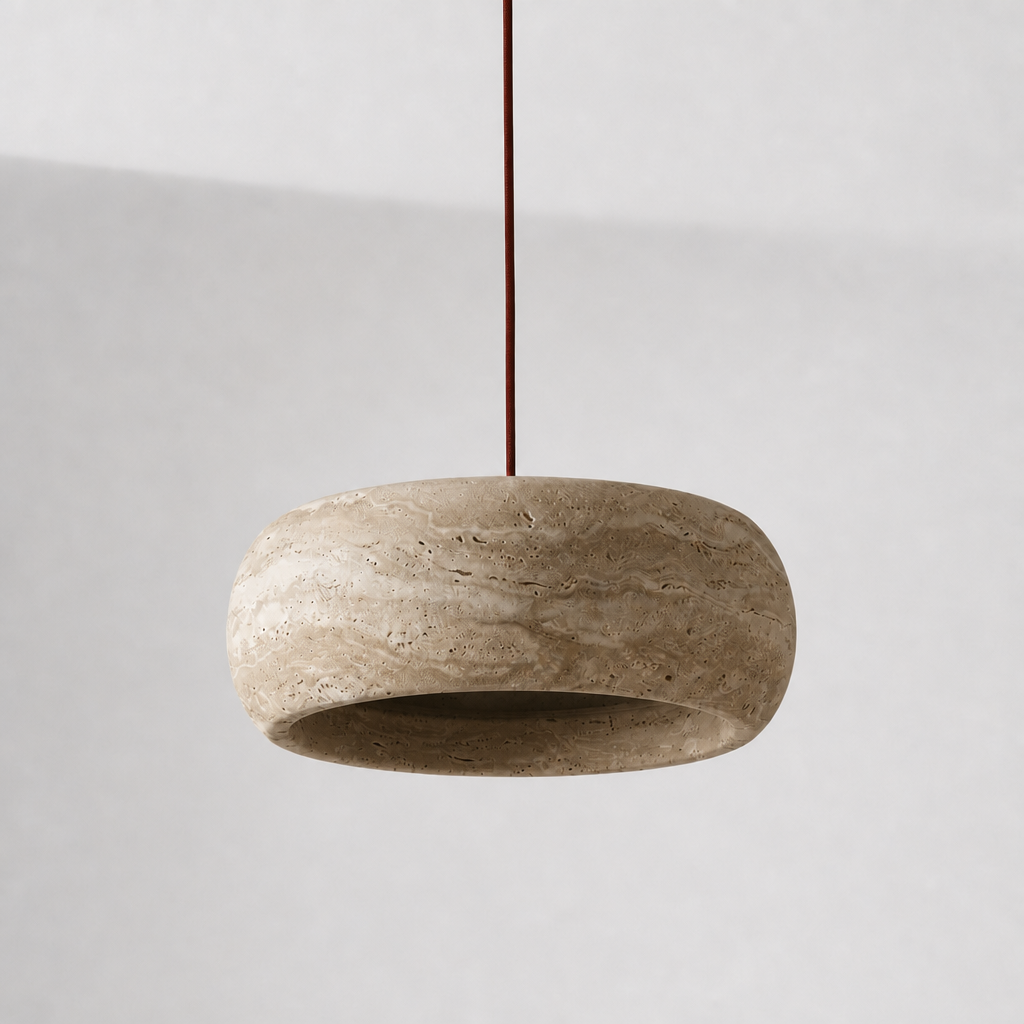
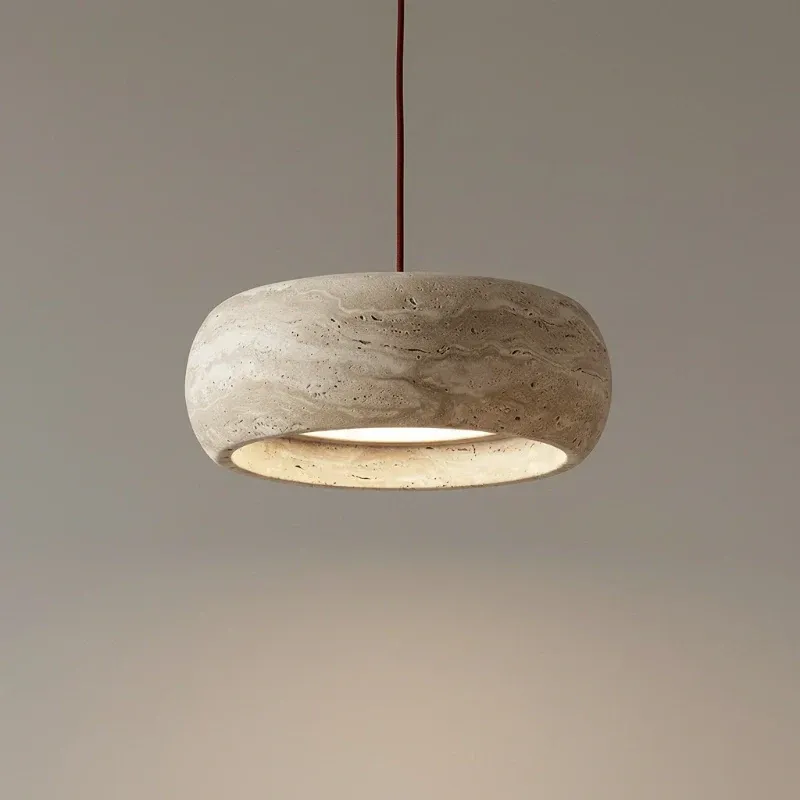
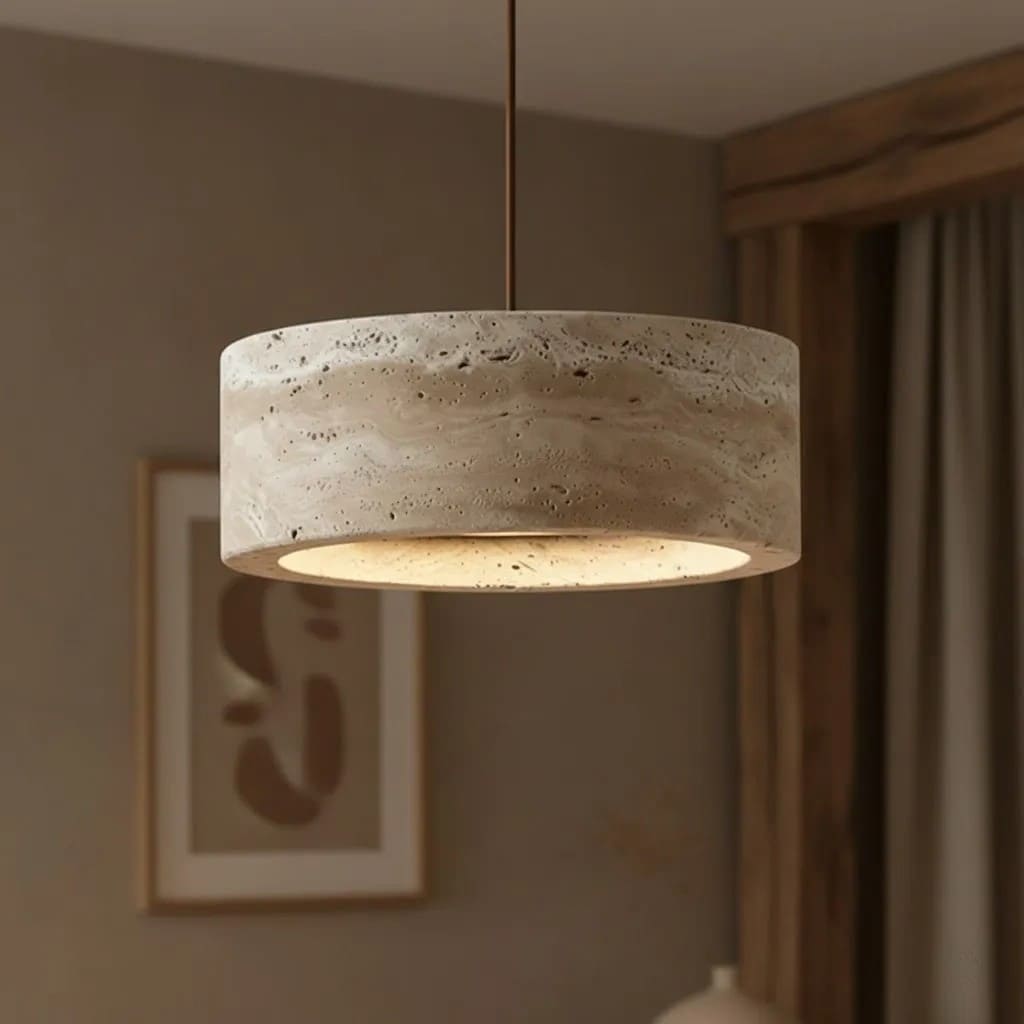
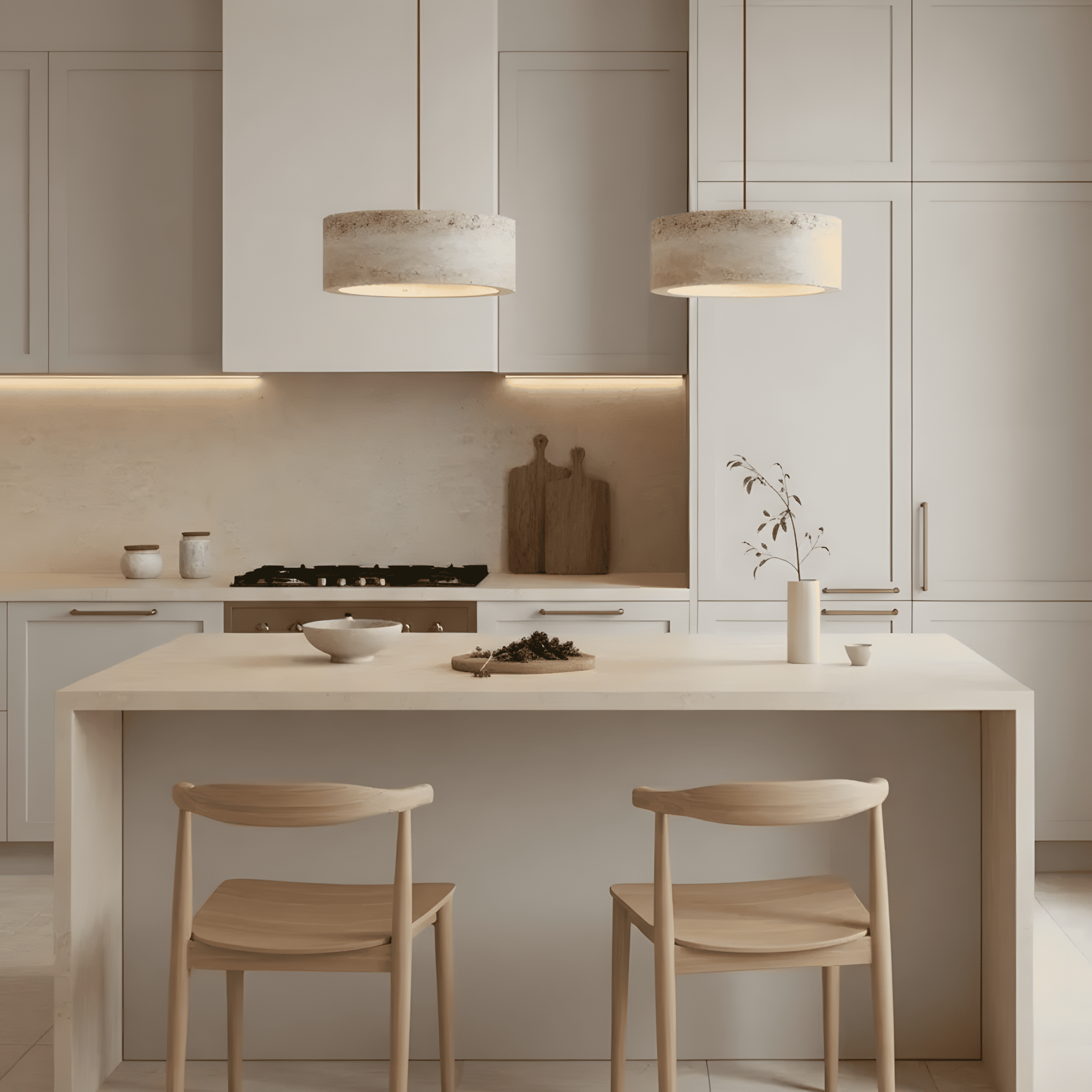
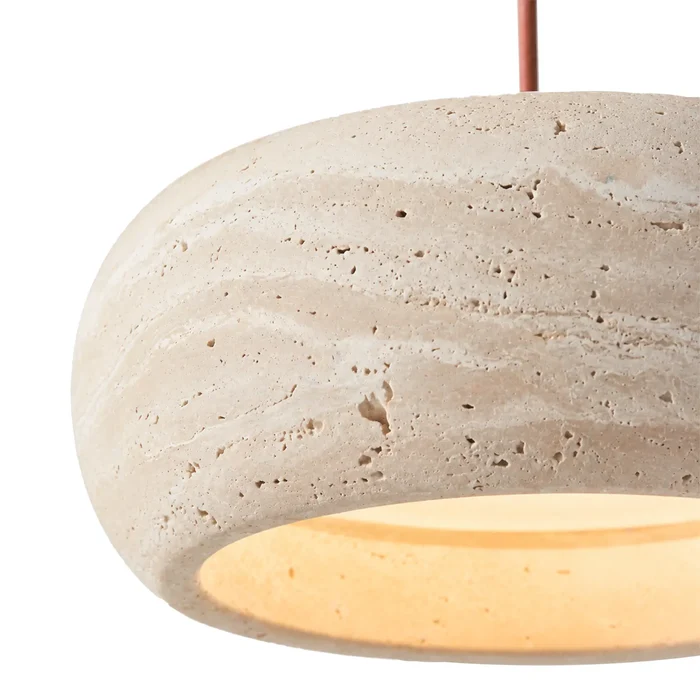
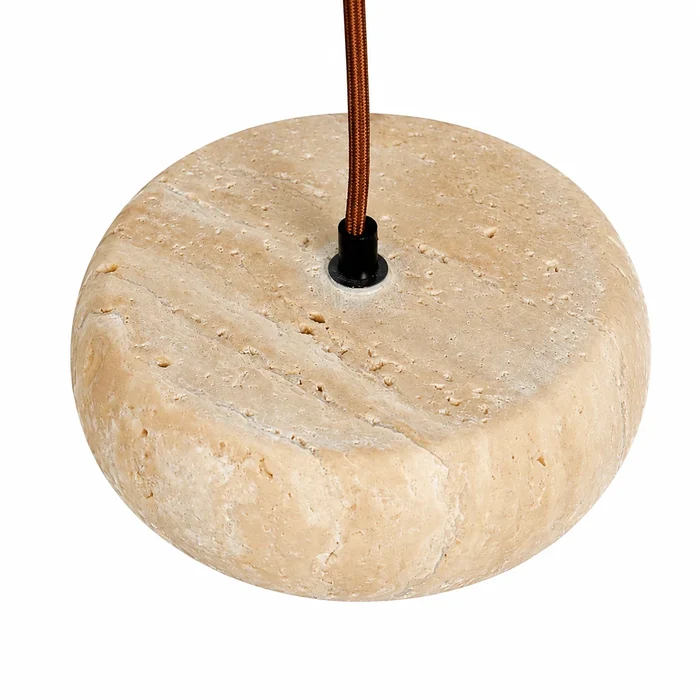
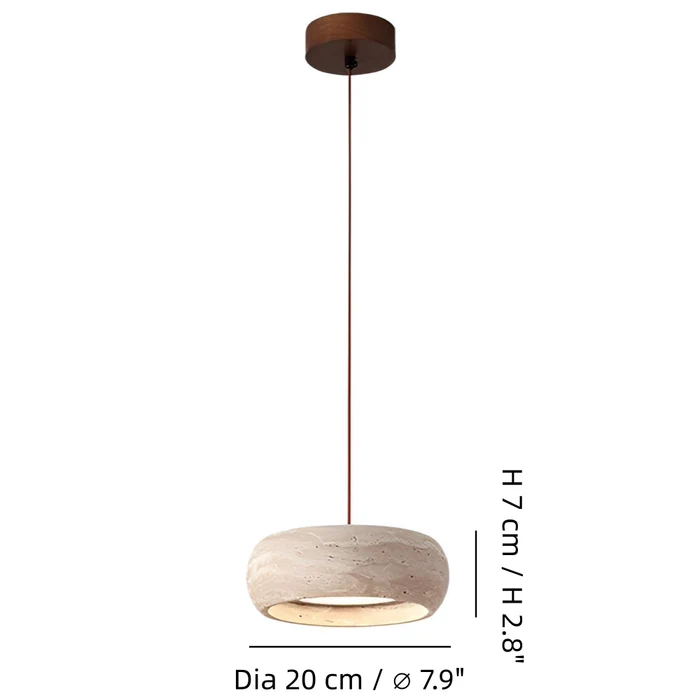
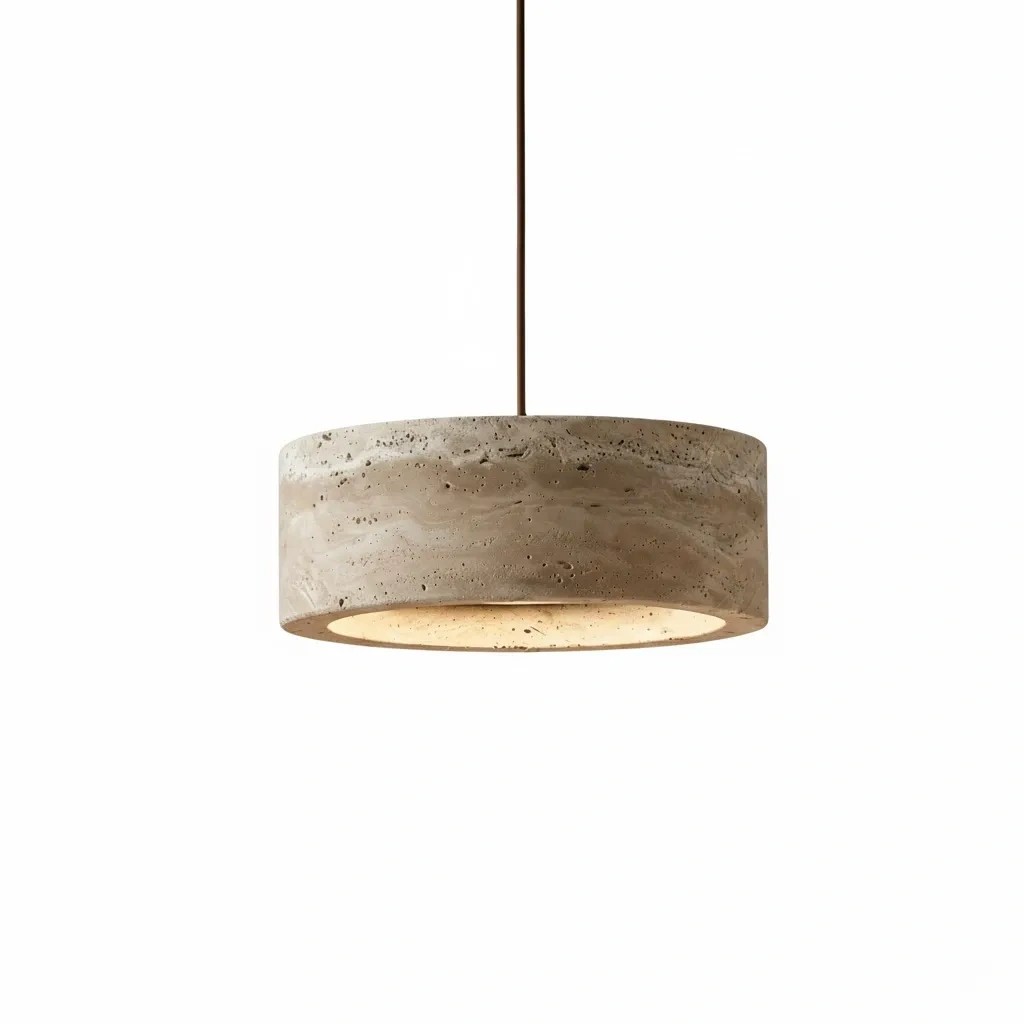
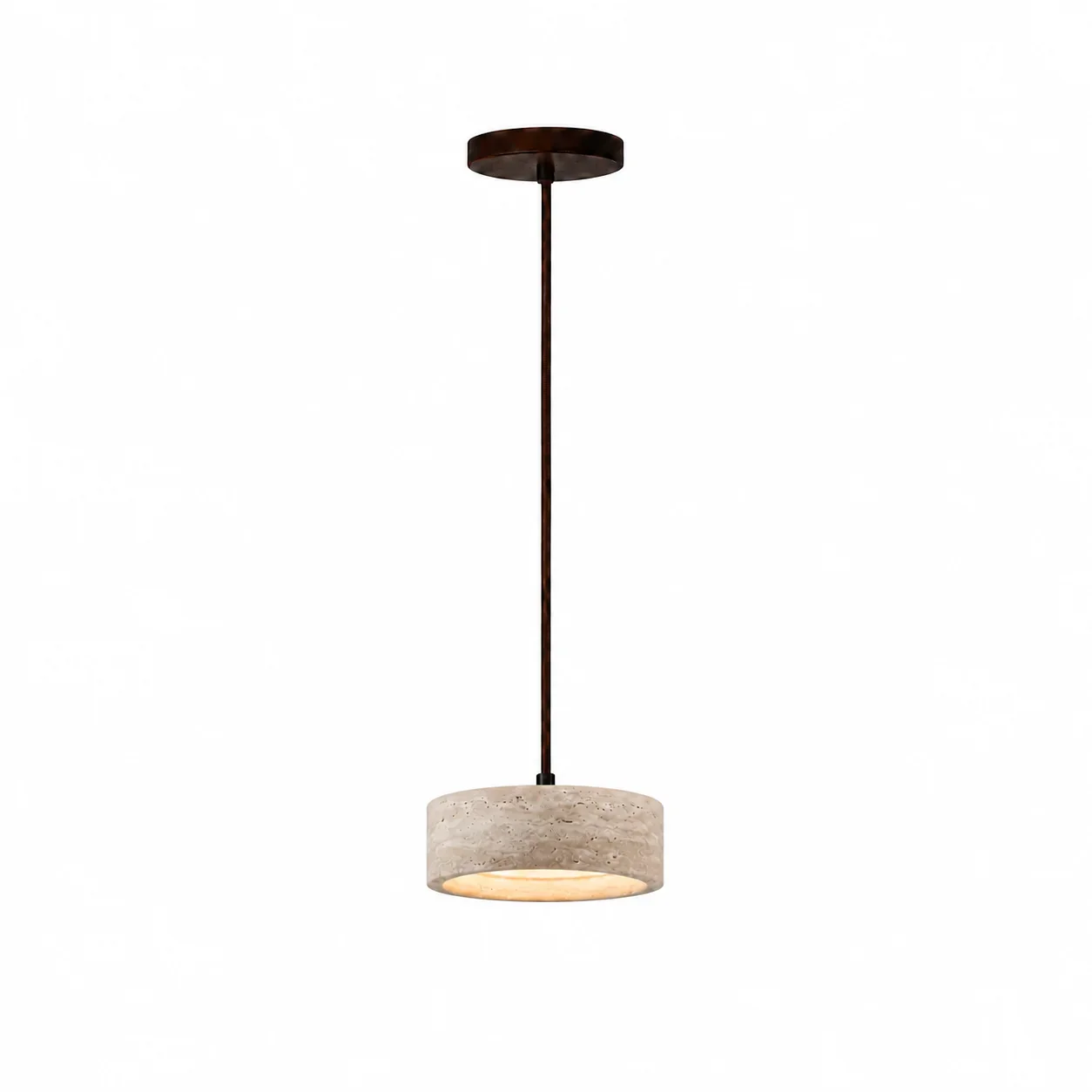
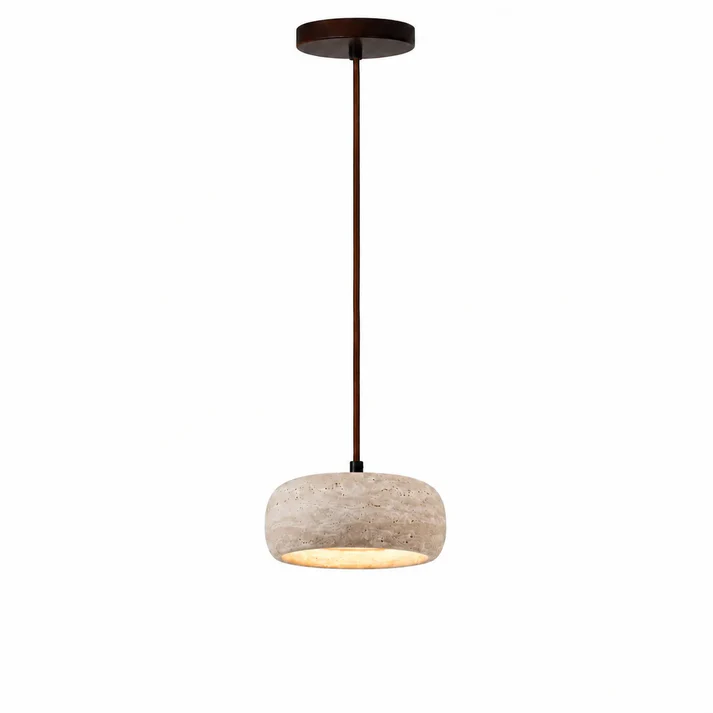
When working with a rectangular or elongated dining table, scale is critical. A small, delicate light will look lost, while an oversized fixture can make the room feel top-heavy. The Vaughn Wabi-Sabi Travertine Drum Pendant Light strikes the perfect balance. Its substantial cylindrical drum shape provides enough architectural presence to command a room, while its soft beige limestone coloration prevents it from overwhelming your dining furniture.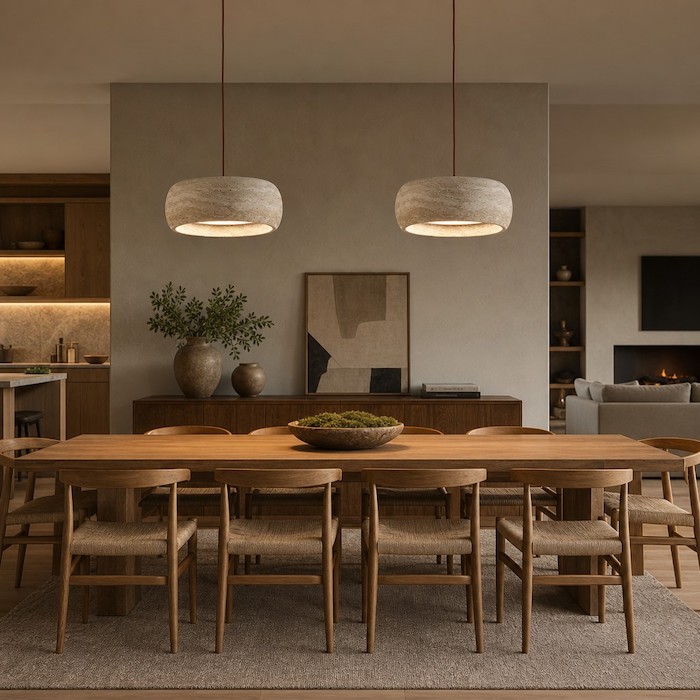
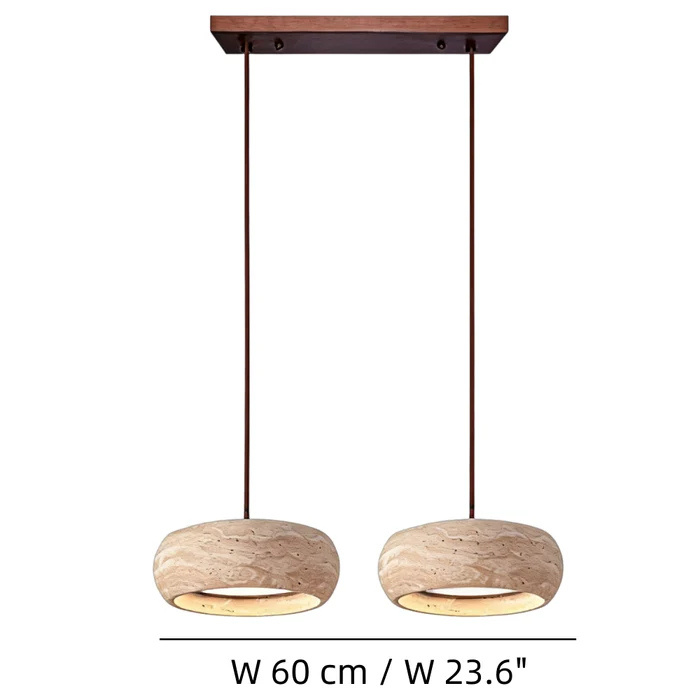
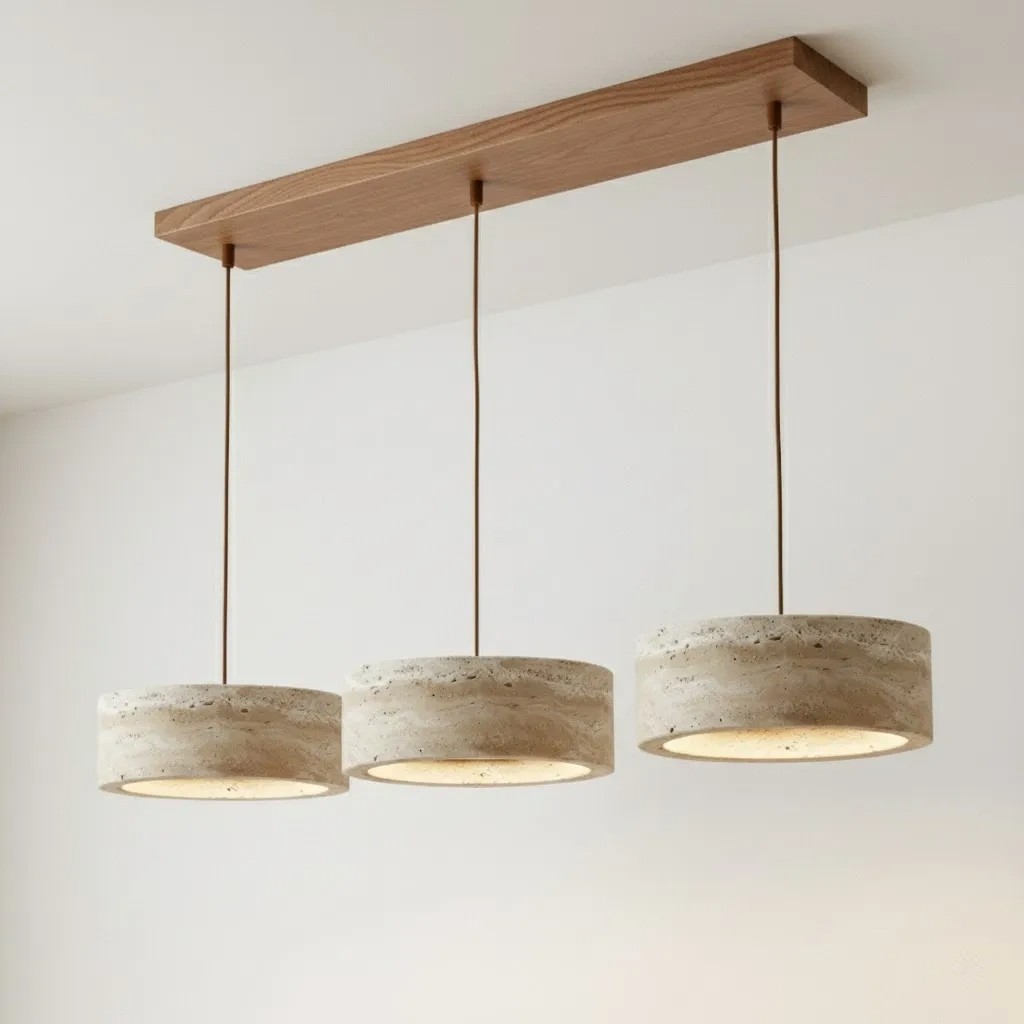
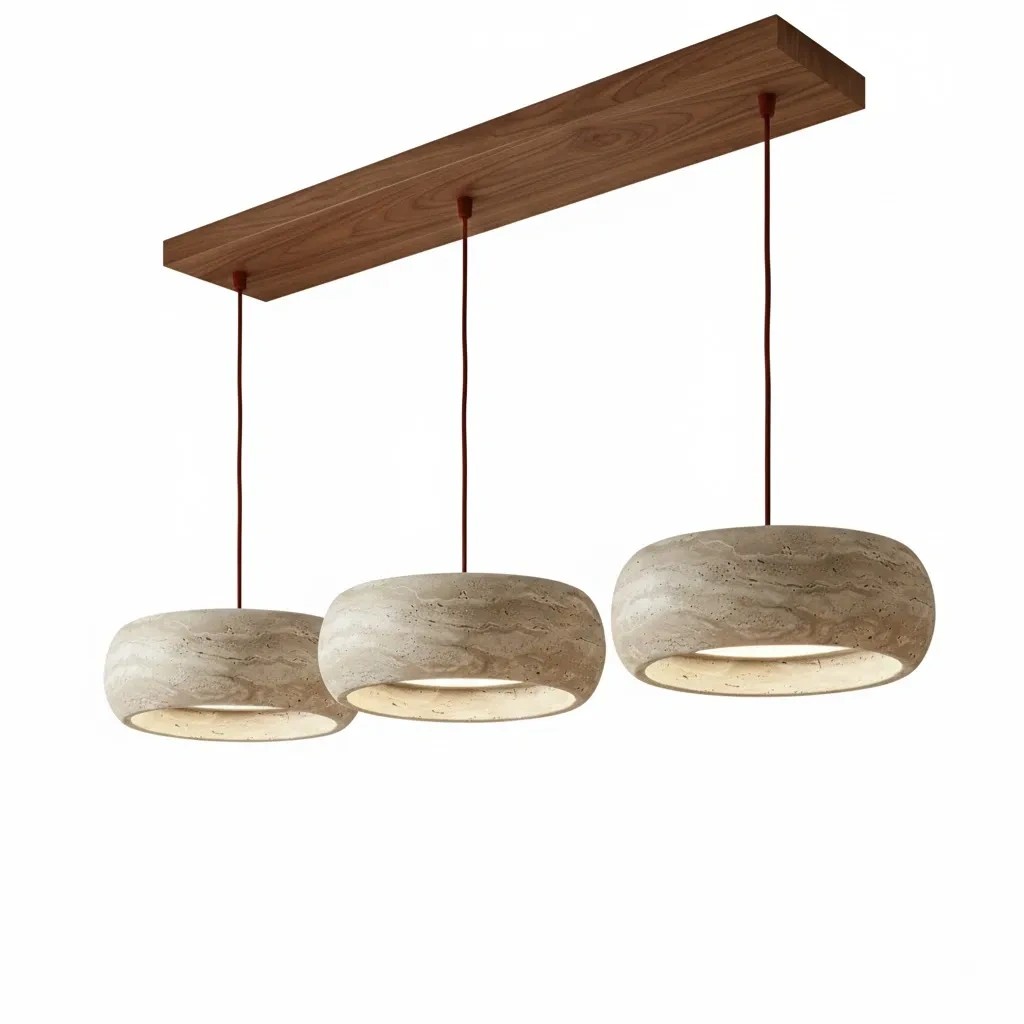
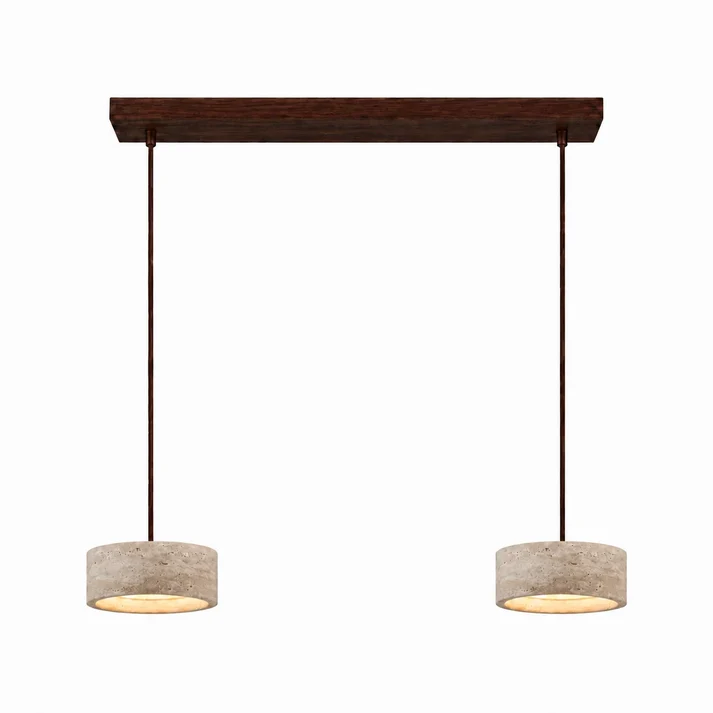
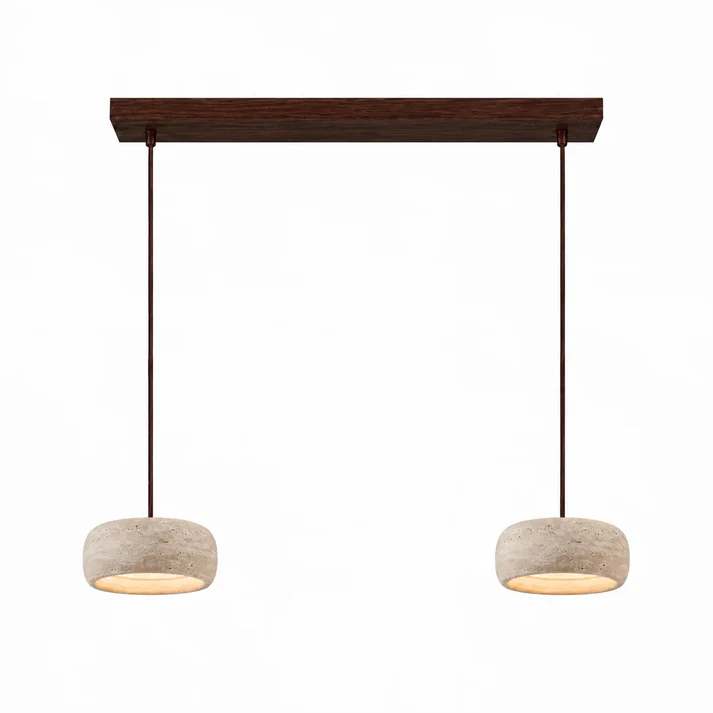
For large tables extending past eight feet, consider installing a pair of these stone pendants side-by-side. This arrangement distributes light evenly across the entire tabletop and echoes the sophisticated, repetitive design language found in custom luxury estates—a perfect example of Coordinating Lighting with Furniture Materials to create a balanced, upscale environment.
The Kitchen Island Rule: Symmetry, Spacing, and Scaling
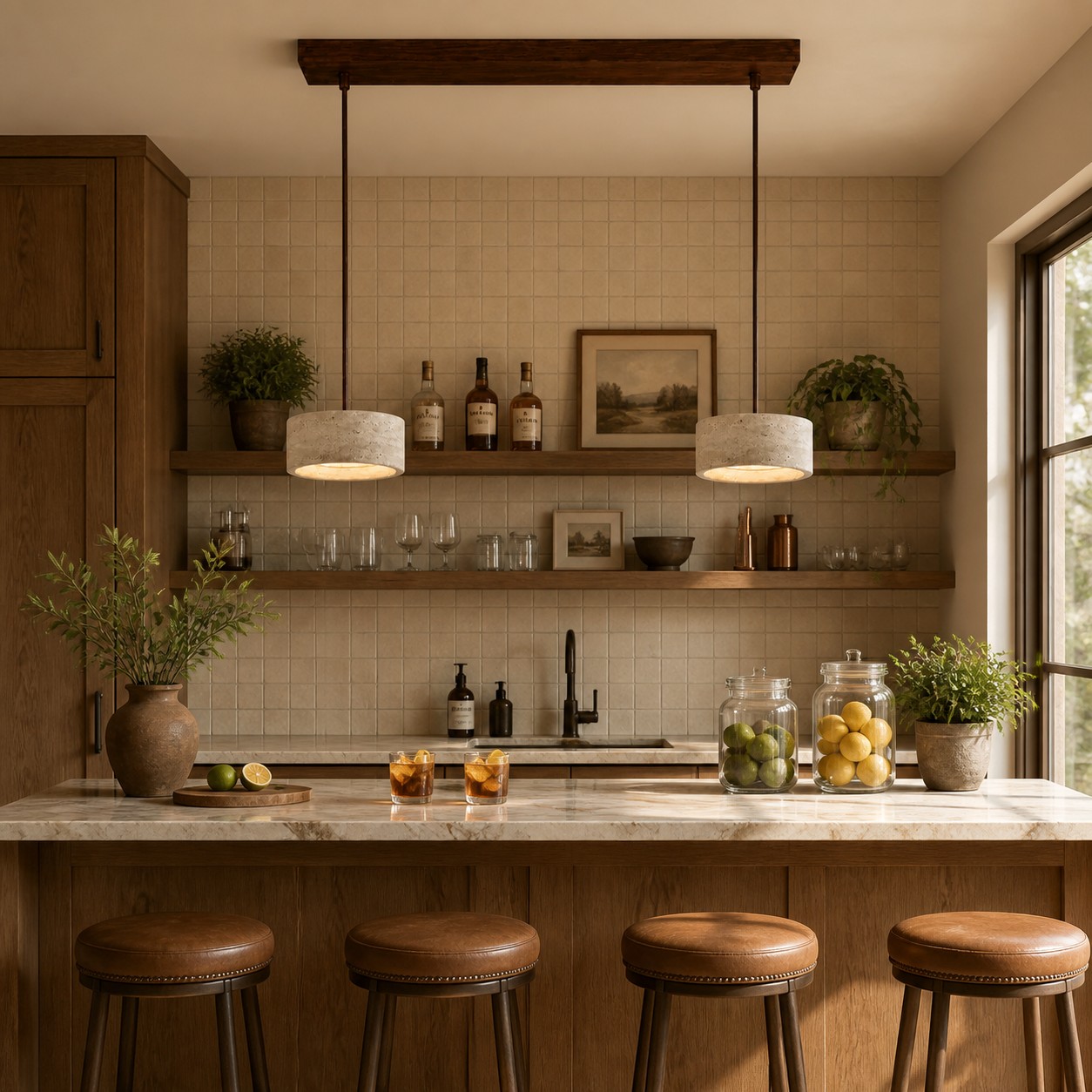
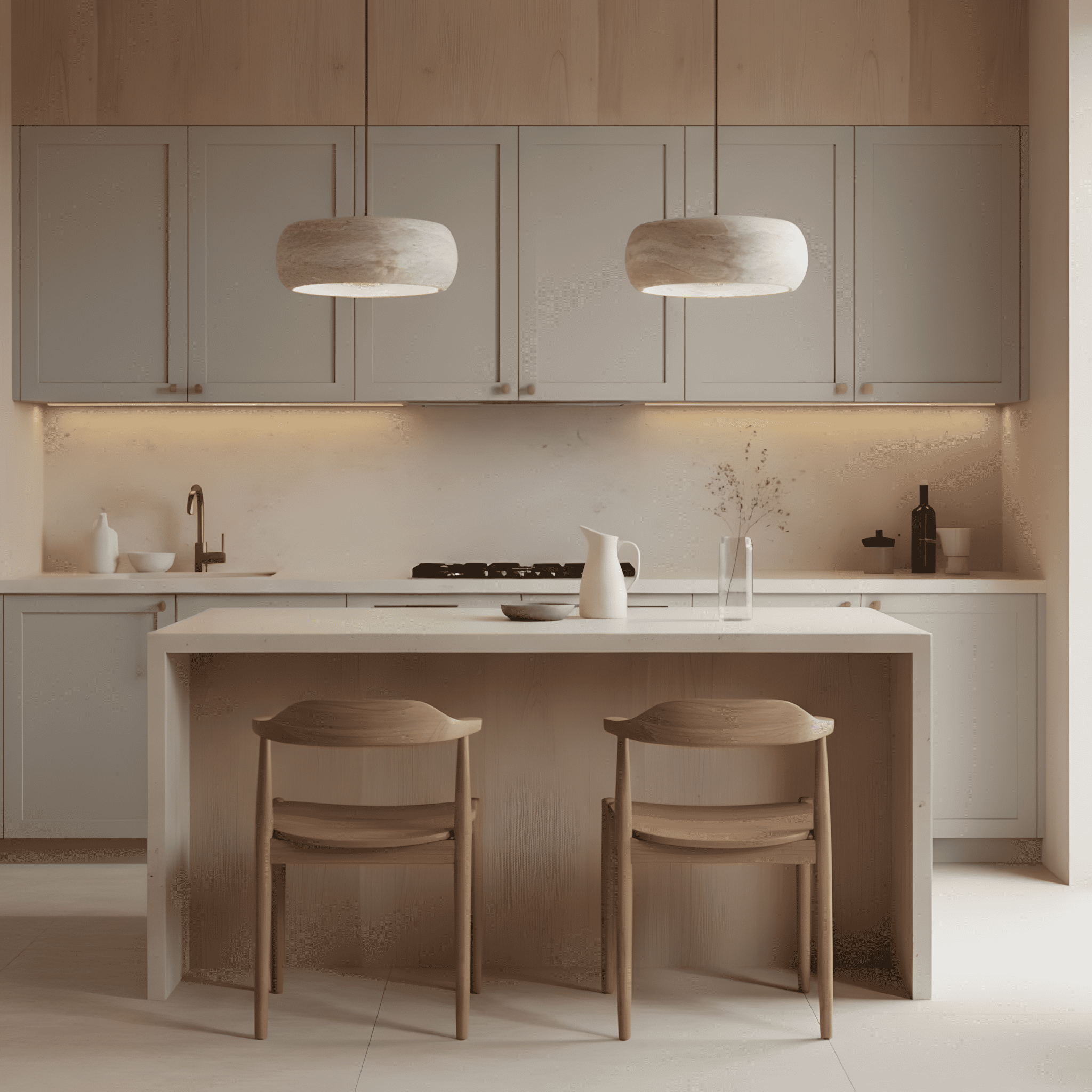
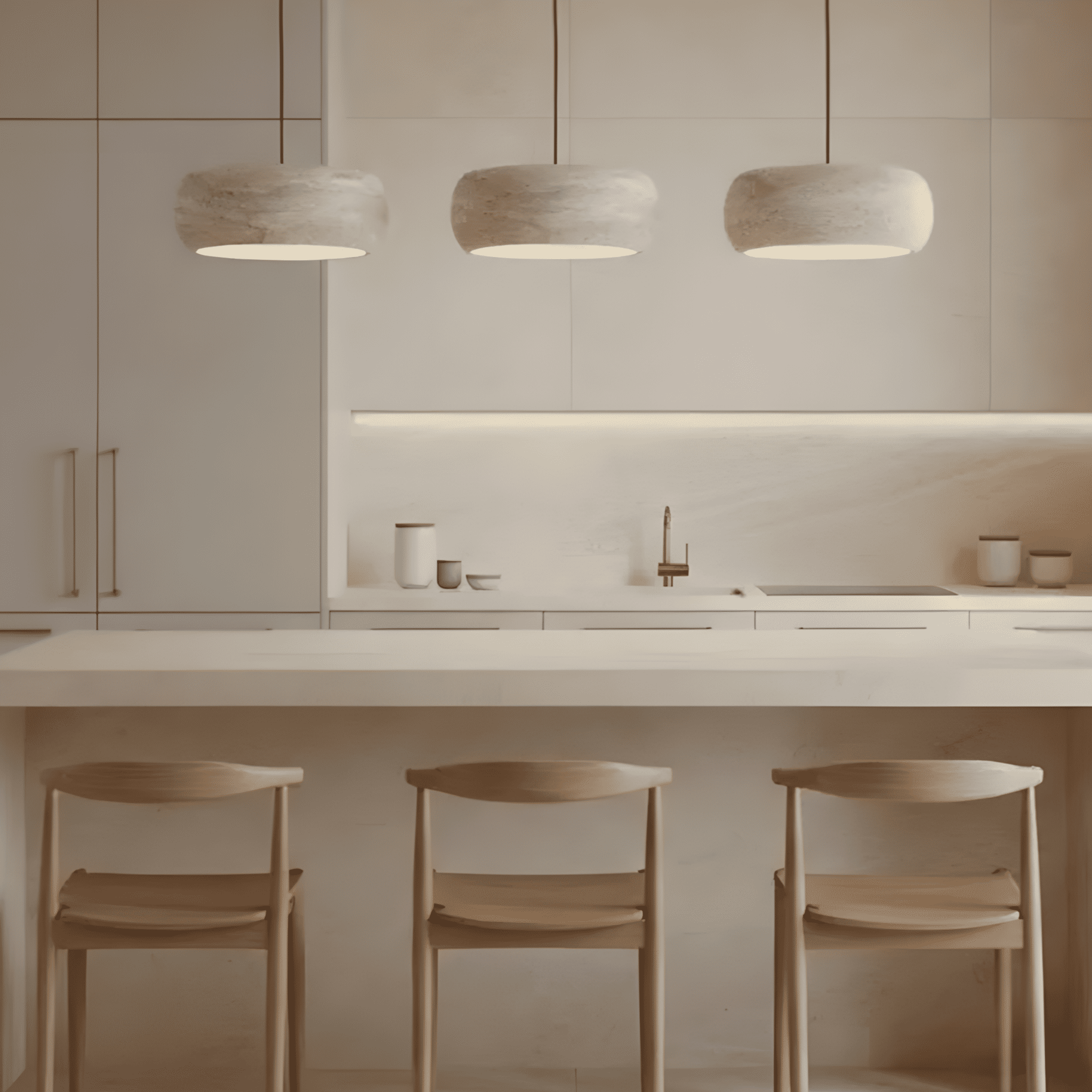
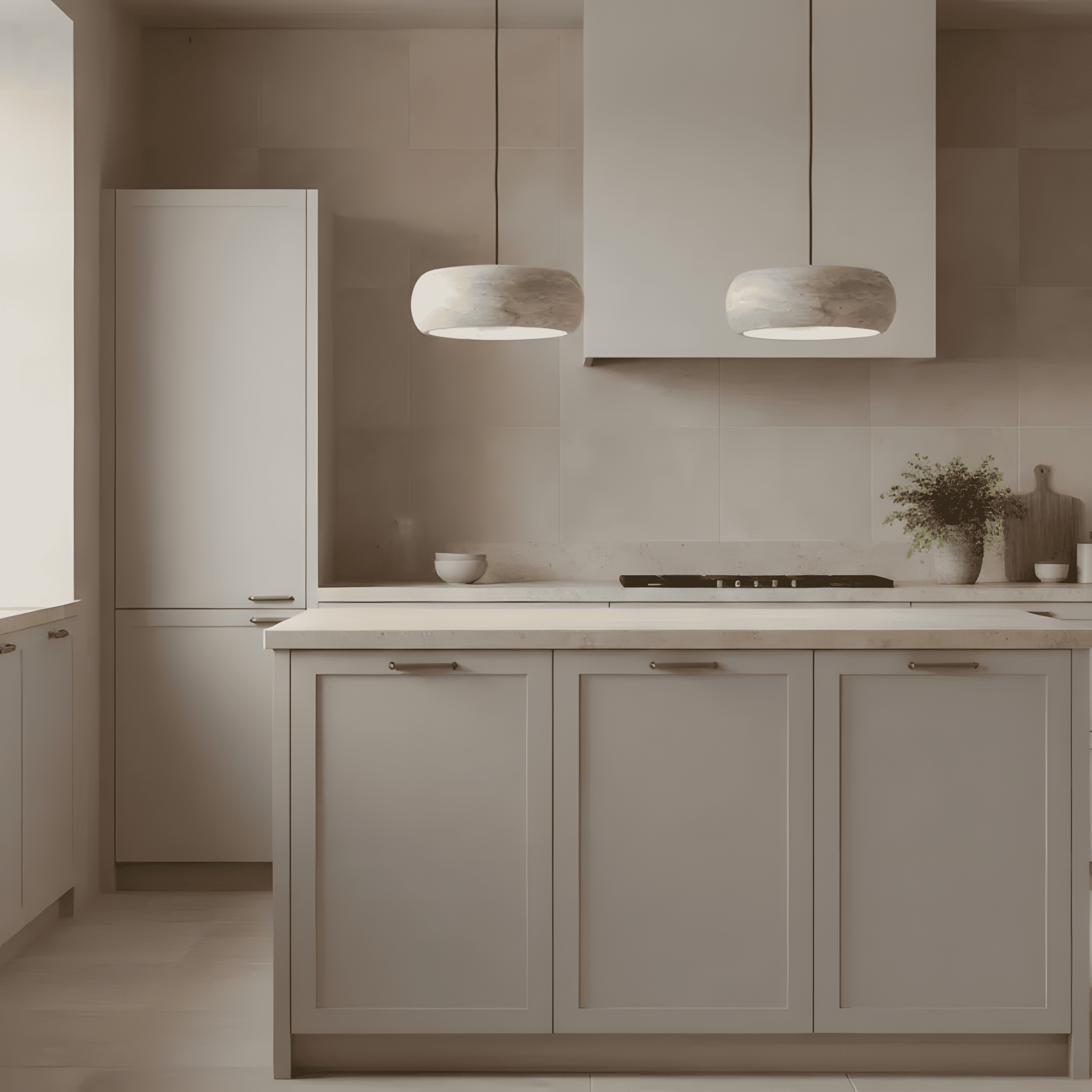
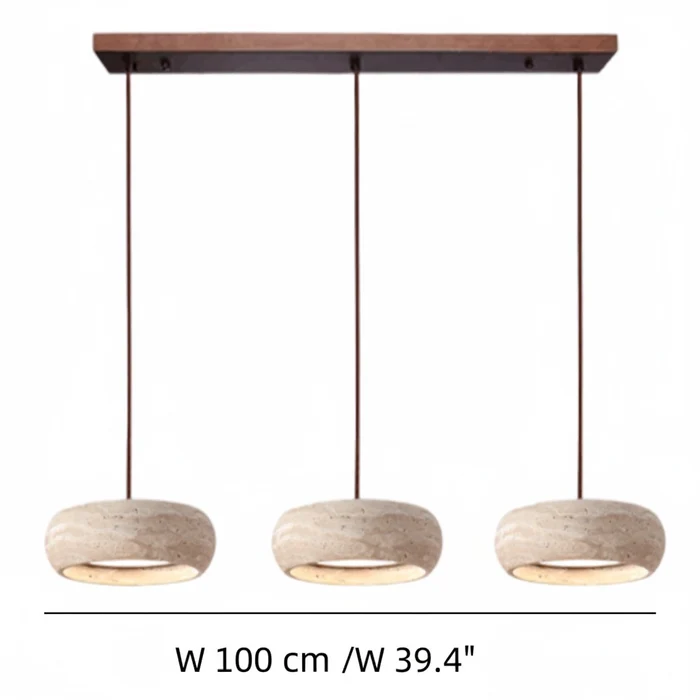
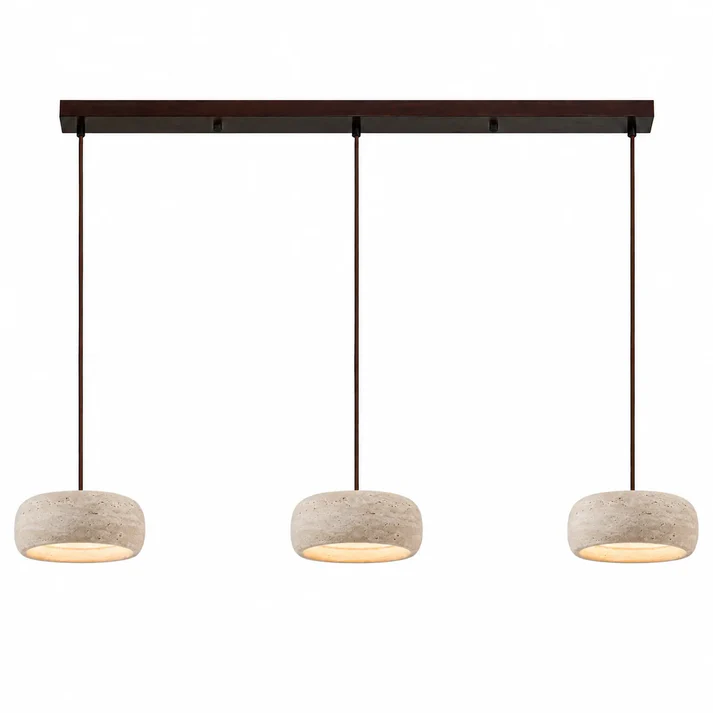
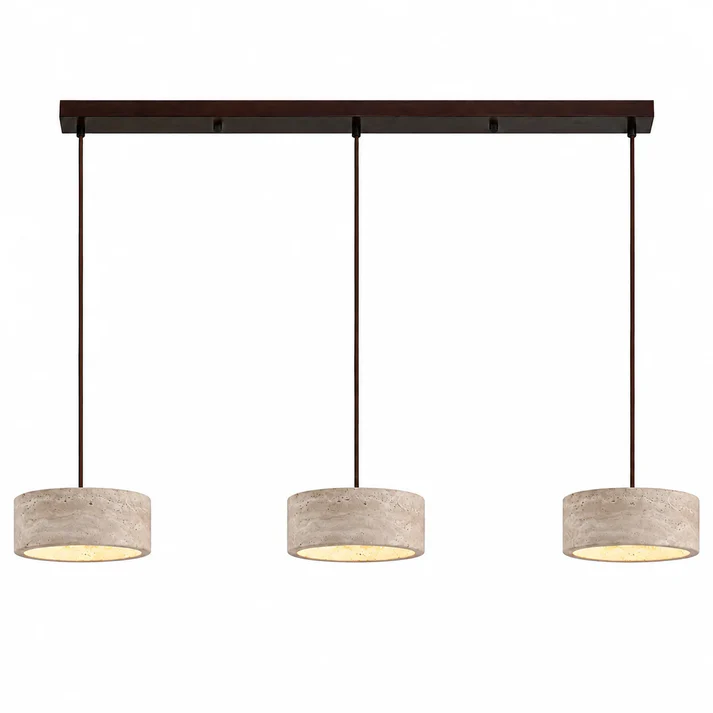
The kitchen island is the hardest-working surface in the modern home, transitioning constantly from meal preparation to casual family conversations. Lighting this area requires a transition from general room ambiance to targeted, functional illumination. Hanging multiple stone pendants in a row over an island creates a stunning visual rhythm that elevates the entire kitchen architecture.
To pull this look off like a professional interior decorator, apply the standard rule of symmetry and clearance. Always maintain a minimum of 30 inches of space between the surface of the countertop and the bottom rim of the light fixture. This prevents tall family members from bumping their heads while keeping the beautiful texture of the stone within direct line of sight.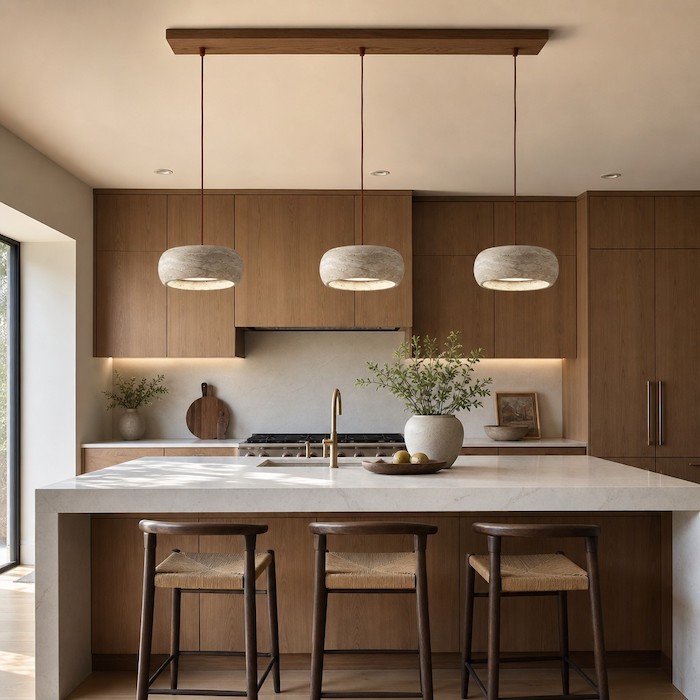
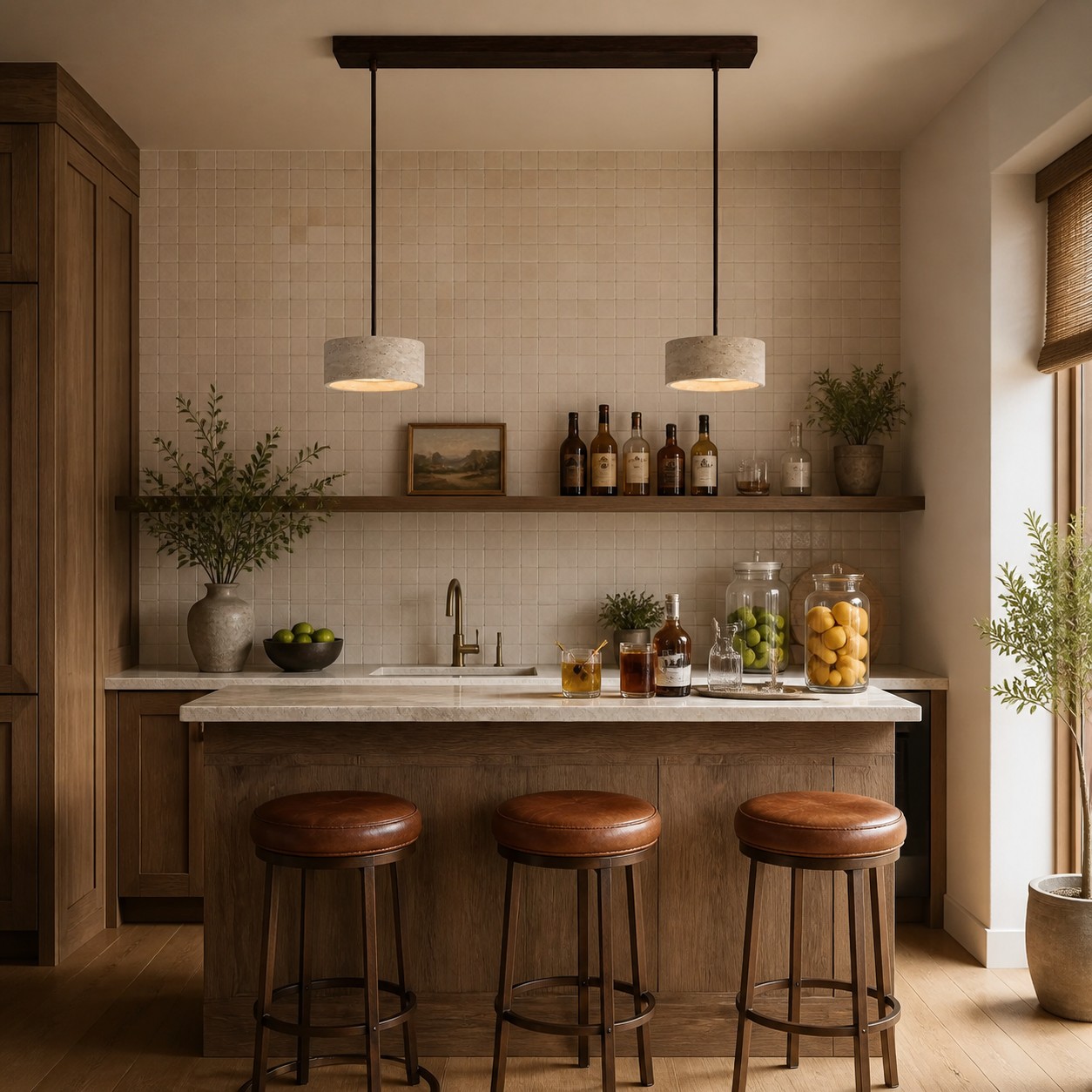
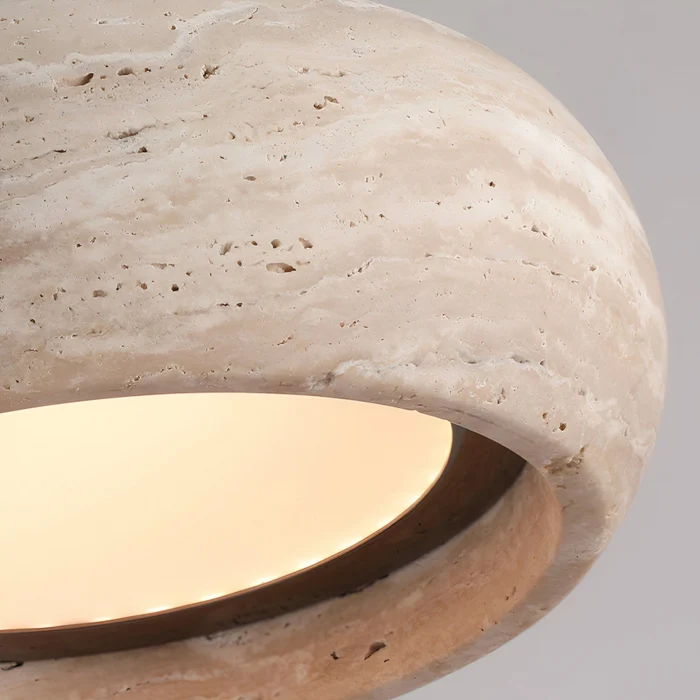
Spacing between multiple fixtures is equally vital. A great rule of thumb is to measure the total length of your island, subtract the combined width of your light shades, and divide the remaining space evenly. Utilizing a pair or a trio of the Vaughn Wabi-Sabi Travertine Drum Pendant Light over an island instantly warms up cold quartz or solid-surface countertops, softening the hard edges of surrounding kitchen cabinetry with the stone’s natural, pitted texture.
The Reading Nook Escape: Crafting Asymmetrical Luxury
Not every light fixture needs to be centered in a room. In fact, some of the most luxurious spaces utilize intentional asymmetry to define hidden corners and quiet retreats. A reading nook or a small sitting alcove in a primary bedroom is the ideal location to experiment with unexpected lighting placement.
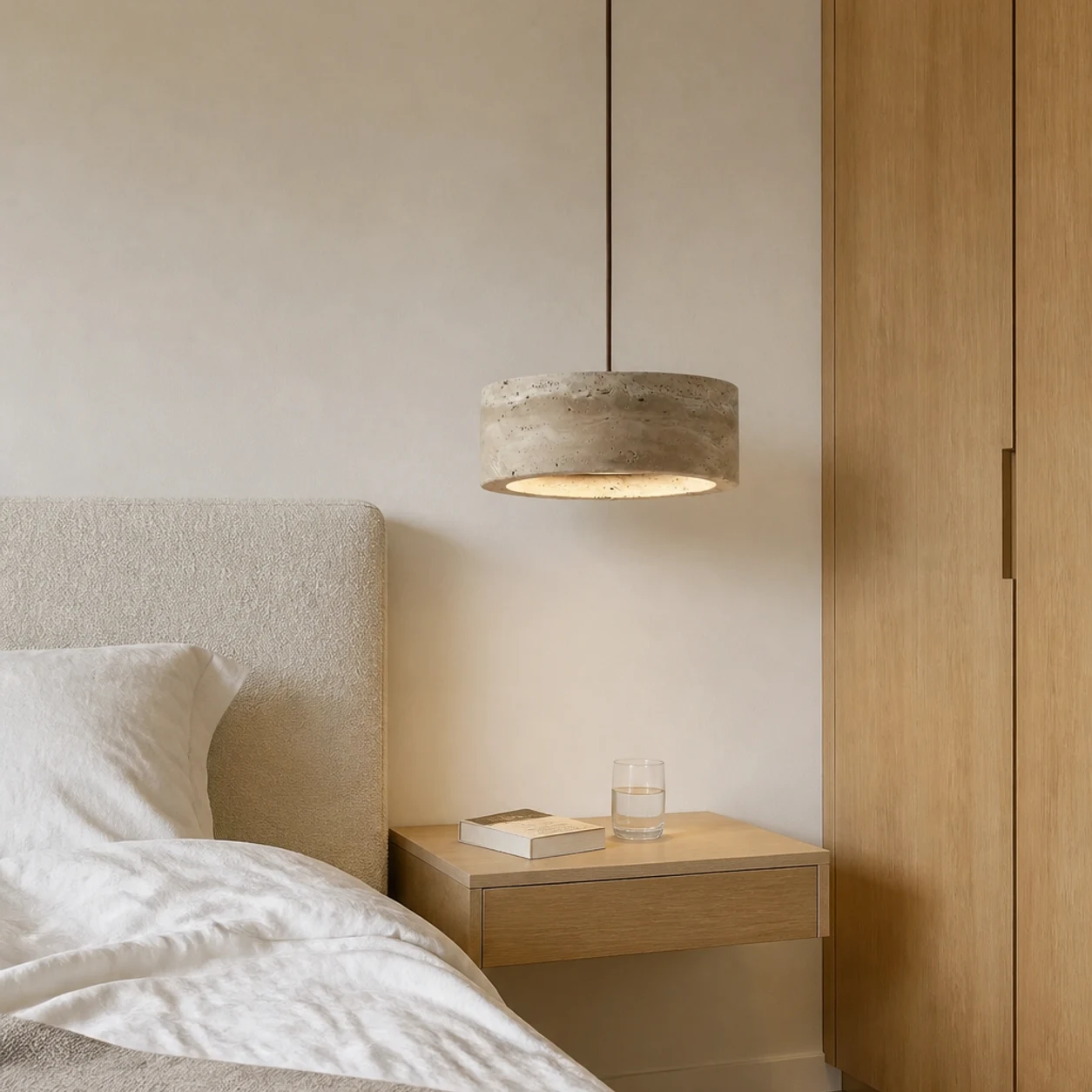
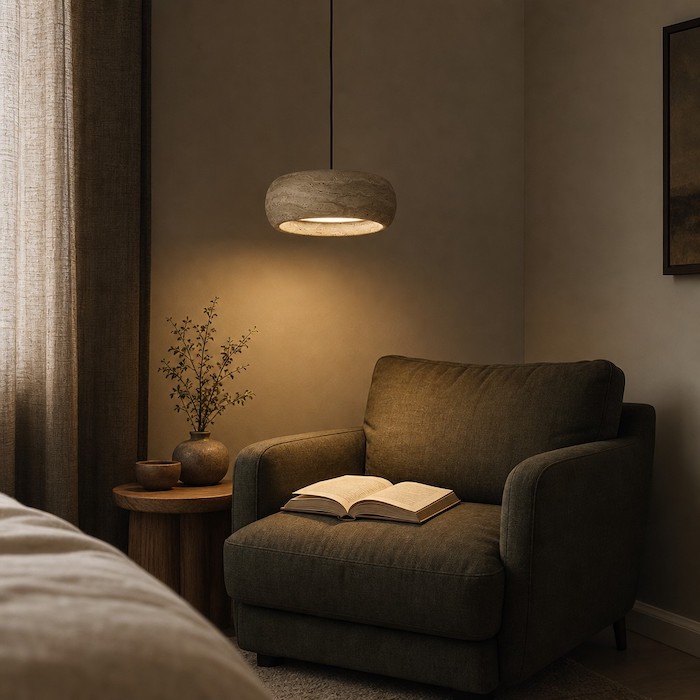
Instead of relying on a standard floor lamp that takes up valuable floor space, suspend a heavy stone drum pendant in an unused corner. Hang it noticeably lower than you would in a main walkway—roughly chest height when you are standing. This lower placement changes the perceived boundaries of the corner, creating an ultra-cozy, cave-like sanctuary that invites you to curl up with a good book.
The organic, unpolished feel of travertine works beautifully alongside comfortable textiles. Pair your hanging stone light with a plush linen armchair, a wool throw blanket, and a small side table made of raw oak or dark walnut. The earthy quality of the Vaughn Wabi-Sabi Travertine Drum Pendant Light complements these natural fibers perfectly, providing a calm, grounded backdrop that directly taps into The Psychology of Lighting: How it Affects Your Mood at Home, helping quiet a busy mind at the end of the day.
Finishing Touches: Cords, Canopies, and Color Choices
When installing high-end lighting, the small details make a massive difference. Standard plastic white cords can cheapen the appearance of premium stone fixtures. Always look for fixtures that utilize fabric-wrapped cords or metallic rods that match the subtle undertones of the stone itself. Ensuring that your ceiling canopy—the metal plate that covers the electrical box—is flush and color-coordinated with your ceiling finish guarantees a seamless, integrated look.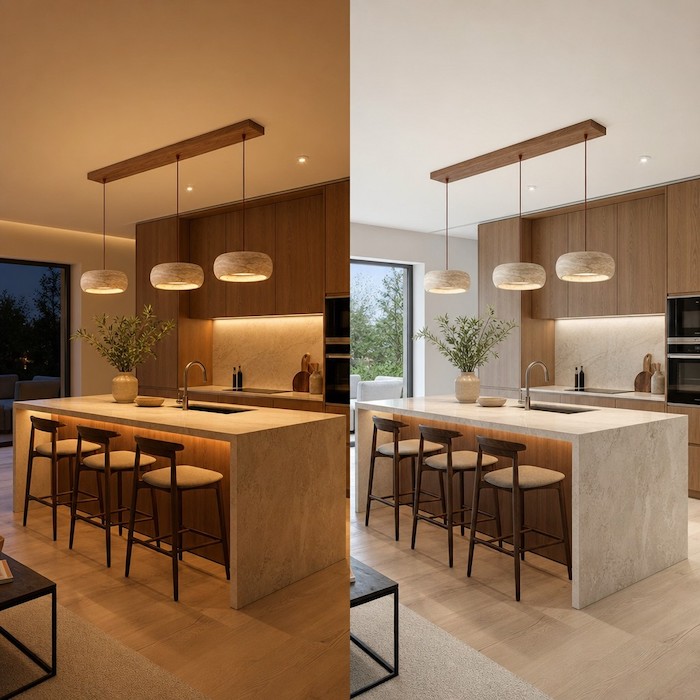
Finally, pay attention to how daylight interacts with your travertine fixture. Throughout the morning and afternoon, natural sunlight will hit the porous surface of the stone at different angles, shifting its appearance from a cool sand tone to a deep, warm beige. By mastering your placement and hanging heights, you turn a simple light source into a dynamic, living sculpture that enhances your home around the clock.